
From Brussels step forward, Rome not enough Defence, government stalls on loan

ROME - Giorgia Meloni continues to tie the two emergencies generated by the energy crisis and rearmament in a double thread. "We cannot tell citizens that the money is only there for defence," she reiterated yesterday as a guest on Mattino Cinque, relaunching a strategy that demands a European solution on the budget margins to be dedicated to the energy price before taking any step forward on the road to increasing military spending.
The decision to take more time on investments in security and weapons was also the focus of a meeting on Wednesday at Palazzo Chigi with Deputy Prime Minister Antonio Tajani and Matteo Salvini, Economy Minister Giancarlo Giorgetti, Defence Minister Guido Crosetto, Undersecretary Giovanbattista Fazzolari, and Meloni's advisors. According to several sources, it was decided there to postpone yet again the final adhesion to the Safe programme, the 14.9 billion EU loan that Italia had 'booked' last summer. A postponement also motivated by the fact that, according to the government's reading, the Safe regulation would not set 31 May as the peremptory deadline for signing the agreement to activate the investment plan presented.
Among the options on the table there is also the one pointed out by Tajani as "a decision already taken by the entire government and the entire centre-right coalition" of "asking for less (than the 14.9 billion, ed.) only to carry out projects for which there are already signed contracts and cannot not be implemented". The hypothesis evoked by the deputy prime minister arouses some perplexity on a technical level and rekindles the government's discontent after Crosetto had repeatedly urged Giorgetti and Meloni herself to clarify the path to be taken. A certain distance also seems evident on the operational impact of the possible activation of the Safe, which, according to the interpretation repeatedly reiterated by the Minister of the Economy, would simply translate into a lower cost financing of expenses already provided for by the public finance tendential and so far covered with the more expensive domestic government bonds. In this light, not even the official signature at the foot of the loan request would meet the need for additional investment, which the Defence Minister has emphasised on several occasions.
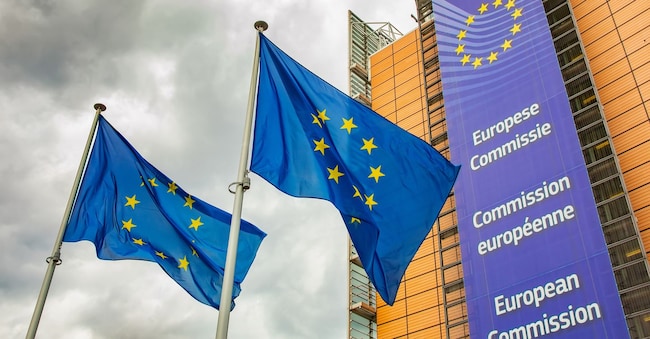
In any case, without answers on energy the road to defence seems closed by insuperable consensus reasons. In this key, the indications arrived yesterday from the executive vice-president of the European Commission, Raffaele Fitto, Fdi's man in Brussels and Meloni's loyalist, are considered a positive development but still not enough. The 'Fitto method' of remodulations, experimented with the funds of the NRP and already with Cohesion (of the 35 billion reprogrammed, 7 are Italian), has indeed proved to be a lifeline for Rome. But it would impose a new negotiation with the regions to subtract a quota of resources to be allocated to the energy priority. While an openness on additional flexibility at European level would offer new budgetary space without having to negotiate with anyone. Ursula von der Leyen's response to Meloni's letter is expected on 3 June, together with the spring package that will also contain the final assessment on the 2025 accounts and the new Country Recommendations. From there the possible margins implicit in the current European rules will also be understood. Which in any case would offer much less than some of the multi-billion hypotheses circulated in recent days.


