
From Budapest blow to Trump and Putin: Europe is stronger
President Usa had bet it all on his Hungarian ace and lost the bet, Moscow loses a "friend", saboteur of decisions of the Union in favour of the Ukraine

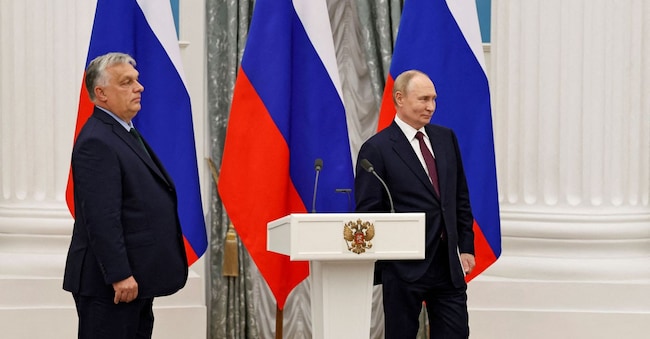
One would like to declare a big party in Europe, replicating in Brussels the delirium of joy of the Hungarians in Budapest on the crazy night of fires and dances that on the banks of the Danube greeted the end of the Orban era, of cliques and failures of the impetuous drift towards moral corruption before political and economic corruption. One would like to declare 12 April 2026 as the day of liberation and redemption of European democracies against the democracies and/or 'illiberal democracies', the day of the peaceful clean sweep that neutralised the growing external interference in electoral dynamics, the scandal of too many foreign godfathers in the fray, with the false legitimisation of the alleged law of the strongest, their own.
In this sense, not only Peter Magyar's new Hungarian course won on Sunday, with an overwhelming two-thirds parliamentary majority, a national-European programme of fighting the corrupt and relaunching development reduced to the bare minimum. With the vote of a country of only 9.5 million inhabitants out of the Union's 450, Europe and its much reviled 'sick' democracy also won, mocking its most violent denigrators and fierce troublemakers in cahoots with each other. In four years of aggression against Ukraine, Vladimir Putin's own goals can no longer be counted in the theatre of war, NATO and the Mediterranean-Middle East-Gulf area. In the presidential elections in Romania two years ago and then last year in the legislative elections in Moldova he had resoundingly lost and had to swallow the victory of the two pro-EU candidates.
Hungary is a much heavier defeat: it means the loss of a true friend, ideologically aligned to the point of tolerating and covering up the spying of its foreign minister at EU summits in favour of his Russian colleague, Sergheij Lavrov. The loss of a consummate saboteur of European decisions disagreeable to Moscow: the 90 billion loan to Kiev approved and then blocked, the hiccuping renewal of Russian sanctions. And continuous sticks in the EU's wheels, ill-tolerated for the constant reprimands and freezing of 20 billion EU funds owed to his country.
These are all very welcome disruptions for the Kremlin, especially to the detriment of European support for Ukraine that has taken over from American support. What's more, Orban lost badly by taking away the credibility of Russian electoral 'helpers' behind the scenes, especially by losing the ability to act as Moscow's effective bridgehead in the EU.
It didn't go any better for Donald Trump. He had staked everything on his Hungarian ace and lost the political bet with the stinging Europe in the midst of the great Iranian mess, blockade of Hormuz and nefarious repercussions on global energy prices, inflation and stagflation.

