From Canova to Kiefer: two centuries of art side by side in Vicenza
The exhibition “Italia and Germany: Painting and Sculpture from the 19th to the 20th Century: From Canova to Kiefer” is open until 2 May at the Basilica Palladiana

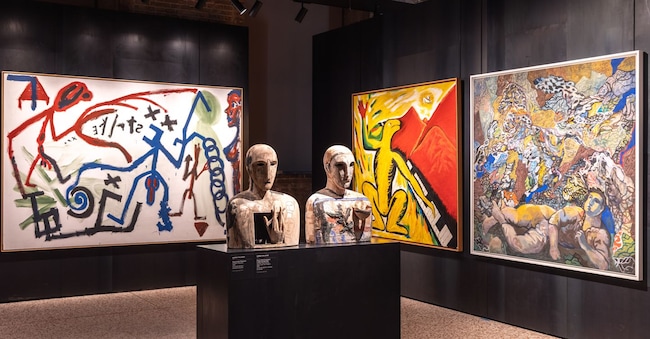
In the midst of it all, Baselitz’s painting heightens the contrast between memory, the body and the image. The final room – entitled I am looking for an innocent country – does not, in itself, offer any answers, but leaves open a space for reflection, much like that balcony evoked by Lorca, a true threshold between life and what remains. It is from there that the journey begins, which the Basilica Palladiana will host until 2 May 2027, featuring 168 works from over sixty Italian and international institutions and collections.
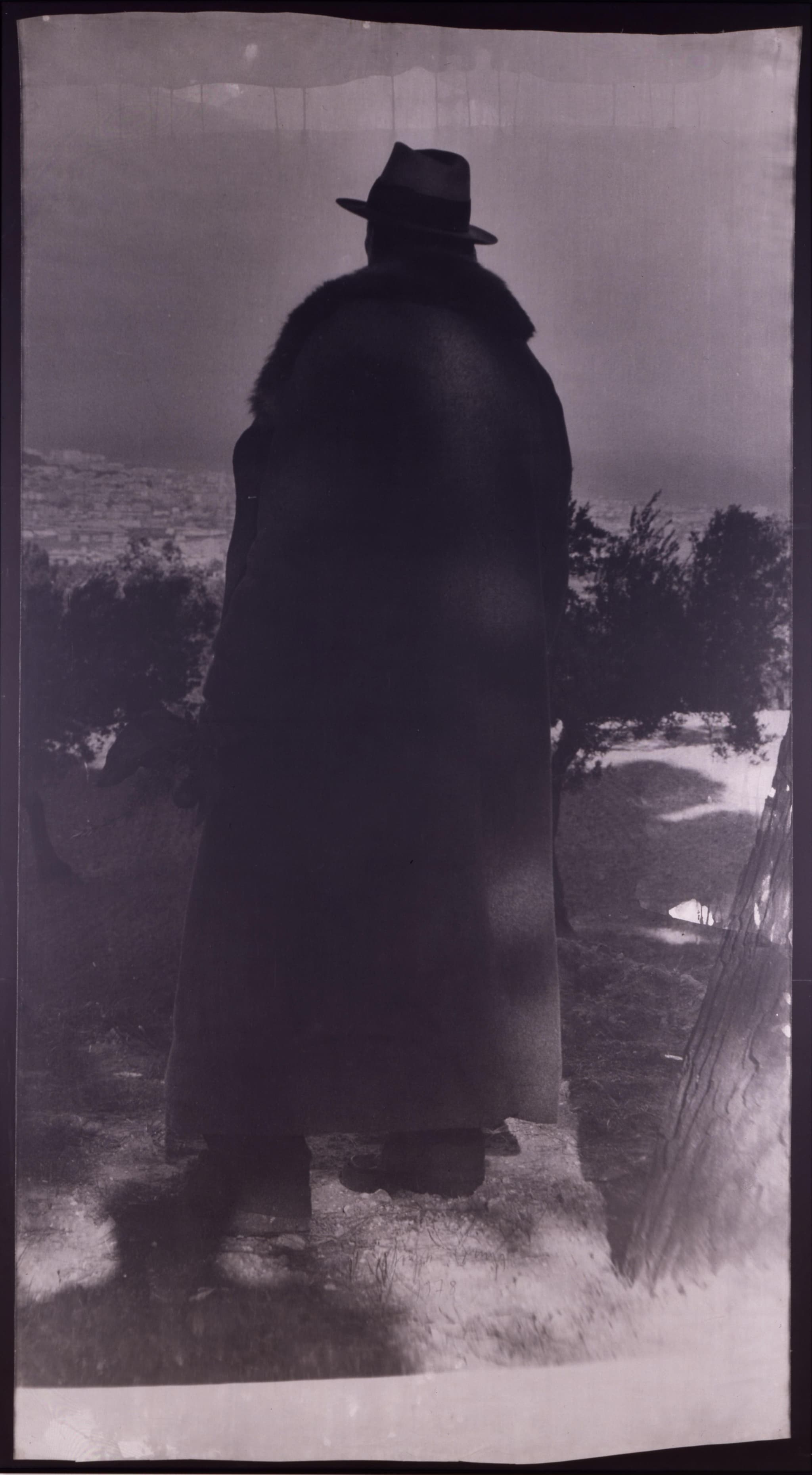
Johann Wolfgang von Goethe
‘The title refers to two artistic traditions examined through the lens of their encounters and mutual transformations,’ explain the curators Gabriella Belli and Valerio Terraroli. Guiding the exhibition is Johann Wolfgang von Goethe, the guiding figure behind the 1786–1788 journey through Italia – including Vicenza – as an experience of discovery and rebirth, at a time when our country was a place for the study of classical antiquity and the Renaissance.
Rome
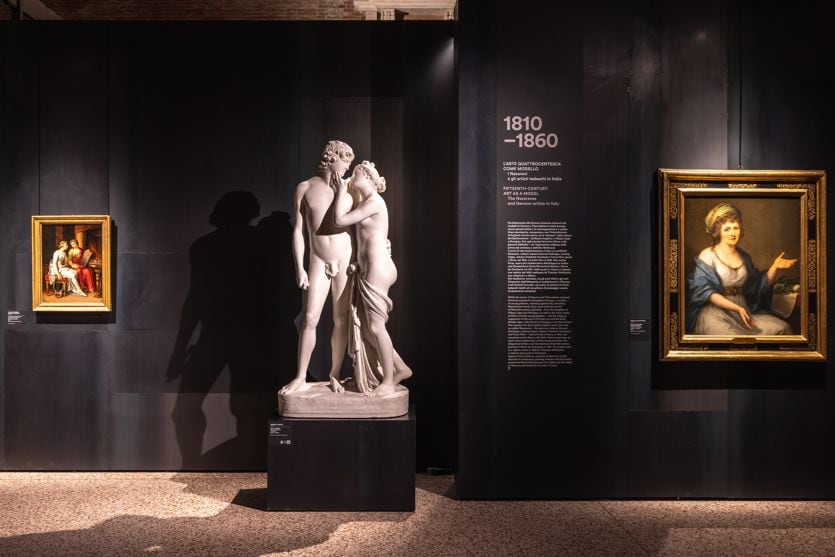
In Rome, the Nazarenes – Overbeck, Pforr and Cornelius – revived the clarity of ancient painting and fostered a dialogue with the Italian Purists and Canova’s classicism, thereby nurturing a shared artistic vocabulary. Later, Böcklin’s Symbolism and Klinger’s engravings left their mark on Giorgio de Chirico’s sensibility. In 1912 and 1913, however, at the Der Sturm gallery in Berlin, Italian Futurism came face to face with German Expressionism, and Boccioni, Carrà, Severini and Russolo engaged with the artistic explorations of Die Brücke and Der Blaue Reiter.
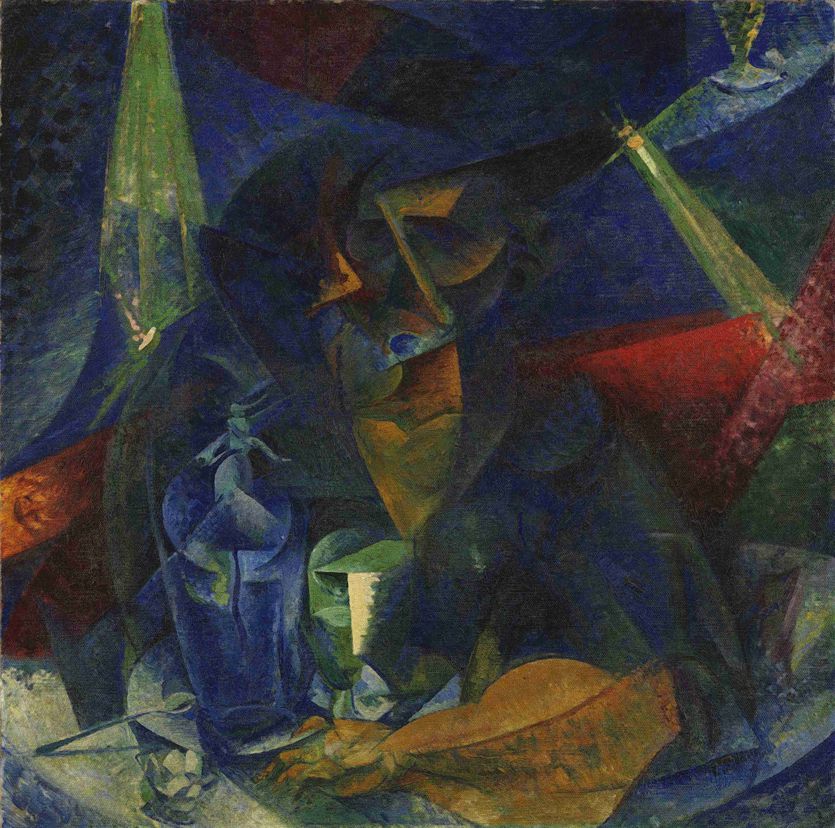
‘After the First World War, Neue Sachlichkeit and Magic Realism, on the other hand, restored an enigmatic precision to the figure, and in the paintings of Dix, Schad and Davringhausen, as well as those of Casorati, Donghi and Cagnaccio di San Pietro, reality seems to be held in a state of suspension,’ the curators go on to explain.
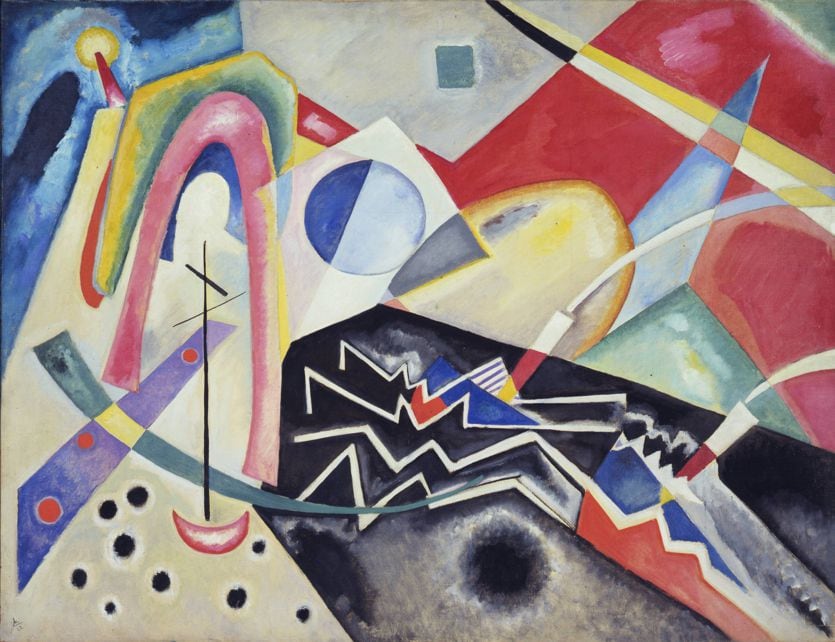
In the 1930s, centred around the Milanese gallery Il Milione, , abstraction brought Kandinsky, Albers and Baumeister into dialogue with Reggiani, Radice, Veronesi, Melotti and Fontana. In the post-war period, Burri, Vedova, Afro and Tancredi encountered Nay, Winter, Schumacher and Schultze. In the late 1950s, the ZERO group in Düsseldorf and the Milanese Azimuth circle, featuring Manzoni, Castellani, Bonalumi and Nanda Vigo, reimagined the very nature of art through light, space and surface.