From Carloforte to Asinara: lesser-known islands to discover out of season
Small areas with very distinctive natural and historical features, where nature takes centre stage in autumn

Key points
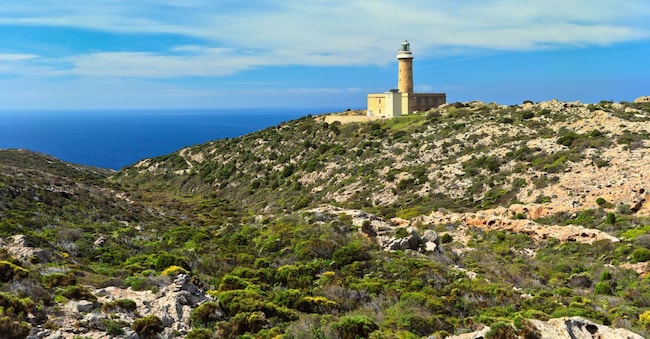
This is the other side of Sardinia – the small islands scattered as far north as they are to the south. Iconic places to visit or to spend a few days’ holiday. Even when the crowds have gone and you can enjoy the beaches and the sea almost in solitude. Cliffs plunging sheer into the sea, not to mention the charm of the lighthouse.
From Cagliari to the Sulcis
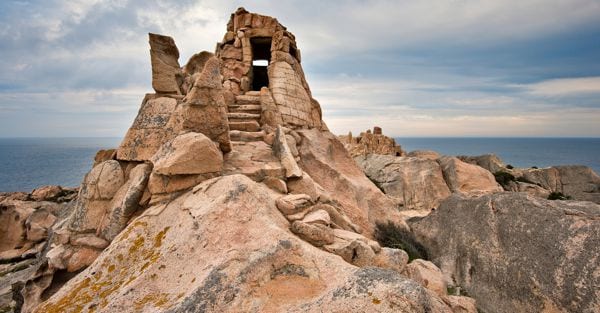
On disembarking at Cagliari, after a journey of about an hour and twenty minutes, you can reach the Sulcis region, where there are two islands. One of these, accessible by ferry from Portovesme or Calasetta, is San Pietro, home to the town of Carloforte – a Ligurian enclave in Sardinia where the inhabitants still speak the language of their forefathers, fishermen originally from Pegli who came from the Tunisian island of Tabarka. From Carloforte’s main square, a stroll through the historic centre – amongst narrow streets and quaint little bars – then leads out towards beaches and coves. From Punta a Spalmatore, continuing via Geniò, Guidi and Girin, the Conca cliffs, the Capo Sandalo headland, the Cala Fico cove, and the cave known as Punta delle Oche. Opposite, accessible only by boat, lies Isola Piana. Don’t miss a trip to the lighthouse, which can be reached by following the road that leads from the town centre in the opposite direction.
Sant’Antioco on the western tip
At the tip of the Sulcis region, some eighty kilometres from Cagliari Airport (but just a few miles from Carloforte), lies the island of Sant’Antioco. You don’t need a ferry to get there; simply take the SS 126. A bridge connects Sant’Antioco with the rest of Sardinia. All around, there is a mix of beaches (equipped with facilities and assistance) and cliffs. In Sant’Antioco, the most popular beach is Maladroxia, which has been awarded the Blue Flag and offers a range of facilities for bathers (including those with disabilities). Other beaches include Cala Sapone, Coacuaddus, Capo Sperone and Is Pruinis. Following the coastal roads, you reach the opposite side, where Calasetta is situated. This small town is known, amongst other things, for its Pilau festival, a traditional dish made with Sardinian fregola and seafood specialities. Then there are the beaches stretching out from the town centre. From Sotto Torre to the two beaches at Le Saline, continuing on to Spiaggia Grande. There is also Cala Tuffi, a sort of natural swimming pool nestled between rocky cliffs. Don’t miss the lighthouse and the Nido dei passeri, a pair of sea stacks that serve as a refuge for birds. And then there’s the harbour, from where you can set sail for Carloforte.
Where the maximum-security prison used to be
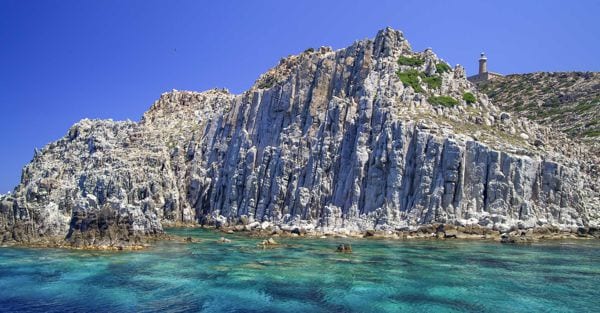
Heading to north-western Sardinia, about forty kilometres from Sassari and Alghero, you’ll find Fertilia Airport, from where you might consider visiting the island of Asinara. The memory of the maximum-security prison lingers. Today, the island is a national park with a protected and unspoilt environment. To get there, you can take the ferry from Porto Torres or passenger boats from Stintino. Cars are not permitted on board. On the island, which has been a National Park since 1997, you can get around by bicycle, on horseback or by transport: rubber-tyred trains and off-road vehicles. The journey is a tribute to nature. As well as the former maximum-security prison, there are unspoilt beaches. Sant’Andrea, Cala Reale, Cala d’Oliva, Cala Trabuccato. Swimming, as the park’s website also recommends, ‘is permitted everywhere except in strictly protected areas’.
Picture-postcard beaches
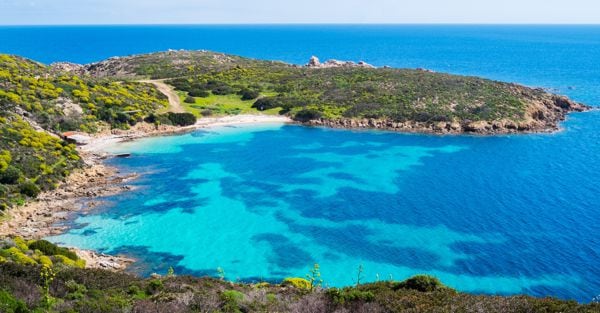
If, on the other hand, you find yourself in the north-east of Sardinia, just under 50 kilometres from Olbia Airport, travelling via Palau and by ferry (cars can be taken on board), you will reach the La Maddalena archipelago, which comprises around sixty islets. On this island, the military era is now a distant memory and, following the closure of the military base, the focus has shifted to tourism. Boat trips offer the chance to sail around the island. You can also visit picture-postcard beaches, such as Budelli or the coves to the north. Crossing the historic bridge dating from 1958 takes you to the island of Caprera, Garibaldi’s final residence. From there, you can walk to the beaches: from Cala Portese or Cala dei Due Mari to Spiaggia del Relitto, and on to Sala Coticchio.