
Sting of over 20 per cent for US Amazon customers: price hikes from clam chowder to broth
A Wall Street Journal analysis of 2,500 products shows the price increases: from deodorants to pet products ranging from 20 to 130% in five months

2' min read
2' min read
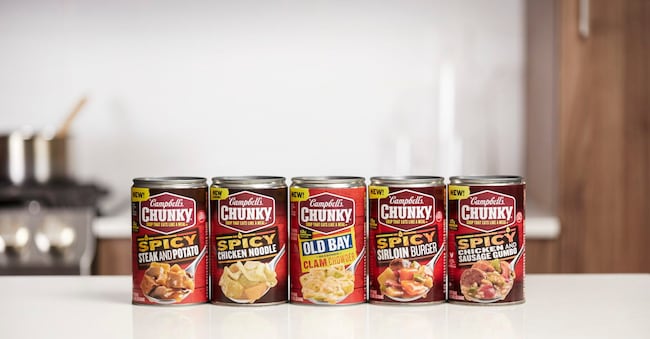
The tariffs effect - applied or announced - is reflected in the online prices of basic goods in the US. In January, a can of the famous New England clam chowder (Campbell's brand) cost less than two dollars on Amazon. On 1 July, the same product was selling online for $2.58, an increase of 30 per cent. But the same is true for some deodorants (+230 per cent), Ricola candies (+42 per cent), chicken broth (+24 per cent) and black beans (+22 per cent), as well as protein products and pet items. At least that is the finding of an extremely detailed Wall Street Journal analysis of almost 2,500 FMCG items whose price trends it cross-referenced among three major retailers: Amazon, Target and Walmart.
What emerges is that in the five months since President Trump's announcement of tariffs (20 January to 1 July), according to Traject Data's analysis - published in the Wall Street Journal - while Amazon, which had announced a stabilisation of prices in April, quietly raised them by 5 per cent for 1,200 of the cheapest items, Target did so by 3 per cent and Walmart lowered them by almost 2 per cent. In short, as the uncertainty over tariffs lingers, major retailers seem to be reshaping their pricing strategies for popular products. However, if you take the most expensive FMCG products over the same time period, you will see that all three retailers, on average, lower them: over -2% Amazon, around -4% Walmart to -6% Target.
Is it to do with tariffs? Yes, but not only. Discounts, periods of promotions, 'Prime days', can differentially influence value trends and possible rebounds. The price of the same metal basket, manufactured by an Ohio company with 'Made in China' components, on Amazon rose from $9.31 to $19.99 (+114.7%), at Target by 5.6% (from $17.99 to $18.99), and in Walmart's e-commerce it fell by 62% (from $17.90 to $6.77). According to some operators, Walmart can afford to lose money on similar online sales because customers often buy more profitable items in physical shops (and therefore the virtual is not the main shop window in which to shop). Not so for the online sales giants.
However, Trump's recent extension of the tariffs deadline towards the EU to 1 August also gives retailers time to stockpile products before higher tariffs come into effect, although it is not yet known by how much. However, it is precisely the lack of clarity that could lead retailers to arbitrary and differentiated variations, between those who aim to increase profit margins immediately and those who prefer to proceed more cautiously.
This news is false and misleading," Amazon said in a statement. "We found no significant changes, either up or down, in the average prices of products offered in our shop outside of the normal fluctuations that affect millions of items on Amazon. For the entire set of 2,500 items analysed, we found that in the vast majority of cases the price did not change or decreased, still being competitive with other retailers'.

