
From class chats to online grades: the privacy guarantor's stakes
Authoriy reminds of the rules to be respected inside and outside schools on video surveillance, electronic register, artificial intelligence, data processing
by Eugenio Bruno and Claudio Tucci
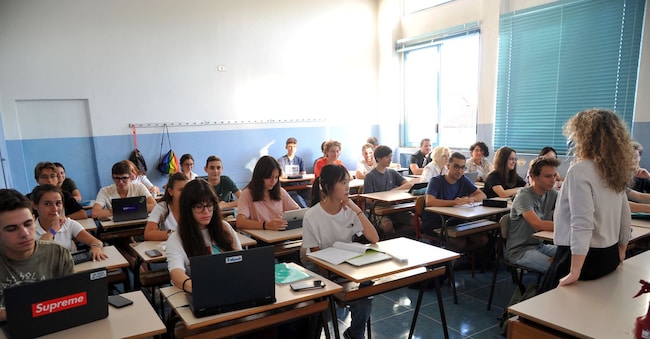
From the introduction of artificial intelligence at school to classroom chats. From the publication of students' and teachers' personal data online to the use of smartphones. From enrolments, which will start in January, to rankings for the recruitment of teachers and technical-administrative staff. The Privacy Guarantor, in a one hundred-page document - available on the institutional website https://www.garanteprivacy.it - has updated its indications on how to deal, correctly, with issues related to the processing of personal data at school, from teaching activities to the management of labour relations, with a series of practical suggestions to help especially the youngest to protect themselves from the risks related to the development of the digital world.
Data Processing
Let us start with the general rules. Let us say right away that all schools are obliged to let the 'interested parties' (students, families, teachers and Ata staff) know how their personal data are processed, obviously within the limits of their institutional (teaching or administrative) activity. It is the school headmaster who gives indications on the point and, to access them, it is possible to address the 'data controller' also through the Data Protection Officer (DPO). If you do not get a reply, or if the response is inadequate, you can then ask the Garante or the ordinary judiciary to intervene.
Turning to concrete examples, data revealing racial and ethnic origins may be processed by the school to foster the integration of foreign pupils; similarly, data on health are important for adopting specific support measures, for home or hospital teaching, for participation in sports activities. On the other hand, when dealing with workers' information, the school must adopt technical and organisational measures to prevent its unjustified disclosure to third parties, which may be families, pupils, trade unions, etc.
Electronic and Social Register
As far as students are concerned, at the time of enrolment, schools may not request personal information that is not relevant to that purpose, such as the health status of grandparents or the profession of parents. On the other hand, it does not violate privacy if a teacher assigns his or her pupils to do classwork about their personal or family world.
The grades awarded to the student in the individual disciplines are shown in the reserved area of the electronic register; whereas admission to subsequent classes or State examinations is resolved with the words "admitted/not admitted".

Brand connect


Newsletter Scuola+
La newsletter premium dedicata al mondo della scuola con approfondimenti normativi, analisi e guide operative
Abbonati