Legality

From the Mafia’s concrete to jobs for young people: a new lease of life for the Villa del Sacco in Palermo

On 18 December, the former home of the builder Zummo will be unveiled. InformaGiovani anticipates 1.5 million in private investment and between 20 and 25 jobs. A youth hostel and a social tailoring workshop will support free services for over 450 young people a year

4' min read

Translated by AI
Versione italiana

4' min read

Translated by AI
Versione italiana

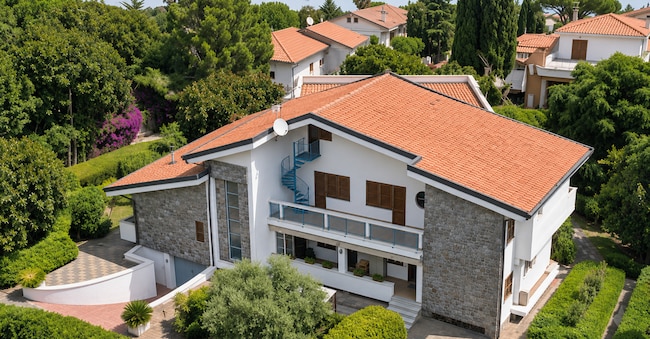
Twenty-two beds for youth exchanges and training. A tailor’s workshop to learn a trade and provide services to the neighbourhood. Europe information points, workshops and a community vegetable garden. In Palermo, the future of the villa that was once the home of the builder Francesco Zummo hinges on a project that combines the reuse of a confiscated property with the ability to generate jobs and resources to keep it open.

On 18 December 2026, the International Youth Centre will be unveiled to the city whilst construction is still under way. The property belongs to the City Council, which has assigned it to InformaGiovani APS ETS. The programme envisages around 1.5 million euros of private investment over the first three years and, once fully operational, between 20 and 25 permanent staff. Work began in September 2026. InformaGiovani, founded in Palermo in 2001, has 14 employees, the majority of whom are under thirty. The villa project does not receive direct European funding, the organisers point out, whilst the association benefits from EU programmes for other activities. Discussions are currently underway with private foundations.

Loading...

Hospitality funds services

Sustainability is the project’s first test. Revitalising the property also means finding the resources to cover its running costs and ensure the continuity of services. Alongside the free activities, there will be a social hostel, meeting and training rooms, and a tailoring workshop. All will operate on a not-for-profit basis: any profits will support the initiatives and a fund earmarked for the centre’s running costs.

The hostel addresses a need highlighted by the organisers: the rising cost of accommodation in Palermo is making it more difficult to organise residential courses, voluntary work and exchanges between young people from different countries. The 22 beds, available at subsidised rates, will be open to the third sector, Italian and international groups, and schools on educational trips. The rooms will be free of charge for those without financial means and available at controlled rates for others.

The tailoring workshop, set up by the San Giovanni Apostolo association, will offer repair, restyling and small-scale production services to the local community and organisations. Sewing and upcycling will also serve as training opportunities for people in vulnerable circumstances.

A new third-sector organisation will take over the tailoring workshop and provide accommodation, cleaning and laundry services for the hostel. The work placement scheme will involve paid work experience placements, with priority given to local residents and young women. Caritas, social services and the Social Services Office for Minors will help to identify suitable candidates.

From the neighbourhood to European networks

The villa covers an area of approximately 500 square metres, comprising 17 rooms, and has a garden area of approximately 2,000 square metres. It will house the Informagiovani helpdesk, Eurodesk and the Europe Direct network centre, dedicated to providing information on and encouraging participation in European affairs.

Alongside the service desks, there will be socio-educational, sports and environmental workshops, counselling services and a community vegetable garden. The aim is to offer free services to over 450 young people a year, with a particular focus on those in vulnerable situations. The decision to combine training with work addresses the social and economic fragility of the local area.

St John the Apostle will run workshops and provide counselling. The diocesan Caritas organisation will refer young people and families to the centre, including through the parishes. The Social Services Office for Minors will assess whether young people should be placed on probation. The Carabinieri Military Union will organise sessions on cyber security, the prevention of gender-based violence and the rule of law; the Italian Alpine Club will focus on sports and environmental education.

The international dimension will be provided by IGNet, the network coordinated by InformaGiovani which brings together 24 organisations across 21 countries. It will be based at the villa, and member organisations will be able to use the hostel for exchanges, training and voluntary work.

Loading...

The Weight of History

The property bears witness to the history of one of the key figures behind the ‘sack of Palermo’ – the building boom that consumed the green spaces of the Conca d’Oro and also wiped out historic buildings. The Anti-Mafia Investigation Directorate has described Zummo as a businessman ‘at the disposal’ of Cosa Nostra ever since the days of Riina and Provenzano.

The confiscation of assets, ordered by the Palermo Court of Appeal and carried out on 1 December 2020 following a lengthy legal battle, involved assets worth approximately 150 million euros: companies, bank accounts, flats and land, including the homes used by the family. In the Court’s view, those assets were the result of a ‘genuine mafia enterprise’.

In the areas open to the public, a pictorial exhibition will trace the journey from the ‘Sacco di Palermo’ to civic renewal, and will be available to schools and visitors. Local and international volunteers are taking part in the restoration work. The challenge, after December, will be to ensure the continuity of services and to turn the restoration of the building into job opportunities.

Copyright reserved ©
Loading...

Brand connect

Loading...

Newsletter

Notizie e approfondimenti sugli avvenimenti politici, economici e finanziari.

Iscriviti