
From copper to antimony, the arms race needs metals
The wars in Ukraine and Israel shine a spotlight on strategic raw materials for the weapons industry: NATO has low stocks and is too dependent on China

6' min read
6' min read
History teaches that raw materials often trigger wars, but it also teaches that it is almost impossible to win a war without raw materials. To fight - and before that to equip oneself with military means, weapons and ammunition - one needs fuels. And you need large quantities of metals, some of which are in common use like steel, aluminium and copper, and some of which are less common and therefore even more strategic. These include antimony, of which China has just decided to limit exports, titanium, graphite, rare earths, as well as a series of chemical compounds used in explosive charges and propellants, such as Tnt or nitrocellulose, of which shortages are now beginning to be felt.
The arms race triggered by the conflict in Ukraine and the need to reconstitute and modernise NATO's arsenals has brought back to the forefront an issue that decades of relative stability, if not peace, had pushed aside not only in Europe, but even in the United States: the difficult access to so-called 'critical materials', for which we deplore the excessive dependence on China, is not only a disadvantage in the peaceful green revolution of the energy transition, but also in the military sphere.
If in the last century it was the USA and Great Britain that largely dominated the supply of raw materials - a trump card that was probably decisive for victory in the Second World War - today the situation is very different. And in a deteriorating geopolitical situation, which also inflames the Middle East, alarm is growing.
As you can imagine, there is not much precise data on the defence industry's raw material requirements: the subject is too sensitive and often shrouded in secrecy. But some clues do exist. And it is revealing of how the increased needs dictated by ongoing wars can help shift the needle of the scales both in the markets and on the battlefields.
Even war needs copper
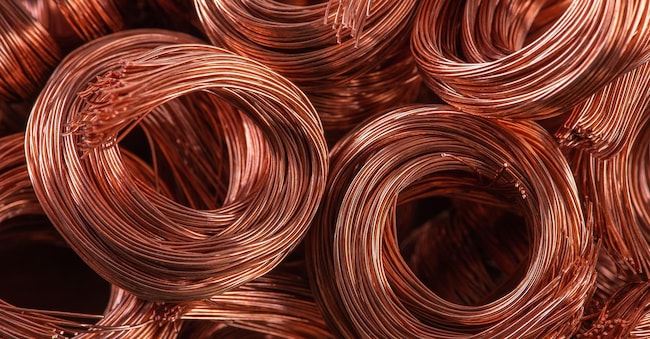
.For instance, the production effort to supply Kiev with heavy artillery ammunition - the 155 mm NATO-standard bullets, of which stocks are now almost exhausted - could further increase consumption of copper, a metal that is already in high demand due to the needs dictated by decarbonisation and artificial intelligence, to a not insignificant extent.


