
Fruit and vegetables, how Sicily aims to escape from the commodity trap
From hydroponics to drones, from 5.0 plants to distinctive packaging: in south-eastern Sicily, agricultural innovation becomes an industrial strategy to reduce uncertainty, defend value and transform traditional products into governed and recognisable supply chains
by Nino Amadore
Key points
There is a line that crosses south-eastern Sicily, from Portopalo di Capo Passero to Ispica, and that tells of a paradigm shift in Mediterranean agriculture. It is not a line made of slogans, but of technical choices, investments, work organisation and - only at the end - of brands.
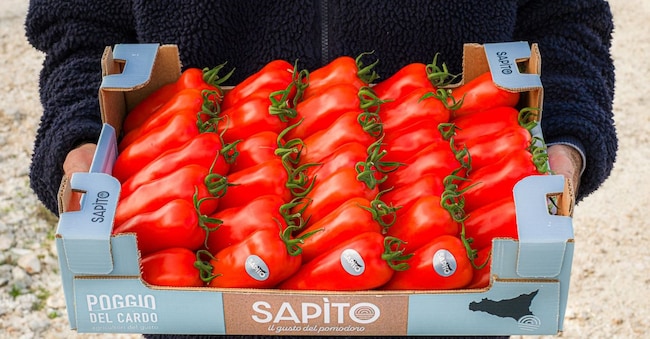
This is the line that unites the Di Natale brothers with their 'Sapìto' tomato, Ioppì's 'Cucù' cucumber project and Fonteverde's technological conversion in the Ispica area. Different stories, different products, but a common question: how do we get out of the commodity trap?
Loading...
Over the commodity, into the process
The stories we tell have a common trait: they do not start from the brand, but from the control of the process. Brand, international cooperation, technology, work organisation are tools to reduce uncertainty and defend value.In a context of climatic volatility, cost pressure and global competition, agricultural innovation is not a fad. It is a strategy for survival and repositioning.The tomato that no longer wants to be a commodity, the cucumber that changes its name, the carrot that switches to 5.0 systems, the olive growing that uses drones: these are pieces of the same transformation. The new Mediterranean agriculture begins when those who produce decide to no longer accept anonymity as their inevitable destiny. When the product is no longer just calibre and price, but the result of a governed production system.And when the process is governed, the name is not marketing. It is responsibility.
Overground Tomato Reducing Uncertainty
Vincenzo and Valeria Di Natale grew up among the greenhouses of Portopalo. For years their company has done what almost all fruit and vegetable companies in the area between Pachino and Portopalo do: grow well, deliver to the markets, accept the price. In fresh produce, the tomato is a commodity: variety, size, daily price. The producer's name rarely plays a role.
The discontinuity stems from a technical rather than commercial choice: growing exclusively in hydroponics. Above ground, inert substrate, calibrated fertirrigation, monitored parameters. In an area characterised by strong light, constant ventilation and water with a brackish component, agriculture has always been a balance between natural vocation and adaptation. Hydroponics introduces a new element: programming.


Brand connect
Loading...
