
From cultured Coimbra to the vineyards of Viseu, discovering the Beiras region
The route covers the central part of the country: from the Atlantic Ocean to the Spanish border via the characteristic Aveiro known as the 'Portuguese Venice'.
5' min read
5' min read
There is a Portugal that does not overlook the ocean, but shows itself in its most authentic form. A journey that begins in Coimbra, which preserves the oldest university memories, continues in the colourful lagoon of Aveiro, also known as the Portuguese Venice, and ends in the silent Viseu, a town of art treasures surrounded by the Dão vineyards. These are three of the iconic locations of the Beiras, the central region of Portugal that stretches from the Atlantic Ocean to the Spanish border and preserves a wealth of history, culture and nature. Both Coimbra and Aveiro are connected by fast trains with Lisbon and Porto, which can be reached by direct flights to Italy.
Coimbra, Portugal's oldest university
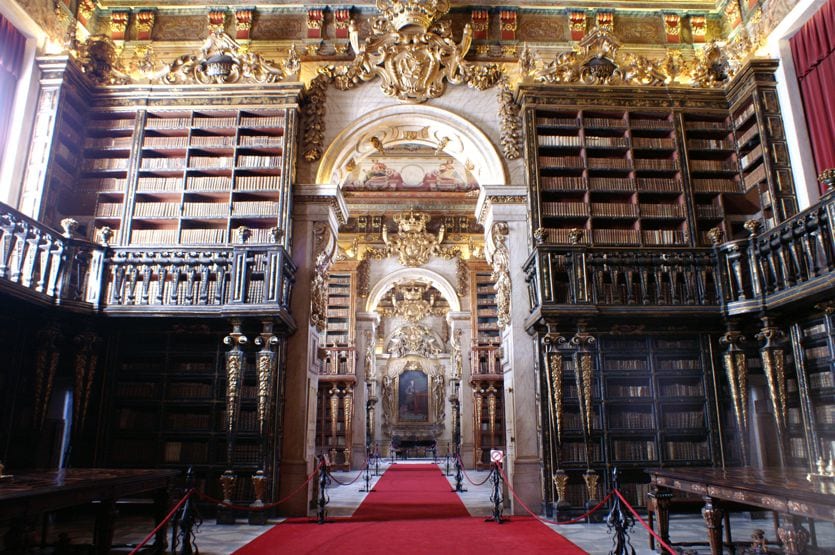
.Students in black robes walk the medieval streets as they ascend and descend the historic centre of Coimbra, home to Portugal's oldest and most prestigious university, perched on a hill and on the banks of the Mondego river. It is quite common to see university students honouring their achievements, especially in the last week of May when they attend the Queima das Fitas, the academic festival celebrating the end of the academic year and the beginning of the month before final exams. Cheerfulness and goliardia invade the city's historic centre, with a succession of events, including the traditional burning of togas, festivities, floats and serenades. To regain a bit of silence, one has to wander through the astonishing halls of the highest expression of Portuguese Baroque, the Joanina Library, which welcomes visitors into a world of culture that for centuries has seen academics of all faculties come and go. The building, in honour and memory of King João V who authorised its construction, completed in 1728, is divided into three floors housing 60,000 volumes, dating from the 16th to the 18th century and representing the best of what was printed in Europe between the 15th and 18th centuries, some books can still be consulted today on the electronic catalogue. In addition to the library, a visit to the Royal Palace is recommended: built at the end of the 10th century, it became Portugal's first royal residence in 1131, inhabited by the first king Afonso Henriques; in 1544, during the reign of King João III, the University was installed in this building. Equally impressive, the Chapel of St. Michael, located next to the library, boasts a harmonious space with a splendid Manueline-style portico and is best known for the azulejos that adorn the nave. In the university's large courtyard stands the symbolic Cabra Tower. Thirty-three metres high, it was erected in the 18th century and takes its name from the ancient bell that once marked every moment of student and city life. Sé Velha, the old cathedral, is also a masterpiece of art; an imposing 12th century building in the Romantic style, which retains the appearance of a fortress and is decorated inside with traditional azulejos. Sé Nova, on the other hand, is the new cathedral, work on which began in 1598 with the Jesuits and ended a century later.
Loading...
Aveiro, Portugal's Venice in Colour
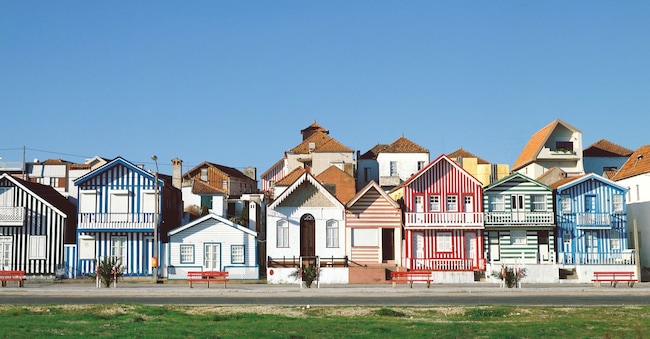
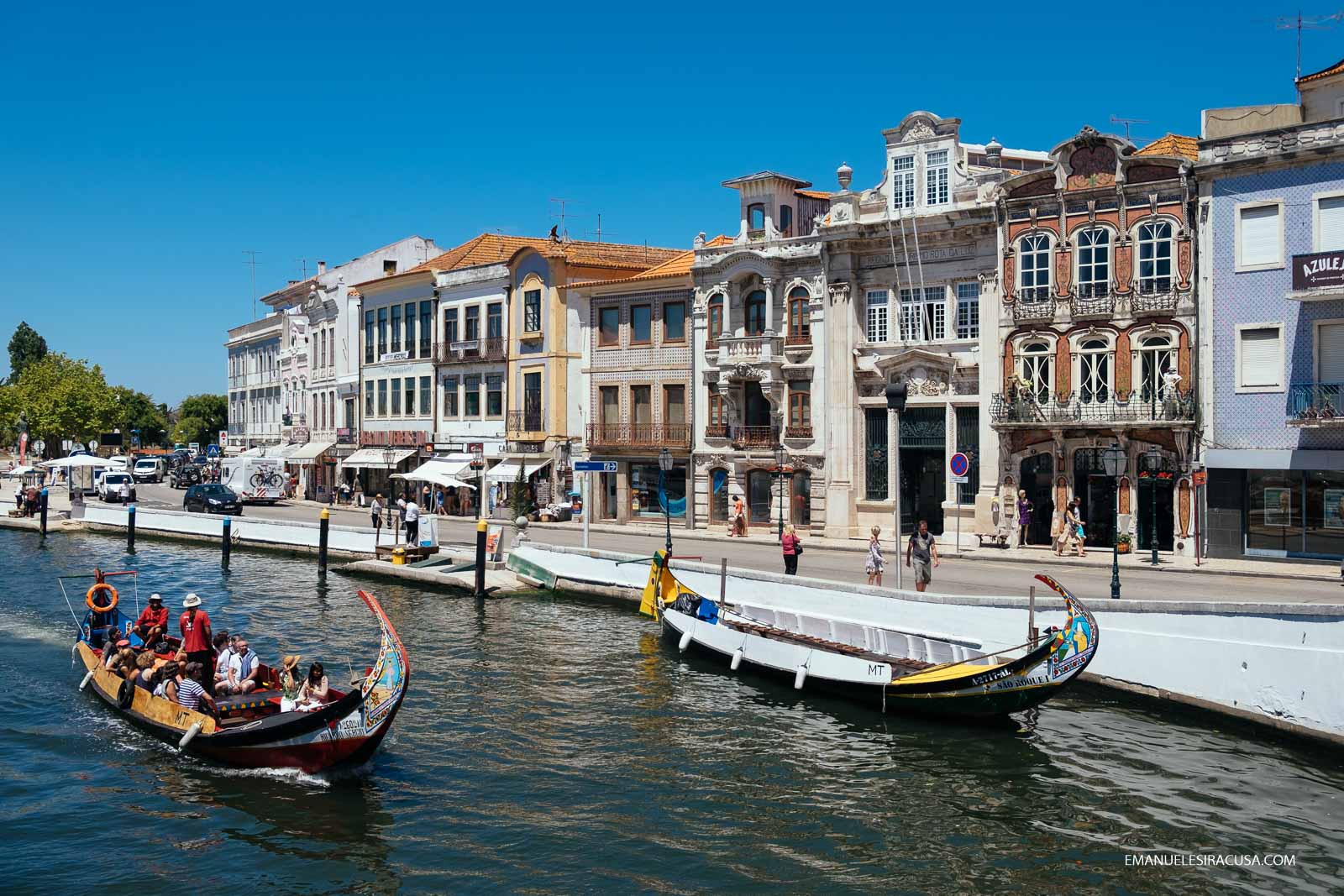
.It is the colour that surprises as soon as you arrive in Aveiro, that of the Art Nouveau façades, of the hand-painted moliceiros. This lagoon city is a world suspended between the sea and tradition, the presence of canals flanking enchanting Art Nouveau buildings and on which navigate the moliceiros, the traditional flat-bottomed boats used at the beginning of the 19th century for harvesting seaweed and now transporting tourists, an atmosphere that easily likens the Portuguese town to Venice. Situated in a ramified marshland area, the Ria, which over the centuries has always been at the centre of the local economy for the fish and salt harvested in the salt pans, today the area has been the focus of redevelopment: the old huts used by fishermen have become wooden dwellings whose facades are painted in bright colours. The heritage of Aveiro's Art Nouveau artistic movement is reflected in every corner of the city. Among the most emblematic buildings is the former Convent of Jesus, which housed an order of cloistered nuns from 1461 to 1834 and is now home to the Arte Nova Museum with its elegant building characterised by 17th century tiled walls. A museum centre that invites visitors to reflect on the Art Nouveau aesthetic revolution through temporary exhibitions and a permanent collection ranging from paintings to sculptures, from wooden objects to furniture and silver, dating from the 15th to the 18th century. Equally symbolic of Aveiro's tradition is the Mercado do Peixe, an interesting place to learn about how fishing is a fundamental activity for the city. Fish is sold daily in this city market, which also boasts a restaurant on the first floor where one can sample exquisite seafood dishes. For an excursion, to the north of Costa Nova, the popular seaside resort of Aveiro, we recommend the Reserva Natural das Dunas de São Jacinto, a nature reserve that rises among the sand dunes and, in a loop route of about seven kilometres, offers birdwatching spots.
Viseu city of art surrounded by vineyards
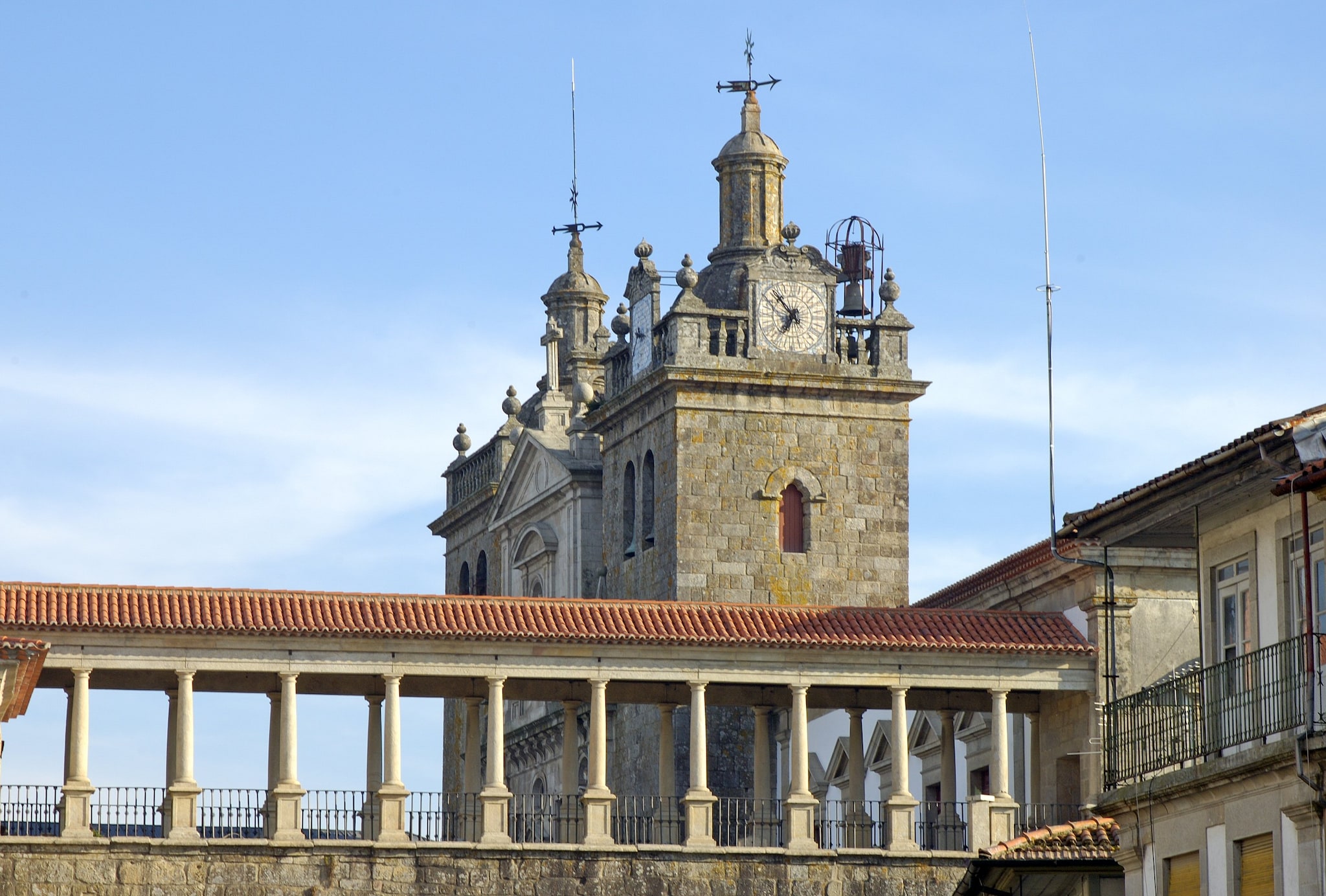
.A hidden treasure of inland Portugal, Viseu reveals itself slowly and quietly to those who wish to discover it. Located 80 km from Aveiro, in the heart of the Dão wine region, known for its light, fruity reds, the city is surrounded by beautiful hilly landscapes. With a medieval historical centre, a maze of streets converging towards the cathedral, which is characterised by a harmonious and imposing ensemble including a graceful Renaissance cloister and a Manueline-style vaulted ceiling. Next to the cathedral, located in the former Episcopal residence Paço dos Três Escalões, the Grão Vasco National Museum houses the works of the talented Viseu artist, Vasco Fernandes (1475-1542). The establishment of the museum took place in 1916 out of a desire to preserve valuable objects by the artist, such as the valuable paintings in the cathedral. The museum houses a collection that includes works of art of various types and chronology; the main one consists of a remarkable series of altarpieces from the cathedral, from churches in the region and from deposits of other museums, all by Vasco Fernandes. It also includes figurative objects and media originally intended for liturgical practices (painting, sculpture, jewellery and ivories, from the Romanesque to the Baroque period), plus an important collection of 19th and 20th century Portuguese painting. To the east of the city, the Parque du Fontelo, with a wooded area of over ten hectares, is the largest public green space in Viseu, ideal for finding the silence that characterises this town.
Copyright reserved ©


Brand connect
Loading...
