The interview

'From currency to defence, from rights to politics: Big Tech occupies the state'

The alarm of Stanford scholar and former MEP Schaake: technology companies replace governments and influence public choices, Europe reacts

by Fabio Carducci

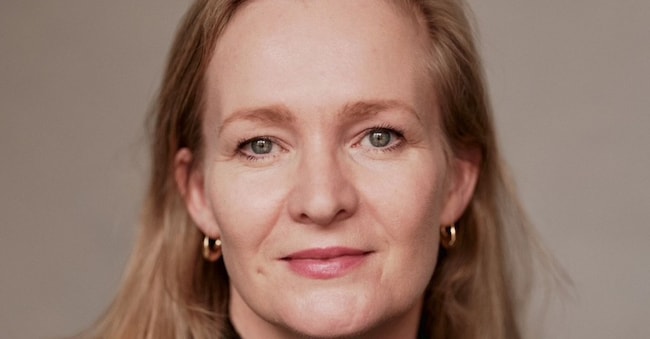
Marietje Schaake Frank Ruiter

6' min read

Translated by AI
Versione italiana

6' min read

Translated by AI
Versione italiana

The now historic image is that of Jeff Bezos, Sundar Pichai, Elon Musk, Mark Zuckerberg and Tim Cook seated in the front row at Donald Trump's inauguration. But the occupation of power by Big Tech goes far beyond the symbolic pictures: from currency to national security, from civil liberties to politics, the big private technology companies have now accumulated such power as to override the sovereignty of governments in key areas of democratic life, enacting a creeping 'coup d'état' that needs to be recognised and fought against. This is the alarm raised by Marietje Schaake, professor of international politics at the Stanford Institute for Human Centered Artificial Intelligence and member of the US university's Cyber Policy Centre. She urges Europe to use its institutions and businesses to guard a strategic front at the crossroads between economic policy and the free market, technology and democratic values. Also corroborating the analysis is his past experience as a member of the European Parliament representing the Dutch Liberal Party.

"Il colpo di stato delle Big Tech", his latest book, was also recently published in Italia (Franco Angeli editore). But the chronicles offer new evidence of the 'coup d'état' every day, between Trump's social statements and the pervasive advance of AI models, the political proclamations and economic offensives of Silicon Valley's leaders, the rise of technology on Wall Street despite the war with Iran and fears over maxi investments. The latest paradox? For a few weeks now, Trump himself has been thinking of regulating the introduction of the powerful new artificial intelligence models.

Loading...

Big Tech, with their leaders neither elected nor democratically accountable, now exercise key functions traditionally reserved for states. Can you give us some concrete examples?

Today, we see these very powerful technology companies making decisions that serve their commercial interest, but at the same time profoundly affect the public interest of our societies, national security, civil liberties, democracy. Including, for example, decisions on defensive and offensive operations: if we consider that today's conflicts often have a digital component, the decisions these companies make are crucial. A large field of activity that was traditionally a monopoly of the state and intelligence services.

What are the risks for civil liberties?

Another very important area, but one that is not treated with the appropriate weight. We often read that AI raises issues of discrimination. For example, it treats women with lower expectations. If I ask a chatbot 'I am going for a job interview, what salary should I ask for', or 'what ambition is appropriate', it will typically suggest lower salaries and more modest positions for female workers. Then there are stereotypes that result in outright discrimination: people with black skin not recognised by facial recognition systems; AI models that replicate past power relations because they are trained on that data. This has effects on insurance premiums, predictive policing tools, i.e. how the police assess the dangerousness of a suspect. These are known problems, yet these technologies are being used. This creates a situation where companies make very important decisions, while states and democratic institutions are effectively bypassed.

At the beginning of his book, he writes that Big Tech actually opened up a position in the White House. Musk has however left that role. Does he think this changes anything or is the problem more structural than personal?

It is a structural problem. Everything I write in 'The Big Tech Coup' was already urgent before Trump's re-election, because I see enormous power in the hands of private individuals. Today, however, tech tycoons - Silicon Valley, crypto, venture capital, CEOs - have been brought into key decision-making roles also because of corruption: Trump allows them to buy influence and receives support from these figures. Companies think that the more they please the president, the more they will benefit. We see this with figures from the crypto world such as David Sacks (financier and chairman of the US Presidential Council of Advisors on Science and Technology, ed), with Peter Thiel (Palantir Founder and financier) behind the scenes, with Mark Zuckerberg (Facebook) who has changed corporate policies to align with the Trump administration.

Who is using whom, between Trump and the leaders of these companies?

The real question is: how much is opportunism and how much is a real opening up of space by Trump to deeply anti-democratic, anti-European ideas? Some want to create alternative models of governance: 'networked' states, city-freedoms, corporate models with CEOs instead of democratically elected leaders. Many ask: who is really in charge in the United States? Is Trump using these billionaires or are they using him? Either way, it is very bad for democracy. It is difficult to see where the power really lies, but in either case the citizens are ignored, the rule of law circumvented: this is very dangerous.

Social media describe themselves as neutral intermediaries, but they can be very powerful 'selective' amplifiers.

They have never been neutral. What is good for society - public health, security, democracy - does not necessarily coincide with what generates profit. The selection of content is decided by the platforms, often for commercial reasons. Today, however, we see something more: the political agendas of these US CEOs (there is also China, but most of the platforms we use are American) explicitly influence the algorithms. So that the content we see does not only serve to make profits but also to pursue political outcomes. Musk is an example: he and the Trump administration have argued that the EU must be weakened and that far-right nationalist parties must win. We have a serious problem: platforms are the infrastructure of our public debate. Even the mainstream news media depend on them and are vulnerable to the overwhelming power of platforms. And then there is TikTok, now central especially for young people, now in the hands of a coalition of Trump supporters. These are explicit tools of influence: we in Europe must not be naive.

From your point of view, is AI primarily a weapon in the hands of 'coup leaders' or can it also defend democratic institutions?

It can be both. 'AI' is now a generic term. It is now also in social platforms and search engines. We have to distinguish between generative AI (such as OpenAI or Anthropic) and applied AI. Generative AI is addictive: you use the service, you share data, which is reused. Applied AI, on the other hand, can remain under the control of the user. And then use counts: a hacker can use AI to attack systems, a cybersecurity expert to defend them. You can't generalise: you have to look at design, incentives, data and usage and who is in control.

 European regulation is often criticised as being too rigid. Is it really effective in limiting the power of large technology corporations?

We should regulate power more, not just market distortions. And regulation is often too reactive: fines are eventually billed by big tech as simply an additional, relatively harmless economic cost. An important exception is the Digital Services Act, especially for transparency on algorithms. It is no coincidence that it is the one most contested by the Trump administration. In general, however, regulation has been too weak and has not created sufficient European alternatives. This is the real problem: our dependence undermines sovereignty, security and democracy. We must have more European alternatives in cloud, infrastructure, cybersecurity, AI or satellites!

According to Big, regulation hinders innovation. Why do you disagree, and what innovation should democracies promote?

It is a caricature. Many innovations arise precisely from regulation: think of sustainability, electric cars, healthcare. Paradoxically, even digital platforms exist thanks to rules that limit their responsibility. Silicon Valley owes a lot to regulation!

Is there a real risk that Europe will end up exchanging lower tariffs for weaker digital rules?

Yes, it is a real risk. European companies want stability and less conflict. But Trump respects strength, not weakness. The European strategy has not worked.

You argue that cryptocurrencies undermine fiscal and monetary policy. Is it realistic to restrict them?

The sooner action is taken, the better. The more this shadow economy grows, the harder it is to control. Many ordinary people invest thinking it is a 'golden goose' and lose real savings. The benefits go to the top, while the risks go to the citizens. Moreover, they are ideal tools for criminal activities. And, systemically, they create risks beyond the control of economic policies.

Among the solutions you propose are the adoption of the precautionary principle, which allows the EU authorities to take protective measures when there is a potential danger to health or the environment, and then restrictions on anti-democratic technologies, the creation of public digital infrastructures, greater transparency/accountability, and stronger democratic control. What can citizens do?

Political leadership is crucial. But technology is still not very central in the European public debate. Citizens must demand that politicians have a vision, because technology affects the economy, security, health, democracy. We are dependent on foreign platforms. Even European pension funds invest heavily in US Big Tech. We need awareness, political pressure and also consumer choice. A movement is growing. But politicians must lead.

Copyright reserved ©
Loading...

Brand connect

Loading...

Newsletter

Notizie e approfondimenti sugli avvenimenti politici, economici e finanziari.

Iscriviti