
From design for all to design for each: how the vision of disability is changing

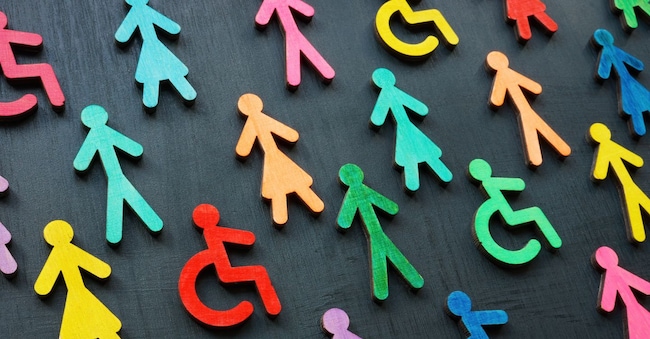
La disabilità è oggi più che mai visibile e centrale nelle società occidentali: se ne parla di più e di conseguenza, rispetto al passato, la si nasconde meno. I diritti delle persone disabili sono sempre più al centro dell’agenda politica di istituzioni internazionali, governi nazionali e comunità locali. Tutto questo è senz’altro dovuto all’abbandono di una visione clinica delle disabilità in favore di una prospettiva meno ghettizzante, impregnata di una valenza socio-culturale e generalmente più inclusiva. Sembrano infatti, almeno a livello teorico, molto lontani i giorni in cui un potente attivista come l’afroamericano disabile James Charlton brandiva a piene mani e sventolava il motto Nothing About Us without Us, facendo dell’integrazione delle persone disabili una questione politica imprescindibile, radicata nella volontà di combattere ed eradicare non tanto le barriere, ma le marginalizzazioni quotidiane, gli stereotipi opprimenti e le difficoltà interazionali che queste persone in
The principles of universal design, or design for all, originally intended for application in the architectural sphere, have spread widely and increasingly since the turn of the century, contributing strongly to the redefinition of the concepts of disability and accessibility. That for all, or design for all, is now ubiquitous in the names or descriptions of projects, professional or cultural spaces, and events. To the point that the very concept of for all seems to have become so diluted that it has lost its value.
Moreover, in today's increasingly complex societies, in which accessibility and inclusion are called upon to address ever-increasing numbers and types of people, the concept of 'for all' no longer seems to suffice or work. In short, we can say that there are two major limitations of this concept, as well as of visions based on design-for-all theories. Firstly, it is materially impossible, if not impossible to conceive, then certainly impossible to develop and implement a service or place that is truly for all, also in virtue of the expansion of the concept of disability in recent years. For example, let us think of the school certifications for the support of pupils in schools of all levels: they are increasingly numerous and complex, with the consequent increasing difficulty of drawing a line between disabilities, disorders and various pathologies, where appropriate.
Secondly, creating something that is truly for everyone means creating a place, space or event that can meet the needs of countless types of people, each with their own specificities. As Zallio and Clarkson (2021) argue, universal design requires that a product, service or place be usable by as many people as possible, but this approach "is gradually evolving to incorporate the principles of social equity and diversity". It is precisely in this sense that there is an important perspective evolution today. It is no longer enough to think for everyone, because it is clear that we do not all have needs that can be assimilated or amalgamated. Likewise, it is no longer enough to look at disability and accessibility in generically inclusive and egalitarian terms: it is now more necessary than ever to look at disability as the value and characteristics of each individual.
It is in this sense that there is a gradual and positive movement towards design for each, in which diversity takes the place of the more generic inclusion, without denying the enormous importance of design for all as a starting point for what seems to be in fact a further and positive declination of it. We can only hope, at this point, that these important revolutions of ideas and principles will be matched by more and more real, positive and constructive revolutions at all levels: from the international to the local level. To the real benefit and support of diversity.

