
From end of life to the assembly line: how BMW’s Car2Car project is revolutionising car recycling
BMW’s Car2Car project transforms materials from end-of-life vehicles into new components, bringing the recovery rate to 51 per cent.

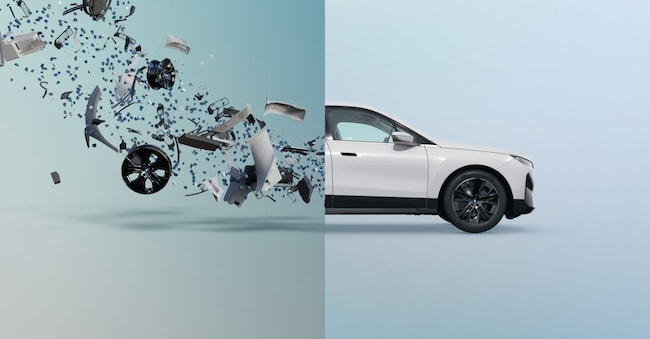
When a car reaches the end of its life, the temptation is simply to treat it as waste to be disposed of. But at BMW, things are changing radically. Thanks to the results of the Car2Car research project, developed in collaboration with a consortium of industrial and academic partners, the Bavarian group has demonstrated that materials recovered from end-of-life vehicles can not only be salvaged, but can also meet the quality standards required to build brand-new cars.
The figures point to a clear turning point. Under standard market conditions, based on conventional dismantling, the material recovery rate stood at a meagre 6 per cent. By applying new process engineering techniques and advanced sorting methods, that figure has soared to 51 per cent. This is not merely a statistic, but concrete proof that a change of course is possible.
A second life for steel and aluminium
The most interesting breakthrough concerns steel. For years, contamination caused by copper residues from cables and connectors has presented an insurmountable obstacle, preventing the reuse of scrap steel from old cars to produce new automotive-grade sheet metal. Engineers have overcome this obstacle by introducing a precision pre-sorting stage, targeted shredding and flawless separation of the alloys.
The result even led to a new patent application. The steel coils produced in this way did not remain merely on paper: they were tested directly at the Leipzig plant, where they were used to manufacture over one hundred thousand standard components for vehicles in production. At the same time, progress was made with aluminium, which rose from 23 per cent to 52 per cent, and copper, which jumped to 68 per cent.
However, it is not all plain sailing. Whilst the infrastructure for metals such as steel, aluminium and copper is now well-established, the world of plastics and glass continues to present significant technical challenges, linked to the complexity of composite materials. Tailor-made supply chains and combined technologies will be needed to bridge this gap.

