From Enigma to Apple One: when collecting is a science
Lots of Apple, but not only. The machines that changed the course of human history are a sought-after collector's item. Real pop icons, even if they are a few centuries old
4' min read
Key points
4' min read
A very special sector in the departments of the major auction houses is that of 'old' scientific instruments. A few decades or perhaps a few centuries old, but united by the common spirit of indomitable research and curiosity. The reference is to machines such as computational instruments, various prototypes, proto-laboratories. Not just nerdy junk.
Collectible scientific instruments: record-breaking proto-computers
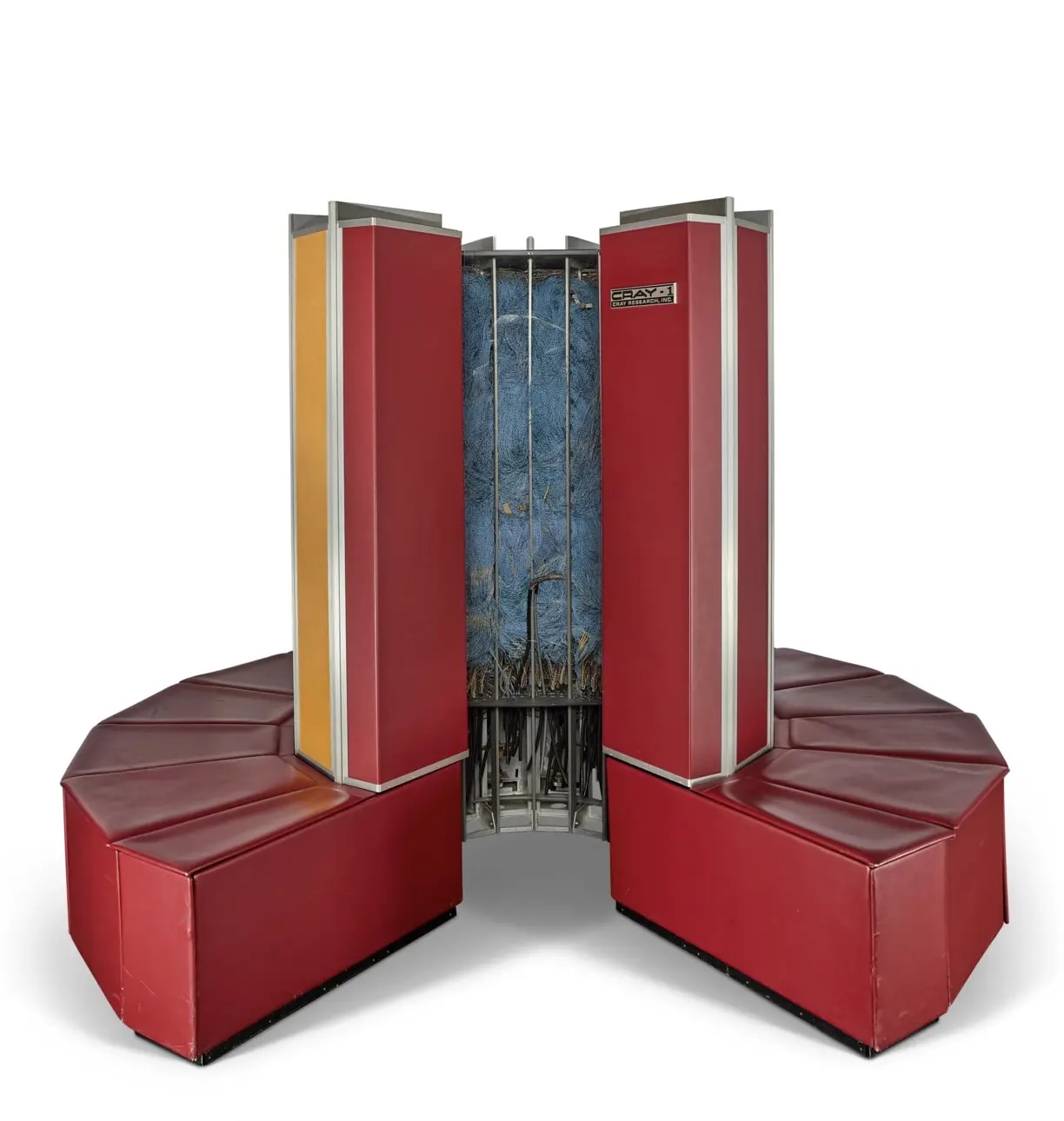
The top lot of the sector at the moment is the Cray-1 super computer, which in September 2024 fetched $1,020,600 at Christie's, in one of the many auctions in which the monumental collection of Microsoft co-founder Paul Allen (1953-2018) was dispersed. The scarlet cabinet (190.5 cm diameter x 287 cm high) is one of only 17 Cray-1s to have survived to the present day (80 were produced) and the first to be auctioned. It was in 1975 that Seymour Cray announced its birth; produced by Cray Research, it cost almost 8 million dollars. At the time of its launch (1976) it was the fastest in the world. It was a milestone in the history of computing and design. Its 'C'-shaped appearance was a break from the rectilinear shapes of previous models, bringing technical improvements. Cray-1 was also instrumental in modelling complex phenomena, from meteorology to nuclear physics.
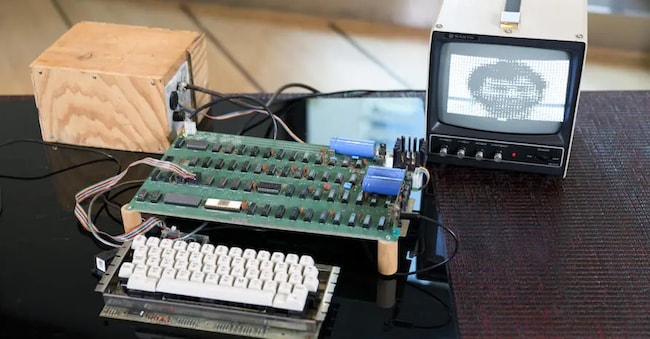
The auction in which it was included, 'Pushing Boundaries: Ingenuity from the Paul G. Allen Collection', offered 36 lots from its owner's visionary universe. A cross-section of the history of science and technology, not excluding works of art deeply akin to that world. Just to name a few lots: a 16th century pilot book ($302,400), the letter that Einstein wrote to Roosevelt ($3,922.000, the auction's top lot), oceanographer Jacques Cousteau's pitch-book for the TV series "The Undersea World of Jacques Cousteau", and artefacts from the race to conquer Space, such as Ed White's astronaut suit cover, the Apollo 8 pilot's flight diary and an Apple-1. The latter - the first pre-assembled personal computer ever offered for sale - fetched a record price of $945,000 at that auction. Another Apple-1, was sold for slightly less ($905,000) by Bonhams in October 2022. These examples were part of the 50 assembled by hand personally bySteve Wozniak, in Steve Jobs's garage, in the summer of 1976. Museum pieces and, in fact, it was the Henry Ford Museum that acquired the lot from Bonhams. The lot also included ephemera (ephemeral material such as flyers, posters, tickets, etc.) from the 'Cincinnati Apple Siders' (a group founded in 1977) and a video recording of Wozniak's speech at the 'Applevention' in 1980.
Auction houses increasingly look to 'scientific' collectables
."The departments of the auction houses to which all this wonderful 'nerdy hardware' belongs are the science and technology departments. The one at Christie's is headed by James Hyslop. We ask him which type of object is the most sought-after by collectors, whether the earliest 'archaeo-tech' machines (e.g. Hansen's writing ball, 19th century) or pop modern antiques such as early Apple creations, undoubtedly cult objects even among design enthusiasts. "The most sought-after objects in the history of technology are those you can point to by saying 'this changed the world'," he replies. "The first Apple computers were made in only 200 units. Fifty years later, their products are everywhere.... From my desk, I can see three of them, and I can trace their history back to those revolutionary (and now very rare) Apple-1s." Sotheby's also finds a similar behaviour in its clients: according to Cassandra Hatton, vice-president of science and natural history, 'demand always picks up around the truly iconic and historically important pieces with a significant provenance'.
The offer is also strengthened in Italy
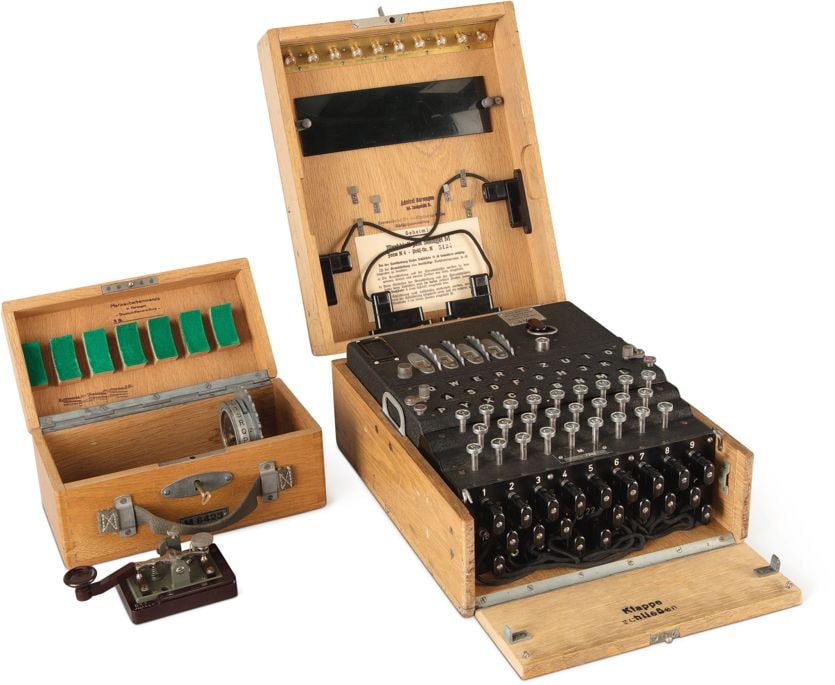
.Of the "cultural resonance" and "symbolic value" of these objects that have shaped our contemporaneity speaks Stefania Pandakovic, head of the new Discovery & Tech department of Il Ponte (Millon Group), recalling "the affection, awe and admiration surrounding the first Apple One", and the iconicity of Marconi's radio. Among the icons proper, one cannot fail to mention Enigma, 'the machine that changed the fate of the Second World War, or even an Olivetti typewriter. At the same time, 'archaeo-tech' - scientific instruments, calculating machines, optical or measuring instruments from the 19th and early 20th century - retain a timeless fascination among scholars, museums and historical collectors,' the expert continues. The current record price for Enigma is currently $800,000 (Sotheby's, 2019); in June, a German collector bought one from Bolaffi for €95,000.