
From EU bigwigs over 130 billion coupons in ten years
Unipol tops Tsr, Generali the stock market rally, Allianz tops dividends and Zurich the highest growth in operating profit

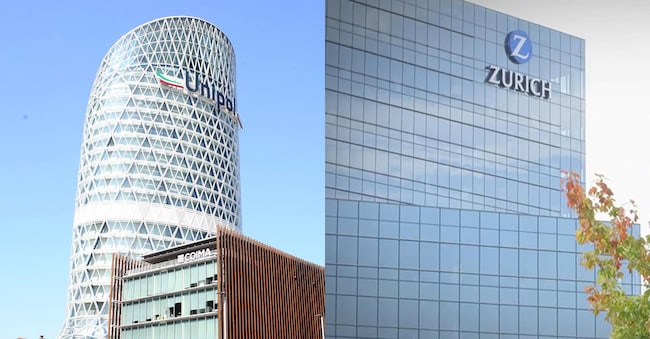
The highest total return shareholder? Unipol. The most extreme stock market rally? Generali. The dividend queen? Allianz. The highest growth in operating profit? Zurich. This is the broad balance sheet of the last decade of Europe's leading insurance groups, which, despite a pandemic, the inflationary crisis, two wars and natural catastrophes on the rise, except for the parenthesis of 2025, have demonstrated a resilience that can be summed up in a single number: more than 130 billion in dividends paid out in 10 years. Two lustres with few blemishes and several medals to pin on their chests, each their own. One, however, for all, namely having achieved a total shareholder return in excess of 176% of the Stoxx 600 Insurance.
Primates
So there were those who excelled on the stock exchange, Generali, which marked a 140% increase in capitalisation. Who grabbed the dividend podium, Allianz with more than L45 billion distributed and a 125% leap in coupon per share. And who secured the gold medal on the business strength front, Zurich with a 96% increase in operating profit. In the middle, Axa, with ten challenging years in which it also took up the overseas challenge and focused significantly on the non-life segment, while still managing to keep the rudder straight in the wake of a total shareholder return of 176%.
The Unipol case
In this scenario, then, there is a reality that makes history in itself. The scale is smaller, the dimension is not global, the focus is on just one country, Italia, but this is enough to put on paper a story that on the results front is surprising. Anyone who bought a Unipol share in 2016 and then kept it in their portfolio by reinvesting the dividends would today find themselves with a total shareholder return of 596%, against an increase in statutory profit from EUR 160 million to EUR 1.64 billion, a coupon that rose from EUR 0.18 to EUR 1.12, and a capitalisation of over EUR 14 billion from the initial EUR 2.4 billion. A result that reflects a profound strategic discontinuity. It is no coincidence that the acceleration of vertical growth took place just after the two-year period 2024-2025, the one in which the impact of the management led by Carlo Cimbri was structural, thanks to the simplification of the company through the merger with UnipolSai and expansion in the banking sector (Bper, Sondrio). The proposed 2026 coupon of EUR 1.12 guarantees a dividend yield of 9.12%, one of the highest in the sector.
The big boys' race
It is also superior to Allianz, which from the top in terms of coupons still has a dividend yeld of 5.6% and in ten years has guaranteed its shareholders a Tsr of 255%. Oliver Bäte's management, which has taken total operating profit from EUR 11 billion to EUR 17.4 billion (+57%), has focused on organic growth and strict diversification between insurance and asset management activities. The historical series shows a steady progression, with superior resilience during economic downturns. Unlike more volatile competitors, Allianz has built its value on operational stability, reducing exposure to reputational or systemic shocks.
Management at Generali also continued. Philippe Donnet arrived in 2016 and will celebrate a decade at the helm with the 2026 AGM. A decade during which the operating result has risen from EUR 4.7 billion to EUR 8 billion and the coupon has increased by 105%. A dividend machine capable, therefore, of disentangling itself from internal board tensions and those with strong shareholders (the Caltagirone group and Delfin in the lead) . All this resulted in a Tsr of 261%. If, on the one hand, Donnet ensured the sustainability of the coupon increase, on the other, shareholder activism favoured an acceleration of the price.

