
From FdI bill to lower VAT on art
Waiting for the government to enter into the merits of the fiscal proxy pressing Meloni's party. And the Supreme Court defines occasional speculation as the buying and selling of a Monet

5' min read
Key points
5' min read
The proxy for tax reform (Law No. 111/2023) mandates the Government to reduce the VAT rate on the import of works of art, transposing Council Directive (EU) 2022/542 of 5 April 2022 and extending the reduced rate also to the supply of works of art, antiques or collectors' items.
The legislative decree to be issued by the government would go through parliament to receive the opinions of the relevant commissions. But in the meantime in the Culture Commission....
The proposal is a pressing for the tax delegation
.On 25 July, the parliamentary initiative bill of deputies Alessandro Amorese and Saverio Congedo, both of FdI, was filed. It puts pressure on the government precisely because it has not yet legislated on art, despite the fact that the tax delegation has already been approved a year ago. FdI's initiative bill would have to undergo a long and thorough examination in Parliament with the possibility of being amended with amendments. While with the tax delegation the timeframe would be faster and should be within 31 December 2024, the date from which Italy will have to compete on the European market with a reduced VAT in France (5.5%) and Germany (7%). The purpose of the draft law is to boost the economy of the art and antiques sector by reducing the VAT rate on art, antiques and collectibles. Article 2, in fact, provides for changes to the regulation of the 5% VAT rate on imported works of art, antiques and collectibles and on the works of art listed in letter a) of the Table of Decree-Law No. 41/1995 sold by authors, their heirs or legatees. On the financial coverage front, the charges deriving from the provisions of the law, estimated at €35 million per year starting from 2024, will be covered through funds allocated to the Ministry of Economy and Finance.
Amorese, leader of Fratelli d'Italia's group in the Chamber's Culture Commission, spoke a few days ago in the Commission, declaring: 'The link between taxation and art is of great importance from several points of view and for various categories operating in the sector, including collectors, gallery owners, museums, consultants and artists. This is why Fratelli d'Italia, aware of the cultural but also economic importance of the entire sector, is continuing its careful study and analysis work, which will lead to a series of proposals aimed at making our nation competitive also in this particular field. We intend, among other things, to work on revising the fiscal discipline on the taxation of the buying and selling of works of art, on which we could intervene, for example, by reducing the relative value added tax. At present, the contemporary art market is shifting its centres of interest towards those countries that have already implemented tax breaks for the sector (France and Germany in particular), with serious penalisation for contemporary Italian culture and creativity, which risk being marginalised within the global art market. Italy has an enormous cultural heritage: we will do our utmost to enhance it in every aspect'.
Court case: when the collector becomes an occasional speculator
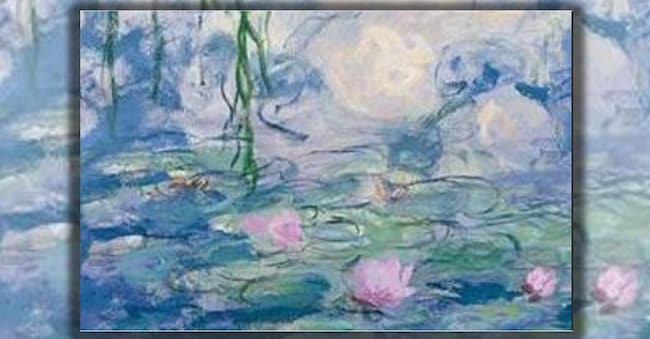
It is a pity that on the legal front there is still no unified line in defining speculative behaviour on the part of the private collector. A few days ago, the Court of Cassation ruled that for a Monet painting purchased for EUR 1.5 million in 2006 and resold after seven years at EUR 6.5 million, capital gains taxes must be paid. The high court rejected the appeal against the Agenzia delle Entrate filed by Ilaria Bastoni, the daughter of Osvaldo (former manager of Marangoni Pneumatici who died at 86 in 2020). For that affair, the same public prosecutor had brought the art collector to trial on charges of tax evasion. From a criminal point of view, however, the matter ended with the extinction of the crime, precisely because the defendant had passed away. The Provincial Tax Commission had also found no wrongdoing.


