From Gemini to TPU clouds: here's how Google wants to be an 'AI-first company
At the Shoreline Amphitheatre in Mountain View, the 2024 edition of Google's historically most important event is on stage. Here's what's new

5' min read
5' min read
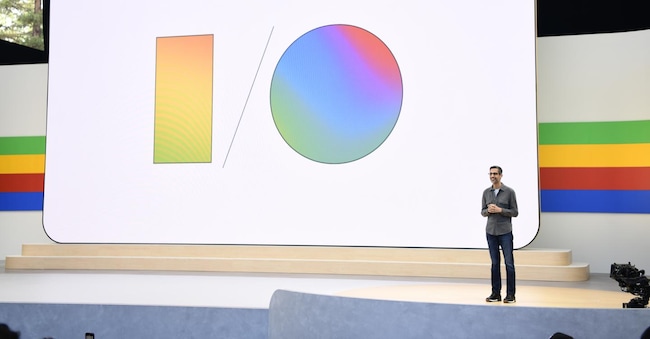
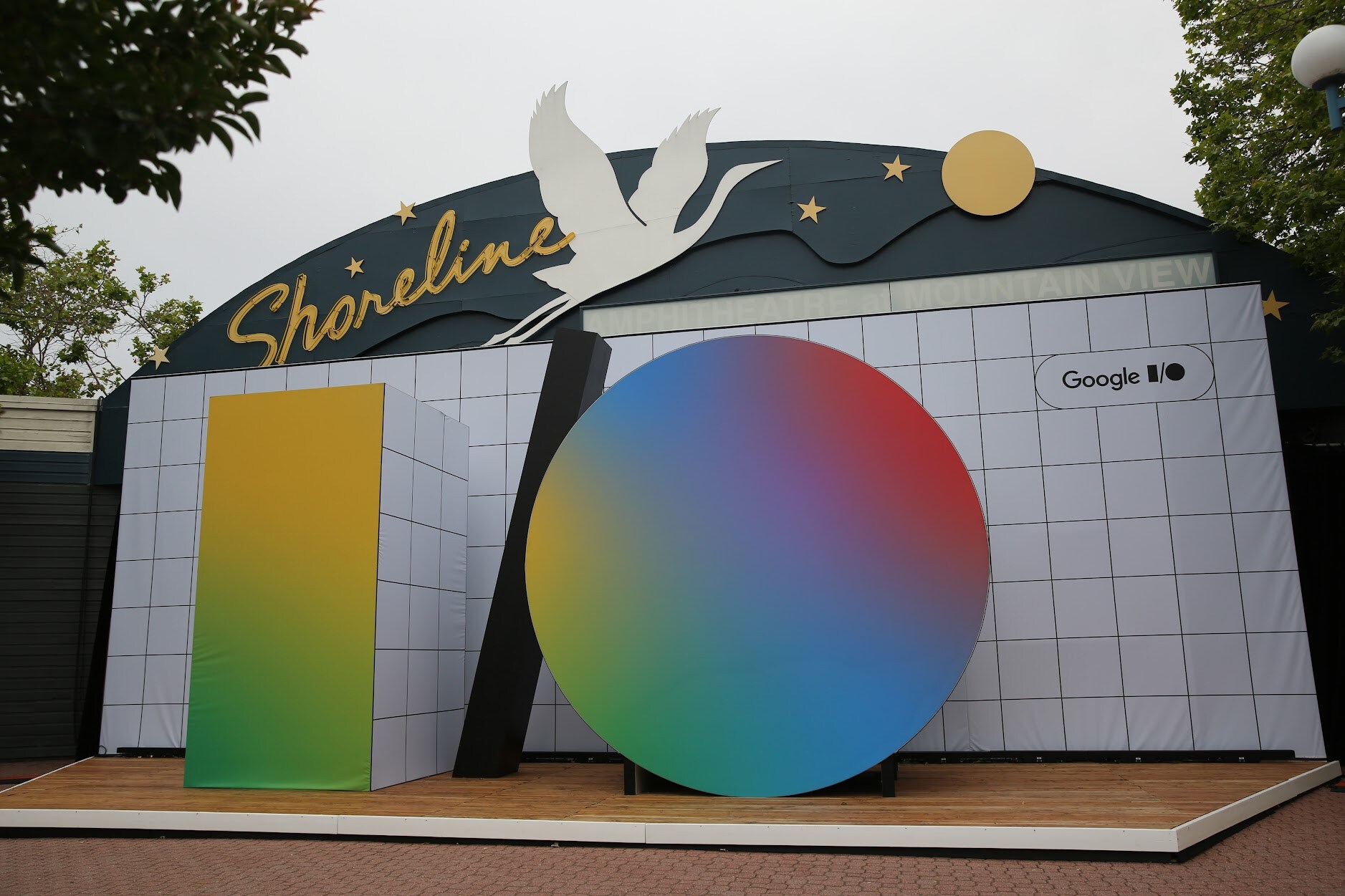
At the Shoreline Amphitheatre in Mountain View, the 2024 edition of Google's historically most important event is being staged, namely I/O, the appointment with the boundless community of developers working on the Californian giant's galaxy of applications and platforms. At this round, BigG had to reckon with OpenAI's announcements two days ago, concerning the new GPT-4o model and the promise, signed by Mira Murati (the Chief Technology Officer of the company financed with 12 billion dollars by Microsoft), of an even faster, more usable and, above all, freely available multimodal artificial intelligence for all. Once the 'danger' of the dreaded search engine bang had been averted, the CEO of Google and Alphabet, Sundar Pichai, and the other executives called to speak on stage focused their attention on the Gemini-related innovations and made AI, as was to be expected, the leitmotif of the busy round of presentations.
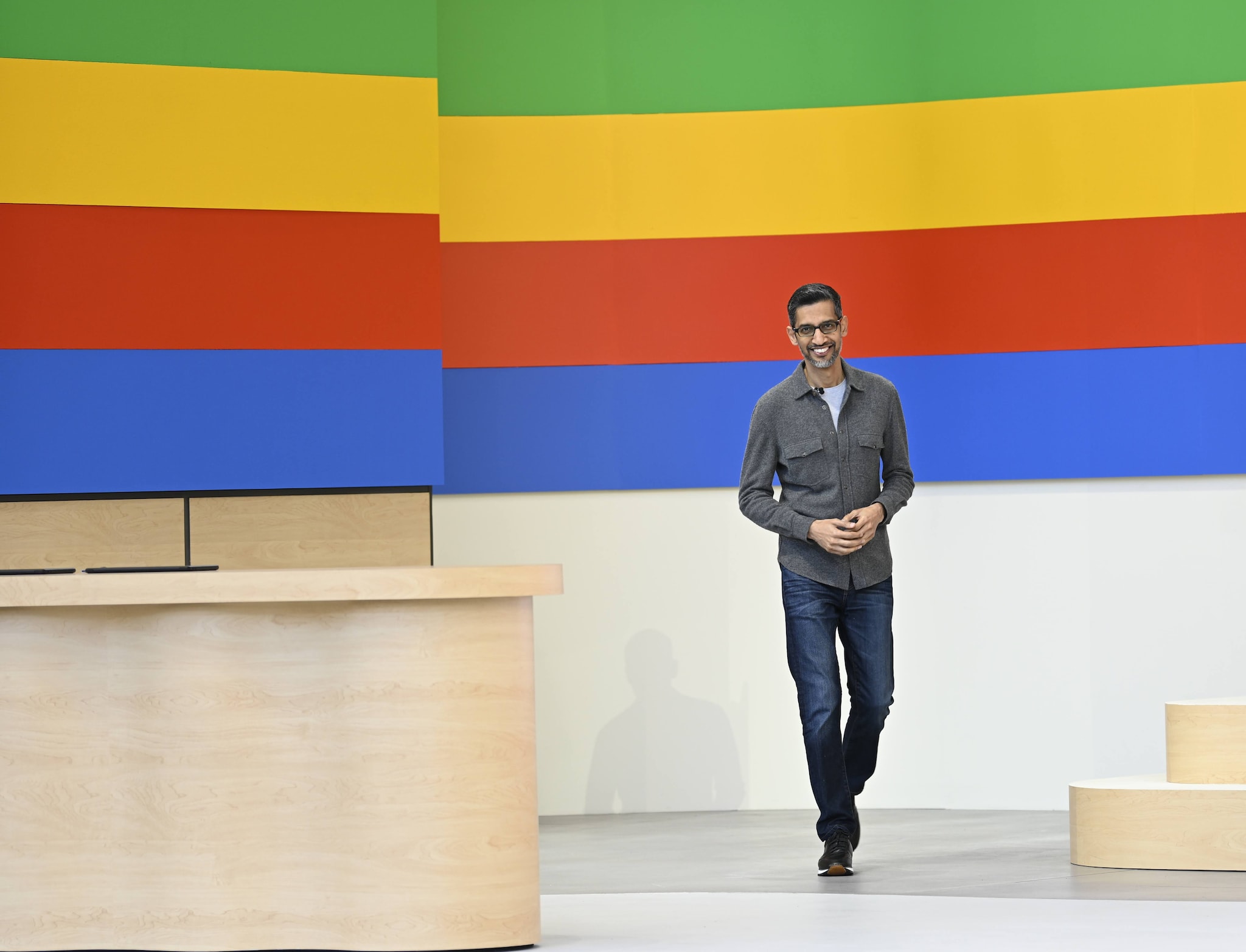
Pichai: 'one million testers for Gemini Advanced'.
The promise launched years ago by the CEO (again at I/O) regarding the migration of vision from 'mobile first' to 'AI first' has repeatedly been a topic of discussion, with Google 'accused' of lagging behind in the application of large-scale language models and consequently not keeping up with the competition in rethinking all its products (for a user base of nearly two billion globally) in the logic of machine learning and generative technology, making the latter widely available and easily accessible. The acceleration imparted by the company in the last twelve months, with the release of the basic models of the Gemini family and the integration of the chatbot in the main Google apps and on board Android mobile phones (replacing the old Assistant) has found a sort of confirmation in the last few hours, giving substance to Pichai's idea of transforming Google into an 'AI first' company. "Our model," the CEO explained in a confidential press briefing, "was built from the ground up to be natively multimodal across text, images, video, code, and more. I see this as a big step forward in turning any input into any output, and we have since made a number of quality improvements in different areas such as translation, reasoning, coding, and more, achieving cutting-edge performance on all benchmarks." Pichai then went to the numbers, confirming that there are now more than 1.5 million developers using Gemini, and that the 'porting' of Gemini 1.5 pro to the Gemini Advanced version (available in 35 different languages) involved more than one million testers in just three months.
More intelligence for Workspace apps
The Google CEO then highlighted what he said was the most exciting transformation made possible by Gemini, namely search. "We have answered billions of queries," Pichai pointed out, "as part of our generative search experience, including the longest and most complex ones, and this week we will launch to all users in the United States - and soon in several other countries - a completely new search experience with AI Overview, for which we expect to exceed one billion users by the end of the year. The objective, in short, is clear: to play ahead of the competition (read Open AI) and radically change the way of finding information within applications, starting with Google Photos, which from the summer will be enriched with a function that will ask it to show the most important moments relating to one of the contacts in the address book with a simple command. "We are making great progress towards our ultimate goal of infinite context," the CEO added, making it clear that the increased intelligence brought in by Gemini will show its effects in all Google Workspace tools, from Gmail to Meet. It will thus be easier to summarise all messages related to a given contact in a clear summary in the background, identify the most relevant e-mails, or even get a summary of key points and actions to be taken by analysing attachments. Gemini will also make text-to-speech models much more productive by generating a customised and interactive audio conversation, in which one can also participate, from a selected dataset of source material.