
Innovation breathes new life into waste to avoid landfill
Alcohol, agribusiness, heavy industry, utilities: projects with universities advance to valorise secondary raw material
by M. Cristina Ceresa
 Aggiungi Il Sole 24 Ore
ai preferiti su Google
Waste materials are no longer perceived only as a disposal cost. "Many of them can be recovered or valorised as secondary raw materials, reducing waste and favouring circular economy models". Andrea Cavagna, co-founder of Rifiutoo cloud-based management software for corporate waste, reflects on the potential of his sector, pointing to the 75% of 11 billion tonnes of waste that worldwide - according to Bank of America Merrill Lynch - still ends up in landfills or incinerators every year. Opportunities, but also new production models with secondary raw materials, which tomorrow could be worth as much as gold: questions of industrial strategies, markets, but also environmental policies to which technologies such as artificial intelligence, blockchain and advanced traceability, Internet of Things and biotechnologies are contributing.
Take the beer and whisky industry: the London-based company Arda Biomaterials recovers the 'spent' grains from the production of these spirits, transforming them into new grain, which is a material similar to leather. Projects such as these occur when another fundamental process of the circular economy is triggered, namely the industrial symbiosis that brings together producers from one world with performers from another. In this way, specialisations are expanded, using the tools and machinery that one has in the factory. This is what happens at the Apulian distillery Bartin, which specialises in grappa, but is now testing, thanks to a project of the Aldo Moro University of Bari, the residues of dairy production to transform them into bioethanol.
The European project Polymers 5B, financed by Cbe Ju with EUR 5.6 million and coordinated by the University of Lisbon, starts instead from agro-food waste such as tomato peels, grape pomace and olive pomace to arrive at biobased and biodegradable polymers through biocatalysis and green chemistry processes whose scale-up is in the hands of the Italian NbsProject.
Ma anche l’industria pesante sta lavorando a procedure di smaltimento mille miglia lontane dalle discariche. Inerti e scarti di plastica rinforzata tra i più attenzionati. Sui primi sta lavorando Haiki+ che con l’insieme delle quattro divisioni - Electrics, Mines, Cobat e Metals - gestisce nel nostro Paese oltre 600mila tonnellate di rifiuti l’anno. Per smaltire adeguatamente cartongesso, inerti e materiali compositi «è stato aperto a Lodi un impianto» ricorda Giovanni Rosti, ad di Haiki+ che nel 2026 inaugurerà a Novara - sostenuto da un finanziamento Pnrr - un impianto per il fine vita degli scarti tessili. Il business plan dell’azienda conta su un dato rilevato dalla IV Edizione dell’Osservatorio Clean Technology 2025 che constata come gli investimenti in processi di economia circolare siano passati dal 16% nel 2023 al 27% nel 2025. Le soluzioni più adottate in questo ambito includono il riciclo di scarti e sfridi di produzione (82% nel 2025 rispetto al 61% nel 2023) e l’approvvigionament
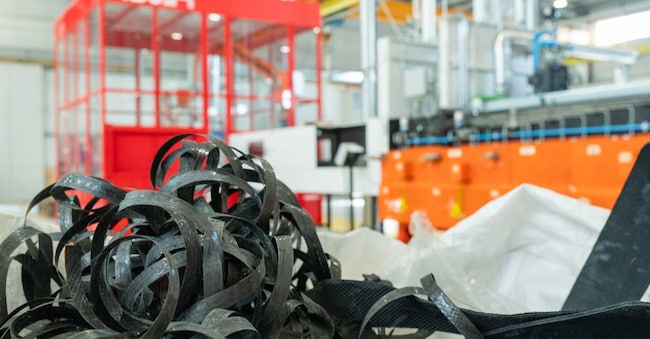
Demanufacturing e reprocessing di materiali plastici rinforzati con fibra di vetro o carbonio sono oggetto di un paio di studi dal Politecnico di Milano supportati da finanziamenti europei. Secondo Marcello Colledani, docente del dipartimento di meccanica e ingegneria, negli ultimi anni la produzione di questi materiali plastici - i Gfrp per intenderci - è aumentata di circa il 2% all’anno, mentre quella dei materiali rinforzati con fibra di carbonio (Cfrp) ha registrato un incremento del 10-12% annuo. Deremco e la mobile plant, battezzata YouRban, agiscono con processi di lavorazione meccanica su pale eoliche dismesse, componenti per l’assemblaggio degli apparati elettrici o elettronici, elementi di rivestimento per interni ed esterni o utilizzati in ambito automotive e diventano sedute, complementi, lampade, sci, protezioni per macchine agricole, scaffalature per camper, packaging, pedaliere per auto.

