
Italia’s most beautiful villages contribute 5 billion to GDP and 2 billion to the tax revenue
According to a Deloitte study, digitalisation and remote working are key strategies for tackling the still widespread problem of depopulation

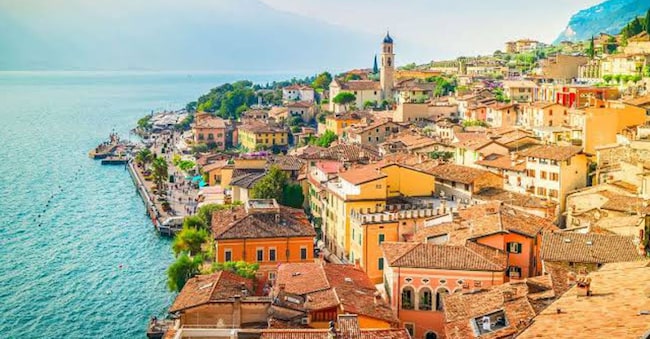
From the north to the south of the country, nestled in the mountains or amongst green hills, on the outskirts of major roads and along centuries-old routes. Sometimes tiny yet splendid in their authenticity, steeped in history and tradition. These are Italia’s Most Beautiful Villages, which are becoming increasingly important economic and social assets for the country, with digitalisation and remote working emerging as strategic levers to combat depopulation. This is revealed in the study ‘The economic and employment impact of tourism and digitalisation in Italy’s Most Beautiful Villages’, carried out by Deloitte in collaboration with the association ‘I Borghi più belli d’Italia’.
A heritage worth preserving
“The figures confirm that our villages are not just a heritage to be preserved for their uniqueness and cultural value, but a tangible opportunity for economic and regional development,” explains Marco Vulpiani, Economic Leader at Deloitte. Our analysis of ‘Italia’s Most Beautiful Villages’ shows that they contribute 5 billion to GDP, 2 billion annually to the tax revenue, and provide employment for around 91,000 people. The most beautiful villages represent only a fraction of the total number of villages nationwide (382 out of approximately 5,500), so the contribution of all villages combined is even higher, confirming the importance of this sector to our economy.”
A 50% increase in added value in Lazio
An analysis focusing on Lazio shows that, although the ‘most beautiful villages’ account for only 11 per cent of the total number of villages (24 out of 217), they nevertheless account for around 50 per cent of the added value generated by all the villages in Lazio (84 million out of approximately 174 million) and provide around half of the employment generated by all the villages (1,568 out of 3,253). All this demonstrates how better-maintained villages that are more attractive to tourists can play a key role in the regional economy.
Depopulation shows no sign of abating
Despite playing a vital role in the economy, villages continue to suffer from depopulation: the population is forecast to fall by an average of 4.4 per cent per year, compared with a national average of 2.2 per cent. This trend does not appear to have been mitigated by the positive rediscovery of the benefits of working life in villages, which emerged during the Covid-19 pandemic with the adoption of remote working made necessary by the pandemic. Studies carried out following the pandemic have shown that 42 per cent of respondents would prefer to live in an isolated location close to nature, 35 per cent in a small town, and 22 per cent would be willing to take a pay cut in order to work remotely in such a setting. Although there are currently no signs of a reversal in this trend of depopulation, fibre-optic infrastructure could play a role in so-called ‘market failure’ areas – the ‘white areas’ – where the private sector would not invest.
Ultra-broadband: 92% of villages to be connected by 2025
The expansion of fibre-optic coverage – set to reach 92 per cent in the most beautiful villages by 2025 – marks a turning point: “Today, the digital infrastructure enables these villages to compete with large cities, attracting remote workers and fostering the development of innovative businesses,” adds Vulpiani.


