From LLama to Muse Spark. Meta tries to re-enter the AI race
After the difficulties of Llama and the pressure on costs, social and growth, Meta launches Muse Spark. The aim: to turn the enormous wealth of content, users and creators into a competitive advantage against OpenAI and Google.
For years Meta had an advantage that no AI Big could buy: billions of users, billions of content, billions of signals. Facebook, Instagram, Threads, WhatsApp. But in generative AI, that treasure trove wasn't enough. Now Mark Zuckerberg is trying again. The new name is Muse Spark. The message is simple: no more chasing the wave with generic models, Meta wants to build an AI tailored to its products. Not a showcase brain, but an assembly line engine. Muse Spark, the company explained, is the first model in the new series developed by Meta Superintelligence Labs, today it already powers the Meta AI app and the meta.ai website, and in the coming weeks it will arrive on WhatsApp, Instagram, Facebook, Messenger and the group's smart glasses.
How is Muse Spark ?
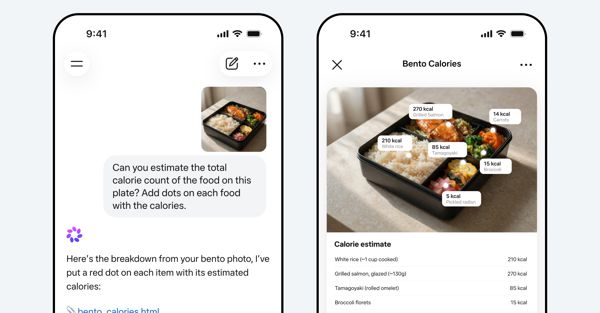
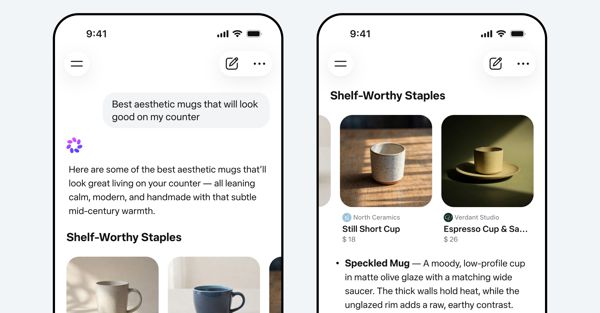
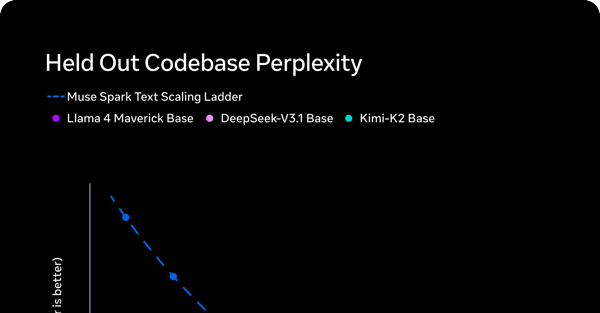
Meta claims that Muse Spark beat models from Google, OpenAI and Anthropic in selected benchmarks, but also admits that it still has gaps on long horizon agent systems and coding workflows. It is a useful confession: it means that the group has not yet reached the frontier, but wants to convince the market that it has found a trajectory. From what we read, it is not just focusing on benchmarks, but on integration. In this the choice seems to follow that of Google. Meta promises more visual and personalised answers, with public content from Instagram, Facebook and Threads inserted directly into answers and attributed to creators. It introduces a reasoning mode with multiple 'sub-agents' in parallel, a shopping mode powered by creators and communities, and multimodal functions to understand images, products, shelves, food, environments. The goal is not to amaze in the lab but to keep the user in the app, inside the Meta enclosure, longer and with more commercial intent.
What are the stages?
Muse Spark is already available on the Meta AI app and on meta.ai. Snapshot and Reflection modes are available globally Shopping, Local and MetaSearch features are currently available in the US. In the coming weeks, Meta AI based on Muse Spark will also be progressively introduced on WhatsApp, Instagram, Facebook, Messenger and AI glasses in the US.
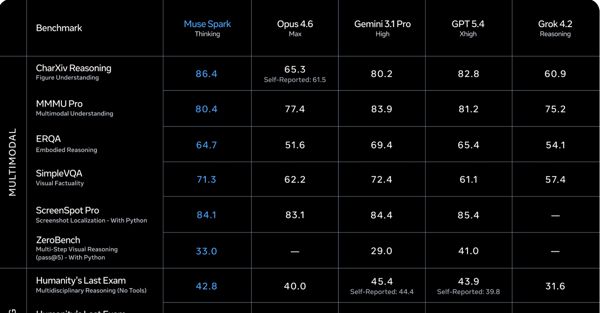
The Meta strategy.
Meta is disassembling and reassembling its AI strategy. Llama was the open source manifesto. Muse Spark, on the other hand, seems to be a smaller, faster and, for now, more closed model: access in 'private preview' via API for selected partners, with the promise of future versions. Translated: Zuckerberg has realised that in order to get back into the game, he must first get competitive again. The open philosophy remains, but no longer as a religion. More as an option. Llama 4 did not meet internal expectations, particularly on reasoning and mathematics, and the launch was postponed several times. That is why the new course also has a face: Alexandr Wang, the founder of Scale AI who replaced Yann LeCun, the former head of Ai who once exited and raised over $1 billion for his artificial intelligence startup. Meta reportedly invested $14.3 billion to acquire 49% of the company and bring Wang to the helm of the new superintelligence division.