From London to Rome, the story of an alleged 650,000-euro Leonardo drawing
In 2004, antique dealer Luigi Minelli of Gubbio bought a work 'in the manner' of the Renaissance genius from Christie's. After 20 years, it was sold in Vienna for 80 times its initial value

3' min read
3' min read
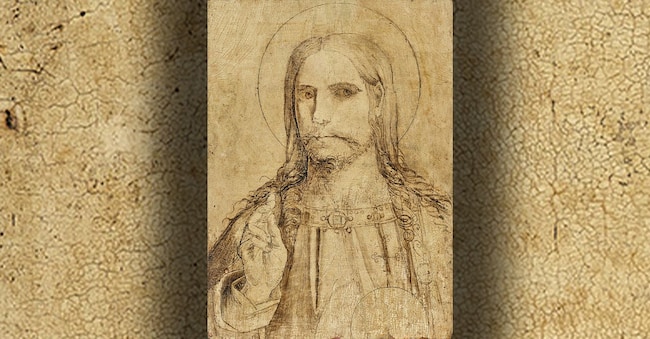
It is the year 2004: in London, the Christie's house is holding one of its many auctions, in the now vanished premises of Old Brompton Road, South Kensington. Amongst the various lots is an ink drawing that may even be a work attributed to Leonardo Da Vinci: it is a sketch of the Salvator Mundi and appears to be a preparatory drawing for the famous painting that the Italian genius made between 1505 and 1515.
After 22 years, that drawing has been resold at 80 times its original price: a work of undefined attribution has revalued by over 5,000%, better than any traditional investment (no stock, bond or fund has performed as well) and even better than many alternative investments, always taking into account the illiquidity of artworks and the greater randomness of their returns. But, in a market that is increasingly hungry for so-called alternative assets for high returns, and thus counter inflation and falling interest rates, the case of Leonardo's alleged drawing is a very rare (in the art world such exploits are not the norm) and interesting one.
From London to Rome
.The story of the drawing starts with an Italian, Luigi Minelli. He is an antiquarian from Gubbio, owner of Antichità Marcelli, with decades of experience behind him: in 2004 he was among the many participants at Christie's auction. When the auctioneer shows and announces a drawing attributed by the same auction house to Da Vinci's workshop, the room is not very impressed. Mr. Minelli, on the other hand, sees something in the work: he bids and wins it for £5,000, about 8,500 euros. The auction house description speaks of a 'drawing in the manner of' and behind the canvas are the letters LDV.
At the time, the Salvator Mundi was not the stratospheric subject it would later become: in 2017, Leonardo's painting was auctioned for $450 million, shattering every record and becoming the most expensive painting ever in the history of art. Coincidence or not, once again another Salvator Mundi has broken a high record: on 29 April, the Dorotheum auction house in Vienna sold a "study" of the Salvator Mundi, the same work that the Eugubinian antiquarian had uncovered years earlier in London, for 650,000 euro.
Minelli himself had resold the work a year after its purchase: in 2005, the drawing was taken to Rome to the home of a famous banker, who has since disappeared. The manager, at the top of Italian finance, had been invited to lunch by Gubbio businessman Giuseppe Colaiacovo, one of the branches of the family of Umbrian cement industrialists, who then took his banker friend on a visit to the Marcelli Antiquities shop: the person, who died prematurely last year, immediately liked the work. For many years, the work had adorned his home; now it will adorn the home of an unknown buyer.