
From Max Mara to Marni: a manifesto for a new sense of practicality
Genny’s exuberant summer, a touch of nostalgia from Roberto Cavalli, and Emporio Armani’s ‘best of’ collection ahead of Dario Vitale’s arrival
by Angelo Flaccavento
 Aggiungi Il Sole 24 Ore
ai preferiti su Google
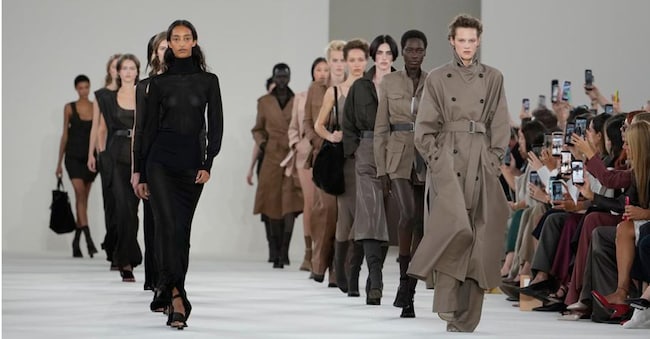
It is too early to speak of a full-blown seismic shift, but the love affair between fashion and entertainment is beginning to show the first signs of cracking. Whilst in recent times ‘content’ had usurped genuine substance, the current season is shaping up to be one of clothes to actually wear – not merely for TikTokers or suitable for posts and memes.
Practicality is a defining characteristic and an unshakeable value at Max Mara. Here, real women are dressed, not feminine fantasies. This does not mean that there is no intellectual depth, or even flights of fancy, in creative director Ian Griffiths’ design process: quite simply, the end result is grounded, not up in the air. This time, the tone is particularly realistic. Looking to the women who, with a pioneering spirit, charted new courses in the social fabric of the 1930s, Griffiths envisions a wardrobe in which the rigour of masculine tailoring appears to have melted away, softened – no doubt drawing inspiration from the bias cuts of Madeleine Vionnet, a subtle yet relentless champion of women’s liberation during that very period. The show is a succession of neutral colours, opening with a loose-fitting trench coat and closing with a form-fitting dress. It doesn’t droop, but it doesn’t float either – because it doesn’t need to.
Merryl Rogge continues to bring bursts of raw, brutalist realism to Marni, whilst shifting the brand’s target audience towards a younger demographic with a higher ‘cool factor’. This is her second collection for the brand: the intention is clearer, but the exact direction is less so. The convergence of Rogge’s Antwerp edge and the enlightened bourgeois spirit at the heart of Marni – as defined by Consuelo Castiglioni, who had found loyal followers amongst the city’s gallery owners, architects and artists, and beyond – appears somewhat muddled.
The wording is harsher and more cutting, which in itself is not a flaw, but there is a certain forced quality to it that strikes one as out of place. Who is Rogge addressing? The new Marni seems aimed at the daughter of the original customer – someone who wants at all costs to rub shoulders with the artists but does not yet possess the mettle that her mother did. The austere style, moreover, certainly has its charm, but in a season of general softening, and given Marni’s playful spirit – as a mindset – this should be taken into account. That said, Rogge’s work is still a work in progress, and patience is a must.
The spirit of the early 20th century lingers persistently, bringing a touch of magic where the lines remain simple and the outfits wearable. From Alberta Ferretti, Lorenzo Serafini envisions a carefree summer escape as a state of mind, combining lingerie, bias-cut silhouettes and bursts of colour in homage to Leon Bakst. Every now and then, the influence of Dries Van Noten is strongly felt, but Serafini has a light, even whimsical touch that is utterly captivating.

