
Domenicali: ‘From triumphs in MotoGP Sprint to Ducati’s industrial project’
The CEO of the Borgo Panigale-based group speaks out. Ducati Corse: a model of efficiency – 80% of expenditure and investment has been covered

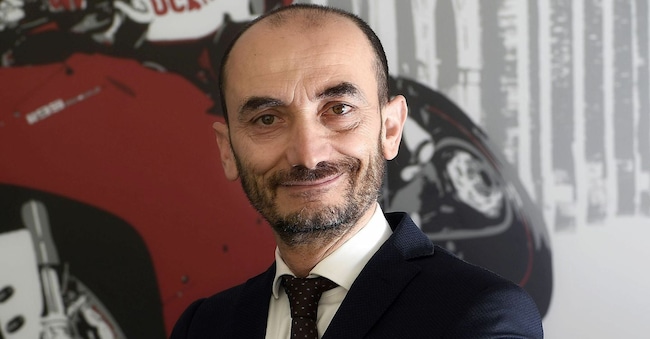
‘We have completed a five-year cycle. We are ready to embark on another. At Ducati, there are two types of continuous cross-fertilisation between the racing division and the mainstream manufacturing sector: the cross-fertilisation of enthusiasm, which is fundamental in MotoGP and which epitomises the spirit of our entire company, and the synergy of technological innovation and brand charisma, which spreads from the racetracks throughout the entire factory and enables our motorbikes to position themselves at an ever-higher, more refined and more profitable level.”
Claudio Domenicali is the CEO of Ducati, the team behind five consecutive MotoGP World Championships. Crossing the finish line at Portimão, in Portugal, rider Marc Márquez won the world championship on Sunday, thus completing the run that began in 2022 with Francesco Bagnaia and was continued by him in 2023, by Jorge Martín in 2024 and by Márquez himself in 2025. Domenicali is as delighted as a child and, at the same time, as measured as a CEO: “From 2000 to 2004, Michael Schumacher won five consecutive titles with Ferrari. For all of us here in Motor Valley, it was a powerful source of inspiration. Today we are delighted, both as sportsmen and as businesspeople, to have achieved this result.”
The racing department’s operation is, in and of itself, efficient: ‘We now cover over 80 per cent of our expenses and investments thanks to television rights – which Liberty Media is managing very well – thanks to contributions from our partners, and thanks to revenue from technology leasing agreements with the satellite teams that race on our bikes. This is a very important balance.’ And the team is ready to tackle the regulatory changes: ‘We are at a watershed moment. Next year, MotoGP will feature different rules and engine specifications. We are confident we can perform just as well. We have come this far via a long, complex and exciting journey.’
Domenicali, who has been with the company for 35 years (“more than a third of the company’s 100-year history”), was first head of the Racing department and then, from April 2013, became chief executive of Ducati as a whole. He has been to racetracks all over the world. The Borgo Panigale factory is his home. He therefore knows the entire journey inside out and has helped to integrate Ducati Corse ever more effectively into the company as a whole: “The most substantial investment cycle in racing began with the arrival of Volkswagen Audi, which had bought Ducati in July 2012. The sporting results are entirely ‘Made in Italy’: the work on technology and engines, with the uninterrupted flow into the road-going models that end up in our showrooms, has all been carried out at Borgo Panigale. But of course, all this work must be seen within the context of the company’s overall and organic structure: the German shareholder has always had great faith in the transformative power and quiet catalyst effect of sporting success. The investments approved, the revision of objectives, technology transfer and corporate finance have been fundamental for Ducati in general and for Ducati Corse in particular. We are an example of a virtuous circle in which every positive outcome generates another, which in turn produces a further positive externality.”
Five consecutive MotoGP riders’ titles are a key strategic element in giving substance to day-to-day operations and ensuring long-term stability. For day-to-day operations, the technical and industrial aspects, together with the reputational and commercial factors, are fundamental. “This victory,” says Domenicali, “with its enormous media impact, is just as valuable as the hard work we put in at the factory. It allows us to position ourselves ever more effectively. Our customer is a demanding one. And it is naturally important to us that they recognise the added value and the corresponding price of the motorbike they choose to buy.”


