
From Mumbai to Delhi to discover the karigars, the ancient master craftsmen
There is a growing interest in and value of the collectible, which mixes traditional savoir-faire and the exclusivity of the unique piece. Three names have intercepted this trend with an aesthetic oriented towards the international market.

5' min read
The collectible has become the true status symbol in the Indian design world. A phenomenon that is certainly fuelled, and in no small part, by the country's growing number of billionaires: in 2023, India counted 185 of them, for a total wealth of almost 906 billion dollars. But the demand for unique pieces that combine traditional craftsmanship, art and contemporary design is also linked to a cross-cultural awareness and general appreciation of ancient knowledge, which is increasingly at risk of extinction. The result is that Indian designers today are experimenting a great deal, fusing ancient techniques with modern forms, in an attempt to enhance the Indian scene globally, but without distorting it.
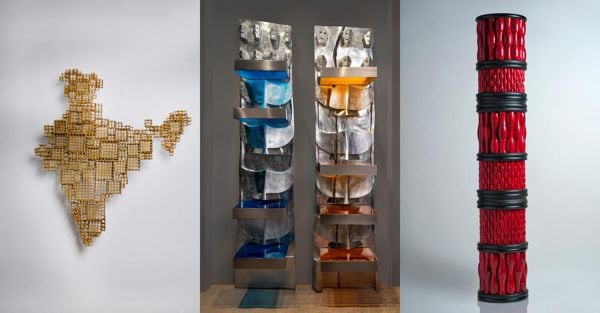
Ashiesh Shah is the brainchild of one of the country's best known interior designers. It is located in Tardeo, a posh, traffic-jammed neighbourhood in central Mumbai. The quiet rooms overlooking a simple courtyard are an expression of his eclectic vision: "If I had to define my approach, I would say that it is research-based, takes its cues from Indian culture, but is the bearer of an aesthetic with a global outlook, rooted in geometry, spirituality and local craftsmanship". The essence of his work lies in rediscovering and celebrating the rich heritage of Indian savoir-faire, and he breathes new life into tradition through unique objects, forged by hand with skill. Hence the origin of now iconic pieces - such as the Guccha, a light inspired by the bells of Shiva's temples - born from the collaboration with the karigar, craftsmen who are the guardians of ancient knowledge. One example is also the Naga chair: "It is made of what we call elephant grass in India, and was made in a remote north-eastern corner of the country," he explains. "The Naga community used it to make mackintoshes made completely superfluous by modern, plastic ones: we have revived the traditional workmanship and the seat has become famous, not least because it expresses the intersection of craftsmanship, design and fashion". Among his creations are the totem poles, much loved by fans of the genre, and always present in design galleries: "I have been working on them for ten years now, they were inspired by the way I look at my Mumbai, which has a narrow, upwardly planned architecture". Shah's style embraces the beauty of imperfection, resulting in creations that whisper stories of skilled hands and suspended time: "When I started experimenting in this direction, I didn't even know the word collectible design. Today each piece has a story, it speaks of a community whose craftsmanship is expressed in a modern language". His studio started the year with a successful exhibition at Féau Boiseries during Paris Design Week, then a sold-out show at Art Week in Delhi, the only Indian artist represented by Carpenters Workshop Gallery.
Loading...
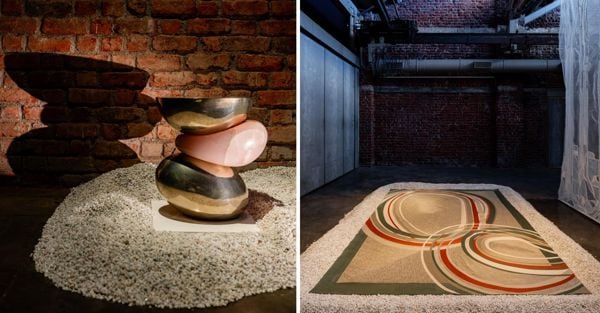
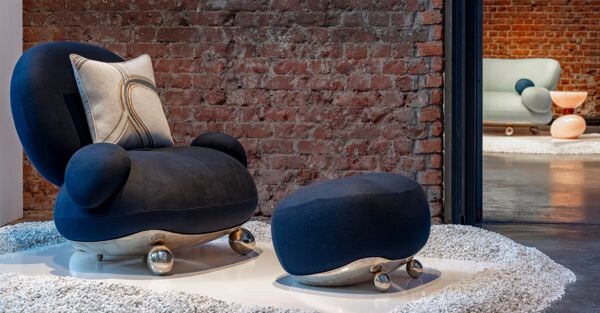
Remaining in Mumbai, after the first collectible design gallery, æquō, established in 2022, Nilaya Anthology, a design exhibition space promoted by the Asian Paints brand, designed by Rooshad Shroff, another name on the rise internationally, has just opened. In turn, Shroff has just inaugurated his first gallery in the city: "The idea was to have a space where I could exhibit my work and present the collections of others at different times of the year, to essentially celebrate Indian craftsmanship, in all its forms," he explains. An architect by training, his CV includes names such as Rem Koolhaas' OMA, Zaha Hadid and Issey Miyake. Geographically, his work in the world of furniture and collectibles is very closely linked to France: first and foremost Hermès, Louis Vuitton and Christian Louboutin: 'It's a case! Before you pointed it out, I never realised,' he says, smiling. Back to India and the collectible: it was an educated and discerning public that fostered his rise. Shroff's most recent collections, which can be seen in the new gallery, are tributes to his predilection for Indian excellence in textiles and embroidery. Striking here is the Weave line, featuring wooden benches and small furniture pieces, both covered in glass beads hand-embroidered on a linen base using the traditional aari technique. His favourite material, marble, is the protagonist instead of the Balance line, in an ethereal play of balances and imposing inclined planes: "I have been working with marble for 10 years, between engravings, inlays, furniture, lights: mine is almost an obsession," he admits. "However, I also experience a constant need to work with embroidery, to which I have dedicated myself for 12 years now. The most recent result was precisely the exploration of a technique that allows embroidery on wood, another material I hold very dear". Like his colleagues, he recognises that the key to the success of Indian design is not only in his hands, but in those of the artisans he works with: "Thanks to them and their skills passed on from father to son, today we can reach such a level of sophistication that any piece, regardless of the ancient history of the technique with which it is produced, can respond to contemporary taste.

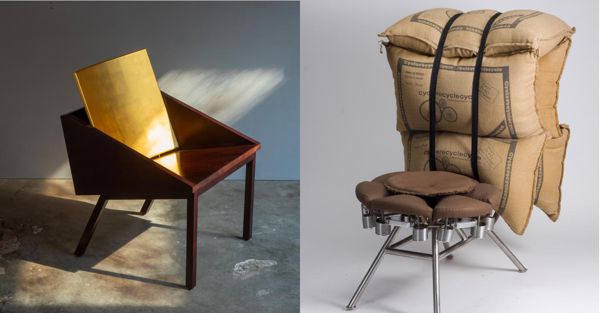
Every object, for the protagonists of design made in India, lives in balance between traditional geometries, sustainability and authenticity, but on the edge of an ever-evolving aesthetic, as Gunjan Gupta, from Delhi, creator of the Ikkis brand and founder of Studio Wrap, knows well. After a master's degree in design at Central Saint Martins in London, she immediately focused on the mix of craftsmanship and design, with research conducted at the Victoria and Albert Museum and in-depth studies on what literary critic Edward Said called Orientalism. "I started my career 20 years ago, at a time when there was no dialogue between Indian design and craft," explains Gupta. Known for her almost playful approach - or perhaps better, her passion for the so-called jugaad, the Indian art of making do - and rigorous research, her most iconic pieces are now in the permanent collections of institutions such as the Musée des Arts Décoratifs in Paris, the M+ in Hong Kong and the Vitra Design Museum in Weil am Rhein, Germany: "From the small streets where bicycles are recycled to the most remote communities that transform and reinvent pots and pans and mattresses on a daily basis, I have always focused on real, concrete stories," he says.
It is no coincidence that one of her most successful pieces is called the Bicycle Throne, an homage to the cyclewala, the vendors who carry huge loads on their small bicycles. It was among the first to give new relevance to the metalwork of the Thathera artisans of Rajasthan, which had been used to embellish the houses of Mughal princes since the late 18th century, and is now at risk of extinction. "The results of these collaborations are special, unique in the world," he enthuses. "For example, the Bidri craftsmen of Bidar, a region near Hyderabad: their practice of carving and inlay has Persian origins and has been handed down for 500 years." With an exhibition curated by Maria Cristina Didero, a year ago, he launched Ikkis, meaning 21, in Milan, because, he explains, they are pieces designed for the 21st century: glasses, cups and plates with a clean aesthetic, reminiscent of the Indian archetype punctuated by vibrant touches of colour.


Loading...
