
From Poste and Tim a big aiming to become a leading tech and services hub
Mobile network, cloud, data centre, distribution, savings, logistics and digital in one reality

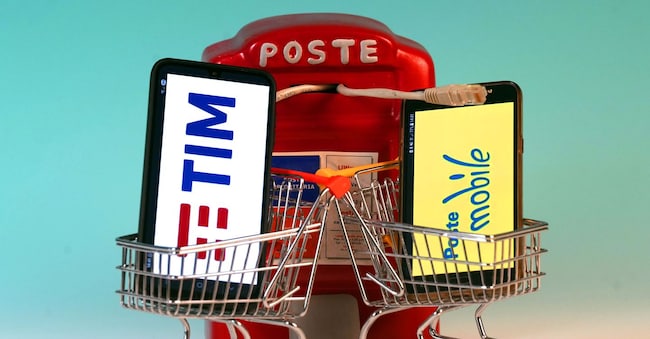
The goal is to build 'the largest connected infrastructure platform in Italia'. The communication given to the Stock Exchange by Poste, regarding the strategy underlying the move to bring in Tim, makes it immediately clear: not a simple acquisition, but a move that represents - at least in its intentions - a sort of big bang in the telecoms and digital market, leading to the birth of a large integrated group, public in its direction, industrial in its mission, called to bring together network, cloud, data centre, distribution, payments, insurance, logistics and digital services.
Herein lies the real novelty. For years, the sector has lived amid price wars, separate assets, unfinished consolidations and an exhausting chase after the big international digital players. Now Poste is trying to change the pattern.
On the one hand there is Tim, who arrives at the operation with three revenue drivers: consumer (6 billion in 2025), Brazil (4.2 billion) and above all enterprise, today the true strategic centre of gravity with 3.5 billion in revenues. Here the change of pace is measured: the cloud has become the first driver (42% of the mix, +24% year on year), overtaking connectivity. Around this are the key assets: 16 data centres plus a seventeenth under construction, the National Strategic Hub, an advanced cybersecurity and encryption platform with Telsy, over 30,000 customers including the public administration and large enterprises, and a backlog in excess of 4 billion. This is the industrial base on which Poste's move is grafted.
On the other hand, there is a unique distribution machine: 13 thousand post offices, 49 thousand third-party points, a super app with over 4 million daily users. A platform that over the years has already expanded its perimeter from deliveries and savings to payments, insurance, energy and digital services. The idea is to merge these two worlds and build a pole capable of scaling.
The synergies, in part, are already a reality. PosteMobile is migrating to the Telecom network, with an expected value of around 100 million in annual revenues for Tim. For its part, the telco has brought Poste's electricity and gas offer (Tim Energia powered by Poste) to more than 750 shops, which is set to rise to 1,200. And Poste insurance policies for consumers and SMEs are already available in Tim outlets.


