
From publishing to water, in Calabria inland areas reign of excellence
The companies. The resilience stories of those who have chosen to do business in so-called marginal areas: from Rubbettino to Mangiatorella

3' min read
3' min read
"The development prospects of inland areas cannot only be tourism. You do not keep a village, a town, alive by transforming it solely into an attraction for holidaymakers, without enhancing its productive capacity, its knowledge, its practices, its history. Without establishing a deep relationship with the community, without understanding the potential of a territory'. This is how, in the Reventino area, the Rubbettino publishing house, in over 50 years of activity, has made a name for itself in the field of publishing, also proposing itself as a manufacturing reality in a marginal territory, at the foot of the Catanzaro Pre Sila. It has valorised culture, identity and production: Florindo, the publisher, together with his brother Marco, director of Rubbettino Print, which takes care of the printing workshop and papermaking, has transformed the small publishing house, founded by their father Rosario, into a point of reference for non-fiction on economics, politics and social sciences, with over 250 new publications a year. And the whole group into an industry worth 10 million a year.
'We need more human intelligence,' continues Florindo Rubbettino, 'to be educated to dwell on what already exists, natural resources, knowledge, traditions, extraordinary habitats, and not on all that is missing. And from here to resume the narrative, to tell another story. Which is ours, but also that of Amarelli, Lanificio Leo, Callipo, Librandi, Gias, of the bergamot companies in the Gioia Tauro Plain, of the Terme di Caronte. Realities with different profiles, the manufacturing one, the agri-food one, which also celebrate the culture of work through stories of enterprise and territories'. Together they have set up Sudheritage, the first network of business museums in Calabria.
In short, Calabria, even the inland areas, is no stranger to modernisation processes and paths of innovation and social growth that penetrate many territories through cultural tools and activities. Even Lanificio Leo, the oldest wool mill in Calabria, in Soveria Mannelli since 1935, has resisted depopulation and is now an international design hub. On the Pollino, entrepreneur Selene Rocco, in collaboration with the Bologna CNR, has relaunched lavender cultivation. Unical has botanically classified the native plant. Today, the lavender park in Morano is a piece of Provence within Calabria, a beautiful botanical garden with over 23,000 visitors every year.
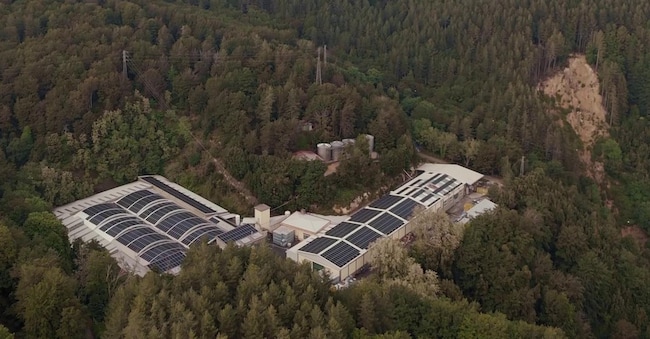
Further south, in the province of Reggio Calabria, in the village of Stilo, the birthplace of the City of the Sun philosopher Tommaso Campanella, best known for its Cattolica, a small Byzantine church at the foot of Mount Consolino, the Federico family represents another excellence, that of Mangiatorella mineral water. A 120-year history, the anniversary of which was recently celebrated with a talk dedicated to the successful enterprises of the inland areas, "to those that have made it, taking the risks to which the context exposed us," says Francesco Federico who, with his brother Piero and sister Titti, runs the family business. He likes to recall that the first person to bottle it was a Garibaldian general. "That of Mangiatorella is the story of an area unique for its scenic beauty. But it is also rich in resources, as witnessed, in the vast area that also touches the territory of Vibo Valentia, by what remains of the Mongiana and Ferdinandea iron and steel enterprises, built by the Bourbons. But, as you know, national industrialisation was planned for the north'. Mangiatorella is currently the largest industrial group in the mineral water sector in southern Italy, with four production plants between Calabria and Sicily and a logistics unit in Messina that houses the management and administrative offices. Two hundred million litres produced, 120 employees and an annual turnover in excess of 30 million.

