
From quiet quitting to 'organisational silence': instructions for the changing workplace
Paolo Iacci, professor of human resources management at the University of Milan, reflects on the root causes of this transition, observing its effects and hypothesising its prospects with the aim of suggesting how to deal with a future that is as uncertain as ever
by Gianni Rusconi
 Aggiungi Il Sole 24 Ore
ai preferiti su Google
5' min read
5' min read
The pandemic has changed people's relationship with work, introduced previously unknown or almost unknown phenomena (starting with quiet quitting) and triggered a transition that is still not complete, and perhaps never will be. The post Covid, in short, has brought a dowry of different models and customs to the world of professions, which cross the boundaries of smart working in its broadest sense.
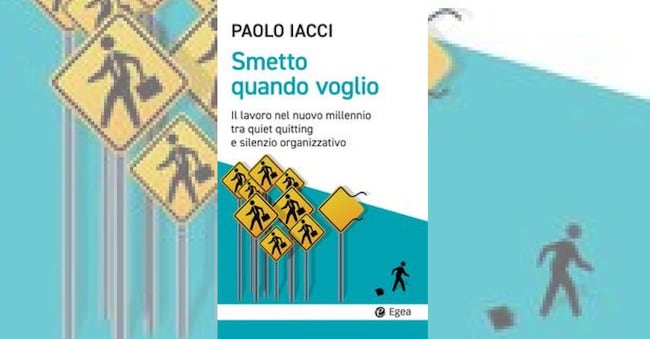
"Smetto quando voglio - Il lavoro nel nuovo millennio tra quiet quitting and silenzio organizzativo" is an essay (published by Egea) by Paolo Iacci, professor of human resources management at the University of Milan, who reflects on the root causes of this transition, observing its effects and hypothesising its prospects with the intention of suggesting how to deal with a future that is as uncertain as ever.
If Italy has also had to come to terms with the phenomenon of thegreat resignation, it should not be forgotten that people have often left their jobs without having a real alternative: this is why, according to Iacci, it makes more sense to speak of a 'great reshuffle' that takes substance from another, much deeper and more pervasive phenomenon, that of the "great rethinking".
Work, in short, continues to occupy a central place in people's lives, but approaches towards it have changed (and are still changing), both from the point of view of the individual, who feels more the need to give meaning to his or her existence by going beyond the desire for a better 'work life balance', and from that of companies. It is therefore logical that, in this liquid scenario, trends have emerged that lead to non-commitment beyond what is strictly necessary (the quiet quitting) or to the acquisition of know-how without new hires (the quiet hiring), and that when faced with critical situations, the path of (organisational) silence has been taken to avoid any form of conflict. We are in an era, as Iacci again points out, marked by fragmentations and paradoxes, which leaves labour professionals only one way, that of navigating by sight. To do so, however, the leaders of organisations should put the personal and professional growth of their people back at the centre of their business activities. What is needed, as the author argues, is a true Copernican revolution, and we tried to understand how to bring it about in this interview.
Let's take a step back and give a definition of smart working: when does remote working become truly 'smart'?

