Safety

From reckless dives to feeling unwell in the water: tips for avoiding accidents at the seaside and in the swimming pool

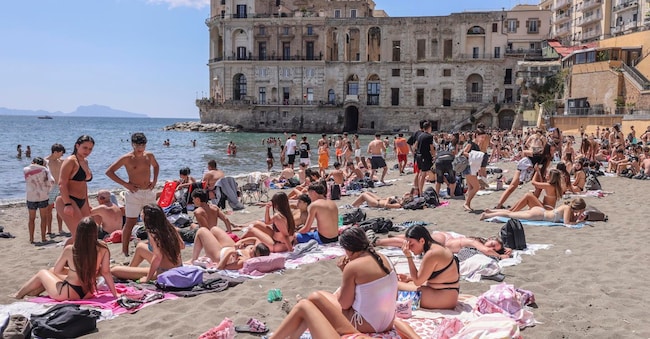
Centinaia di bagnanti sull spiaggia di Posillipo. (ANSA)

3' min read

Translated by AI
Versione italiana

3' min read

Translated by AI
Versione italiana

From reckless dives to sudden illness in the water. Safety at the seaside and in swimming pools – as well as at lakes and rivers – never takes a break. Not least because recent news reports have brought to light a problem that crops up every summer.

The latest cases

This is the case of the young Cagliari footballer Yael Trepy, who nearly drowned in a swimming pool on the Costa Smeralda on Sunday afternoon. According to initial reports, Trepy is believed to have felt unwell whilst swimming in the pool. He was pulled from the water, given immediate first aid and airlifted by helicopter to Sassari, where he was admitted to intensive care. Also on Sunday, in the waters off Su Giudeu beach in Chia, a 17-year-old tourist was struck by a small boat carrying around ten migrants near a buoy. The girl was admitted to hospital in Cagliari.

Loading...

300 drowning deaths a year

The figures are significant: there are an average of 300 drowning deaths each year. Between 2024 and 2025, the ISS recorded over 600 such cases, with a higher proportion of males, and these were almost equally divided between the sea – particularly on public beaches – and inland waters. This data is taken from the annual report of the Observatory for the Development of a National Strategy for the Prevention of Drowning and Accidents in Bathing Waters.

Greater risk at sea

‘Most drownings occur at sea and in inland waters, which together account for 93 per cent of cases. A smaller but significant number – particularly given that it mainly involves children and teenagers – occurs in swimming pools.’

Illness whilst in the water is the main cause

The main cause in 44.9 per cent of cases is ‘fainting in the water’, followed by ‘falls into the water’ and ‘adverse weather conditions’ involving rough seas and a return to shore hampered by strong currents. The statistics compiled by the observatory show Lombardy to have the highest rate at 14.9 per cent, followed by Veneto at 12.1 per cent, then Tuscany at 8.6 per cent, and finally Emilia-Romagna at 6.1 per cent.

Never leave children alone

And yet, according to the experts, by following a few simple rules, the number of such tragedies – which have ‘remained broadly stable over the last 20 years’ – could be reduced.

The first point is never to leave children unattended, not even to take a phone call. If there is a communal or private swimming pool, it is best to have it fenced off so that children cannot access it without supervision.

Learn to swim straight away

One piece of advice is to ensure that children learn to swim and become comfortable in the water as early as possible. For teenagers and adults, the first piece of advice is not to go swimming when the red flag is flying. In 80 per cent of cases, drownings occurring in adverse sea and weather conditions are due to an underestimation of the danger. You should also avoid consuming alcohol and drugs. Furthermore, if you find yourself in difficulty, never swim against the current but swim sideways and signal that you are in trouble.

Be careful when diving

Also take care when diving in; never dive in without knowing the depth of the water. It is best to swim in company or near someone else and, in the case of rivers, be aware of low temperatures and currents. Also pay attention to signage and the presence of lifeguards. Be mindful of warning signs and boundary markings, as well as the presence of boats.

Copyright reserved ©

Brand connect

Loading...

Newsletter

Notizie e approfondimenti sugli avvenimenti politici, economici e finanziari.

Iscriviti