Businesses

From research to business: Naples is investing in talent and ideas

Tecno In, Materias, SMS Engineering: stories of excellence that drive innovation and help new entrepreneurs to thrive

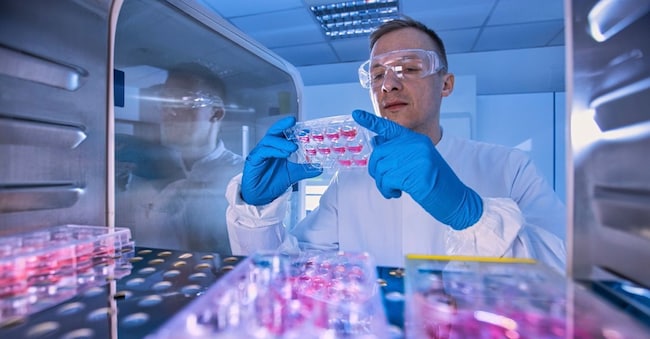
Laboratorio di ricerca IMAGOECONOMICA

7' min read

Translated by AI
Versione italiana

Key points

  • Tecno In, an incubator for start-ups and entrepreneurs
  • Materias: a bridge between cutting-edge research and business
  • SMS Engineering: technology takes on a manga-style approach to connect with young people

7' min read

Translated by AI
Versione italiana

(Il Sole 24 Ore Radiocor) – Whether it’s new materials, cutting-edge medicine, artificial intelligence or geophysics, the key to innovation lies in fostering dialogue between research and industry, whilst nurturing young talent. In Naples, three stories are striving to make a difference.

Tecno In: people before ideas, to nurture entrepreneurs

‘People before ideas’. This is the key to turning research into business, according to Davide Sala, sole director of Tecno In, a company with Neapolitan roots which, since the 1980s, has not only been an innovative enterprise in its own right but has also spawned over a dozen start-ups, bridging the gap between the worlds of research and entrepreneurship. “The real obstacle to the creation of new businesses often lies in the merging of two different mindsets: being a university professor is wonderful, but it doesn’t mean you have an entrepreneurial mindset, and vice versa. To succeed and turn an idea into a business, you have to learn to respect each other’s roles – that of the innovator and that of the manager,’ he says. ‘The first step is to get to know one another; only then can you work out whether the underlying idea is viable with a good chance of entrepreneurial success. As well as, of course, having the technological expertise to put into practice.”

Loading...

With these prospects in mind, Tecno In – founded in Naples in 1983 as a small craft business – grew to become a public limited company (Spa) in 2004. It is the parent company of other businesses, some of which remain in its core portfolio, whilst others have been sold off or have gone their separate ways. Next IE (Next Innovation in Engineering) was established through a collaboration with the University of Chieti; it holds three patents and operates in the field of earthquake-resistant engineering, specialising, amongst other things, in the inspection of strategic infrastructure such as viaducts, motorways and railways. Next Geosolutions was established in 2014; having joined the Fincantieri group, it generates a turnover of 500 million euros within the Underwater Division, providing marine geoscience services and support for offshore construction.

“We don’t just provide the initial capital – we’re not business angels – we bring in the right managers, establish market positioning, and identify the services needed in an increasingly demanding environment,” says Sala. A case in point is the latest venture, Muonix, which grew out of a project with the Ministry of Scientific Research in collaboration with the University of Naples Federico II and a consortium of other companies. It specialises in geological diagnostics, ranging from the detection of cavities in urban subsoil, to the discovery of unknown chambers within the pyramids, right through to the monitoring of nuclear and industrial sites.

‘We were working on a research project into geological risk; we went to a conference and met some young people from Naples – physics researchers – who were testing a new theory on muons. Muons are cosmic rays, a bit like gamma rays and X-rays, but with a wavelength that penetrates much more slowly, yet much deeper,” explains Sala. “They showed us applications carried out both on Vesuvius and on Mount Fuji in Japan. ‘People all over the world were working on this new application.’ The next step was a €300,000 investment in a prototype to back, followed by the patent and, finally, the company. ‘We had the intuition to turn it into a business because we already had a market and the infrastructure in place. We set up the company, like any other, together with them. It wasn’t just a company we invested in.’

“But the most important thing, at least in the initial phase,” Sala reiterates, “is to understand people. The small companies we have created – some of which have since grown far larger than we ever expected, whilst others are still growing – must have the capacity to bridge two different worlds and cultures: that of research and that of entrepreneurship. These are worlds that often operate at different paces and use different languages. Neither is better than the other, but they must be integrated’ so that ideas and talent can give rise to businesses.

Materias: changing the rules of the game through excellence

If people matter, excellence makes the difference. “We’re looking for ideas that change the rules of the game, ideas with a strong scientific basis. It is excellence that makes the difference,” says Caterina Meglio, CEO of Materias, another Neapolitan organisation that has taken on the task of bridging the gap between high-level research and industry, supporting technology transfer and the development of innovative solutions, with a particular focus on advanced materials.

“The first point is research, particularly in the materials sector, which cuts across virtually all industrial fields. Research that is truly in-depth and can deliver advanced technological solutions which, in some situations, can actually be a game-changer,” he says. It’s a field where only one in a thousand succeeds. ‘It takes at least five years of investment. In our 10-year history, we’ve seen around 1,300 ideas; we shortlisted about 70, began investing, and that number was whittled down to 40; we narrowed it further to 25, and of those 25, we now have 14 agreements with companies for patent licensing.”

Next year, in the first quarter of 2027, the first product will be launched on the market, thanks to an agreement with Bonifiche Ferraresi in the field of new fertilisers. ‘Ours is a very long journey; it requires very patient capital, which, however, makes all the difference when it pays off,’ says Caterina Meglio. ‘Our model is based on ideas of high scientific value. That is why our most important asset is human capital. We have 20 employees; everyone on our team holds a PhD, two are returnees, and all, of course, have degrees in STEM subjects. And 70 per cent are women – not because we set out to make it that way, but because they proved to be the most talented.”

“My source is expertise – Italian talent, which is the best in the world,” continues Meglio. “The second asset is intellectual property. We hold 140 patents divided into five patent families. These patents have been extended to every country in the world, so we have authorised patents in the United States, Canada, China…”. This is the path that takes cutting-edge research from academic papers and research laboratories to the market and the business world. ‘I’m not a researcher; I carry out business intelligence assessments to work out whether anyone else in the world has already worked on this, is currently working on it, or whether the market is viable for me. Alternatively, I create a new market because my idea leads to the creation of something that doesn’t yet exist.’

Loading...

A company synonymous with innovation: “We help ideas become reality”, as the company’s website states. Start-ups and SMEs such as Estesias, specialising in 3D printing of reinforced concrete; Sanidrink, specialising in antimicrobial surface treatment; and AMPure, which develops innovative dermocosmetic formulations, have all been founded here. Whilst Materias’s spirit is proudly Neapolitan, and its young talents hail from Campania, the same cannot be said of its capital. “That comes from the North,” concludes the CEO: 7.5 billion raised from private investors and national players, with 14 projects funded by public money.

SMS Engineering: Cosmo and the dream of taking the Pope into space

Thirty years of history, a turnover of 7 million euros, 60 employees, honoured by two Presidents of the Republic – Napolitano and Mattarella – and listed amongst the companies in Borsa Italiana’s ‘Elite’ project, dedicated to SMEs with high growth potential, and a dream: to reach for the moon. This is the DNA of SMS Engineering, an information technology company specialising in software development, ERP, AI, BI, cyber security and digital infrastructure, particularly for data centres. Proudly Neapolitan in origin yet international in its outlook, and, above all, determined to bring young people closer to technology.

“We were just young people when we founded it,” says Vice-President Massimiliano Canestro, “three engineers and a doctor of mathematics. All from the University of Naples Federico II.” They stayed in Naples and built their careers there. Their latest milestone is investment in artificial intelligence, which now accounts for 1 billion in turnover. But their sights are set further afield, and this involves engaging the younger generations.

“We talk about technology in schools too,” says Canestro, “but subjects like ours can seem daunting. That’s why we’ve decided to reach out to young people and speak their language.” This includes projects that go beyond simple communication and outreach. SMS Engineering features on the ‘Quartieri Spagnoli’ edition of Monopoly in Naples, with its logo on the ‘Technology Station’; to promote its IT solutions, it uses a cosplayer who portrays Marvel characters. “Young people are our talent and will be our future clients in the business world,” adds Canestro.

The dream – and the champion of building bridges with the younger generations – is called COSMO. It is a small visual indicator of microgravity, designed to float when conditions of apparent weightlessness are reached. It stems from the experience gained during the JumpinFuture zero-gravity missions, carried out by the Centre for Near Space at the Italian Institute for the Future. With its funny and likeable robot-like appearance, it has also taken social media by storm, featuring in stories posted by both ESA and NASA. ‘COSMO now stands as a symbol of the convergence of scientific research, technological innovation and public outreach. We use it at scientific, technological, university and institutional events, where its presence helps to make complex topics such as microgravity, space exploration, artificial intelligence and new technologies more accessible and engaging,” explains the vice-president of SMS Engineering.

It is customary for astronauts to take a mascot with them on space missions: SMS Engineering has proposed COSMO as an ‘ambassador of Italian innovation’ to NASA. ‘Our dream now is to actually take COSMO into space, as part of a future Axiom Space mission or other missions to which ASI might contribute,’ says Canestro. ‘Pope Francis had already given his blessing to COSMO. We also wanted to imbue this project with a special human and spiritual significance. Inside COSMO’s head is a rosary blessed by Pope Leo XIV, which we would like to take into space as a universal symbol of peace, hope and brotherhood amongst peoples. This message stems from the conviction that space belongs to all of humanity, regardless of nationality, culture or religious beliefs.”

Copyright reserved ©
Loading...

Brand connect

Loading...

Newsletter

Notizie e approfondimenti sugli avvenimenti politici, economici e finanziari.

Iscriviti