From Sangiano to Collodi for the anniversaries of Dario Fo and Carlo Lorenzini
This year marks the 100th anniversary of the Nobel Prize winner's birth and the 200th anniversary of the author of Pinocchio

Key points
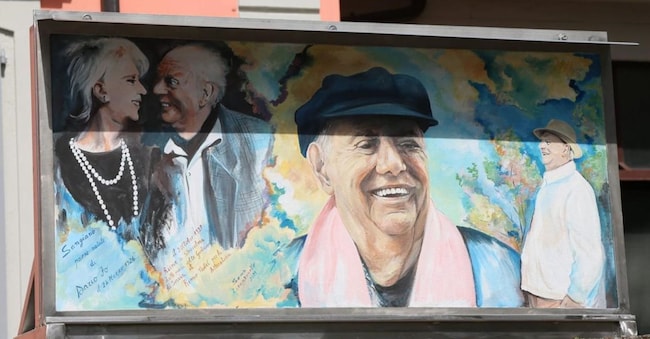
Sangiano and Collodi two very distant villages (the former is in Piedmont and the latter in Tuscany) actually have one thing in common. These small towns have hosted famous artists who have left their mark over time. On 24 March 1926, Dario Fo was born in Sangiano, on the shores of Lake Maggiore. One hundred years later, in 2026, his name still resounds in theatres all over the world, while a rich calendar of initiatives celebrates his artistic and civic legacy, from Italia to abroad. One of the anniversaries to mark on the calendar in 2026 is the bicentenary of Carlo Collodi, pseudonym of Carlo Lorenzini, the father of Pinocchio, the second most translated book in the world (after The Little Prince and excluding the Bible). Between Tuscany, Piedmont and Lombardy in the name of the memory of centenarians, in small towns that tell of art, history and culture is the itinerary suggested by Assocamp (the association of reference for resellers, maintainers and hirers of camper vans and caravans) which proposes to discover places connected to the stories of famous personalities and the villages that continue to live on amidst tales and installations.
On Lake Maggiore
In Sangiano, in the province of Varese, a village of just over 1,400 inhabitants in the Varese area, a couple of kilometres from Lake Maggiore and the Hermitage of Santa Caterina del Sasso, there is the birthplace of Dario Fo: a white building with large windows from the Hermitage of Santa Caterina del Sasso. Then, still in the area, there is the village of Porto on Lake Maggiore. The family later moved to this other place. The hamlet has the charm of a place from another era. The lakeside promenade, the historical centre with its cobblestones, the Romanesque churches such as San Michele al monte, which offers a view of Lake Maggiore. Not forgetting the centre with its solemn buildings, certainly unusual for country towns, the churches (from that of Santa Maria Assunta to the Baptistery of San Giovanni Battista) and also the ethnographic museum, the wash houses, and the beaches of Porto Valtravaglia and Montesole. And, for lovers of surprises, the abandoned village of Cavojasca, which can be reached by following the path to Brissago Valtravaglia. Glimpses recounted by Fo in his book "Il paese dei Mezaràt" (The Land of Bats), Every year since 2024, the Festival dei Mezaràt has been organised here and in other small villages around the lake, in collaboration with the municipality of Sangiano. The dates for 2026 are being finalised in April and May and include cultural events, including the staging of the play 'Lo Santo Iullare Francesco' (The Holy Francis) by Marco Pirovano, the last member of the Fo-Rame company.
In Piedmont
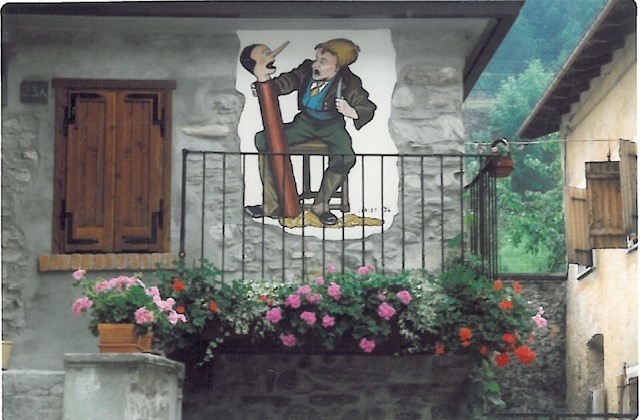
To celebrate the 200th anniversary of Carlo Lorenzini, aka Carlo Collodi, the creator and author of Pinocchio, the book that has accompanied the childhood of millions of children, a stop must be made in Piedmont in the village of Vernante, a municipality in the province of Cuneo located in the Upper Vermenagna Valley. Here, murals, decorations and pictorial details recount episodes from Collodi's famous novel, transforming the Alpine village into an open-air illustrated tale. The link between Vernante and Pinocchio is Attilio Mussino, one of the most important illustrators of Carlo Collodi's masterpiece, who spent the last years of his life in Vernante, where he produced some of the most famous illustrations dedicated to the puppet. Vernante is a real museum village with the walls of the houses decorated with a hundred murals telling the story of Pinocchio. The village also has a museum dedicated to 'Il Pinocchio animato', the last edition illustrated by Mussino set by the artist in this very place.
In Tuscany
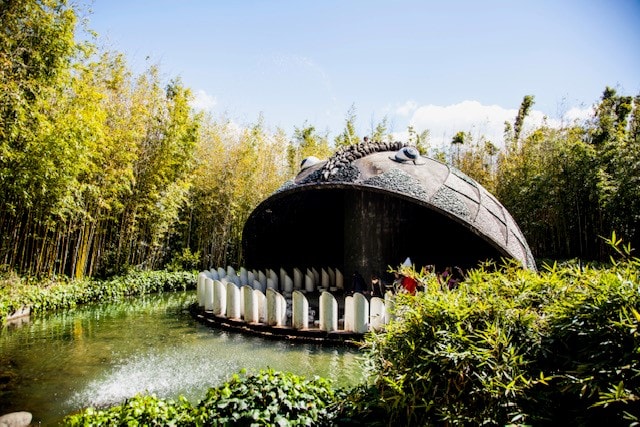
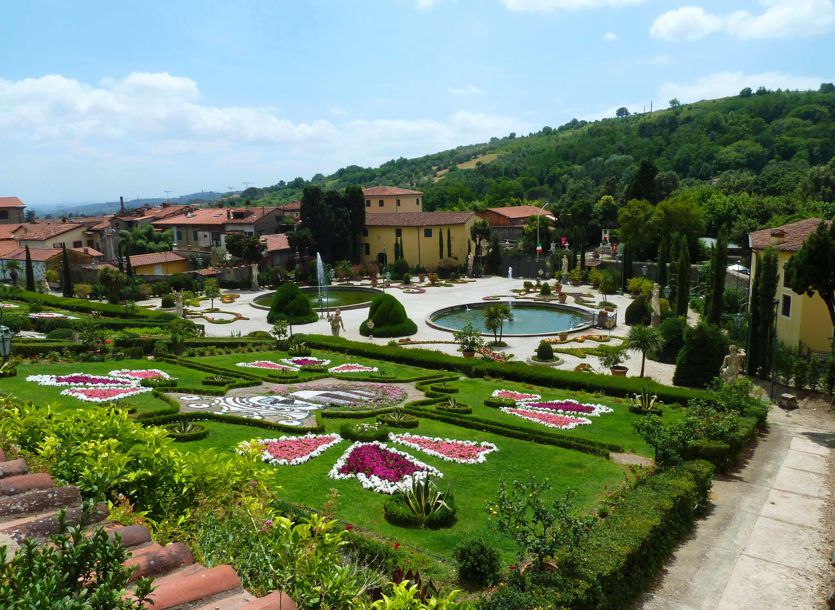
If, on the other hand, one wants to discover the other places dedicated to the inventor of the story of the puppet that has accompanied the youngest children, one has to move to Tuscany, to Collodi, a hamlet in the municipality of Pescia, the birthplace of Carlo Lorenzini, the writer who chose the name of his town as his stage name. Visiting the village, characterised by a sort of 'cascade' of houses on a steep hill, narrow and steep alleys that lead up to the fortress, means living Pinocchio's adventures. In the medieval village where Lorenzini spent his childhood, don't miss the Pinocchio Park. Animating it are the bronze and steel sculptures depicting different characters from the fairytale. Such as the whale or the witches' oak tree that is said to have inspired the hanging scene by the cat and the fox.