
From Sicily to Apulia, the 100% Italian cotton supply chain is growing
A label certifying the national origins of cotton is under consideration, while fields that had been abandoned in the 1960s are being cultivated again

2' min read
2' min read
Italian cotton could soon have its own label, certifying its 100% Made in Italy origin: the proposal was presented to the Ministry for Enterprise and Made in Italy by the Sustainable Fashion Innovation Society, an association of eco-sustainable fashion and design brands and producers, as part of the first National Table dedicated to the 100% Made in Italy organic cotton supply chain, an initiative that was taken up a few days ago in Rome at the Phygital Sustainable Expo.
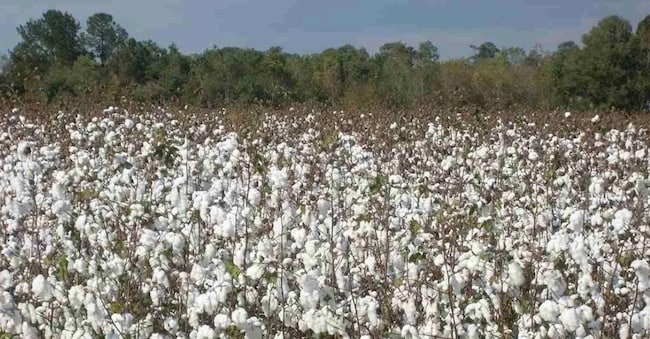
A certification that includes every stage of the supply chain, from cultivation to sale, and that would bring back to life the long tradition of cotton cultivation in Italy, which in past centuries was widespread mainly in the Sicilian and Apulian countryside, but which was interrupted after the Second World War due to rising production costs and the development of synthetic fibres. At the same time, 100% Made in Italy cotton could provide the fashion industry with sustainable and traceable yarns and fabrics to meet the demand of increasingly demanding and aware consumers.
There are already companies that produce several tonnes of Italian cotton, which is also certified by Gots, the most important international standard for the sustainable production of clothing and textiles: Cos-Cotone Organico di Sicilia was born in 2019 in the countryside of Tusa, near Messina, and grows its cotton in different parts of the island, and then has it processed by textile companies in the provinces of Bergamo and Padua. The yarn is later transformed into fabrics, used in the collections of Ovs but also of luxury brands such as Chanel, through its subsidiary FashionArt, which produces denim.
In Apulia's Gargano region, entrepreneurs Michele Steduto and Pietro Gentile set up Gest-Cotone Organico di Puglia in 2020, which now covers around 300 hectares in the Capitanata region: in order to improve the quality of the fibre, music with beneficial frequencies of 432Hz is played in the fields, according to the principles of harmoniculture. Gest produces custom-made shirts made from its cotton, and has been collaborating for years with the Bergamo-based Albini group. As of next October, the company will be able to make use of a new ginnatura (the separation of fibres from seeds) plant, the result of a two million euro investment. Also active in Apulia is the Apulia regenerative cotton project, with which the Armani group, together with the Fashion Task Force of the Sustainable Markets Initiative, with the Circular Bioeconomy Alliance and with the coordination of the European Forest Institute, Crea and Pretaterra, is bringing the local cotton crop back to life. Apulian cotton is also at the heart of the Itaco (Italian Cotton) project launched by Beste, a textile company in the Prato district that has always been committed to sustainability and is already working on new agreements with producers in Sicily and Sardinia.


