
From social housing to simplifications, the 4 billion home plan at the finish line
Final filings underway: fast-track procedures arrive to implement projects

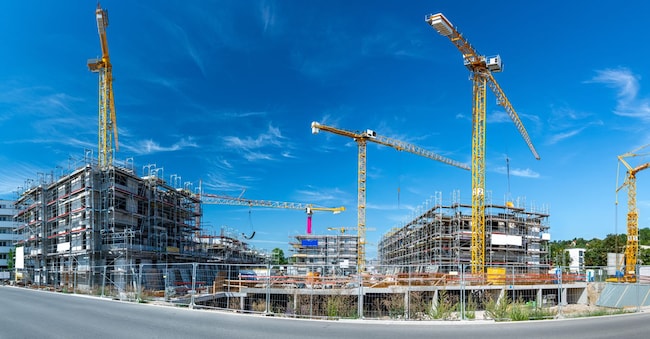
Administrative simplifications to speed up the urban planning steps needed to implement projects. Maintenance of social housing to bring the more than 60,000 currently uninhabitable properties back into circulation. And interventions for social housing (student halls of residence and residences for the elderly) in addition to affordable housing, i.e. properties at affordable prices for the so-called grey bracket: those too poor for the rental and purchase market but too rich to be included in the social housing lists. One hundred thousand housing units in 10 years, as Prime Minister Meloni announced last summer. All with an important role for funds, including private ones. These could be the ingredients of the Meloni government's 4-5 billion home plan, which should land on the Council of Ministers' table this afternoon. Already announced at the beginning of March, it was overwhelmed by the emergency of war and accounts.
The file work on the texts, all of which are armour-plated, will go on until the very end and was still going on last night between the Ministry of Infrastructure and Palazzo Chigi. 'We are still working on it tonight, we are still working on it even in these minutes, I do not want to give figures,' said Deputy Prime Minister Salvini last night at the end of the meeting of the Carroccio parliamentary groups.
Amidst many points to be defined, there is, however, some certainty. Everything will revolve around a decree law that will address the issue of public housing. This is where the funding of some 970 million euro from the last three budget laws is available. They will be used to redevelop housing that is vacant because it is uninhabitable: work that costs relatively little (20 thousand euro per intervention, although some talk of double that) but that will bring considerable benefit to the area. A management committee, headed by a commissioner, could be involved in the management of the resources, in which the Regions and Anci would also sit, as well as the mayors of some large cities. A step that could, however, complicate the flow of funding to the Housing Authorities, in an emergency over the tightness of the social housing system.
A second emergency measure will then address the issue of social and affordable housing. In this case, work will be done on two strands: redevelopment of public buildings and construction of new buildings. The easing of authorisation procedures will therefore become fundamental. In this case, a model already exists: it is that of the student halls of residence in the Pnrr. Here, urban planning simplifications have already been foreseen, with derogations from the prior approval of implementation plans for projects. Similar models could then be applied. And investment funds could be involved, with the co-partnership of public and private entities and the participation of institutional investors such as Cassa Depositi e Prestiti.
Finally, there is the chapter on speedy evictions. The hypothesis is to launch a bill that could be used to speed up evictions, starting precisely with council houses (more than 20,000) occupied illegally. A hypothesis in the balance until the very end: only today will it be decided whether to actually bring the text to the Council of Ministers, even if, as has been leaked, this specific measure could eventually be skipped.


