Research by the Politecnico di Milano

From technologies that study emotions to robots that work alongside people

With HumanTech, over 80 research projects are underway to develop safer, more inclusive and more sustainable digital technologies. Today’s discussion between the research community and industry also features Paolo Benanti, chair of the Ethics Committee of the Ministry of Labour’s Observatory on Artificial Intelligence

4' min read

Translated by AI
Versione italiana

4' min read

Translated by AI
Versione italiana

From algorithms that enable the assessment of workers’ stress levels to robots that share production spaces with people, right through to research into the effects of digital technologies on emotions and decision-making processes. These are just some of the research activities carried out by the Politecnico di Milano as part of HumanTech – Humans and Technology, a project run by the Department of Management Engineering that investigates the relationship between people and digital technologies to promote industrial systems that are more sustainable, inclusive and mindful of human wellbeing. The project comprises over 80 research activities and utilises three experimental facilities dedicated to the study of human-technology interaction.

The event

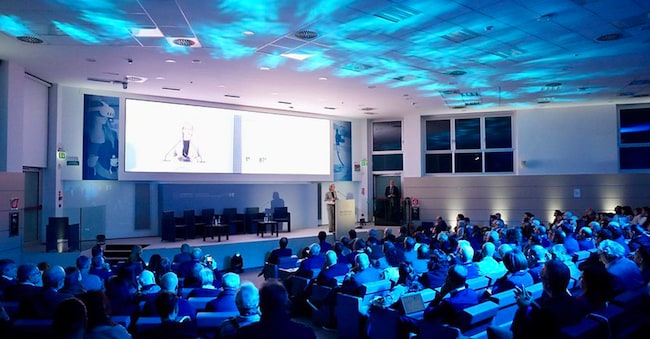
HumanTech took centre stage at the event “Human Agency in the AI Era – Research and Business in Support of People-Centred Technologies and Innovations”, held today at the Bovisa Campus of the Politecnico di Milano. Following the official welcome, the proceedings were opened by Paolo Benanti, a Franciscan friar, professor at LUISS Guido Carli and the Pontifical Gregorian University, and chair of the Ethics Committee of the Ministry of Labour’s Observatory on Artificial Intelligence, who stated: “Within the innovation process that characterises the adoption of artificial intelligence, it is essential to maintain a significant degree of human control so that, once delegated, processes do not become irreversible or unmanageable.”

Loading...


Academia, business and institutions

The event brought together representatives from academia, business and institutions to discuss how to design, adopt and manage artificial intelligence technologies in a sustainable, inclusive manner that prioritises people’s wellbeing.
Funded by the Ministry of Universities and Research for the period 2023–2027 as part of the ‘Departments of Excellence’ initiative, HumanTech integrates technological and industrial expertise with economic, managerial, behavioural and social science expertise. The research is structured around three complementary strands: the design of people-centred digital technologies; the development of resilient and sustainable production processes and supply chains; and the adoption of organisational models and working systems that put people at the centre.

“Redefining the relationship between technology and people”

“HumanTech aims to reshape the relationship between technology and people to ensure a sustainable digital transition of industrial systems, through models of technological development that also take into account the implications for people, society and the environment – says Raffaella Cagliano, Head of the Department of Management Engineering at the Politecnico di Milano – HumanTech now represents a strategic platform for contributing to the global debate on how to design and govern technologies whilst keeping people at the centre and creating value for organisations and society. With one year to go until the project’s scheduled conclusion, the challenge is to continue cutting-edge research, strengthen our international scientific standing and expand collaborations with businesses to increase the economic and social impact of the results achieved’.

From artificial intelligence to worker safety

At the Marco Garetti Laboratory, which is dedicated to the study of industrial technologies, researchers analyse the interaction between people and digital systems through collaborative robots, exoskeletons, wearable sensors, and virtual and augmented reality technologies. Among the projects developed is a system that uses biometric data from wearable sensors to estimate the physical, cognitive and emotional stress levels of operators. Other activities include the design of workstations based on ergonomic indicators and the development of solutions to enhance safety in human-robot collaboration.

How emotions influence decisions

The BRIEL – Behavioural Research in Immersive Environment Laboratory studies people’s emotions, behaviours and decision-making processes in real, immersive and controlled environments, using tools such as electroencephalography, eye-tracking and physiological sensors. The research carried out includes analysing the effects of artificial intelligence support on cognitive load and stress in decision-making processes, and studying the relationship between work-related stress, creativity and performance. The aim is to gain a better understanding of people’s cognitive and behavioural processes in organisational and technological contexts, by measuring behavioural and psychophysiological responses.

Data for innovation

The DataHub Lab, a high-performance computing centre dedicated to advanced data analysis, artificial intelligence and the management of large volumes of information, supports the development of models to tackle complex problems across various scientific and industrial fields. Among its applications is research into smart warehouses, where people and robots operate in the same environments. Thanks to high-performance computing resources and optimisation models, researchers have developed solutions for dynamically planning robot routes in real time, whilst integrating worker safety into the management of operations.

The Experimental Heart

These three facilities form the experimental heart of HumanTech and enable the technological, cognitive and organisational implications of digital transformation to be addressed from complementary perspectives. Research activities are complemented by international scientific collaborations, PhD programmes, and initiatives focused on training and the dissemination of knowledge.
Today’s discussion also involved the president of Assolombarda, Alvise Biffi, and representatives from EssilorLuxottica, Errevi Automation – Exotec, Save the Children Italia, the Menarini Group and Banca Mediolanum. The programme included a round-table discussion, six thematic workshops focusing on the applications of artificial intelligence and digital innovation, visits to laboratories, and meetings between researchers, businesses and professionals to explore opportunities for collaboration.

Scuola, tutti gli approfondimenti

La newsletter di Scuola+

Professionisti, dirigenti, docenti e non docenti, amministratori pubblici, operatori ma anche studenti e le loro famiglie possono informarsi attraverso Scuola+, la newsletter settimanale de Il Sole 24 Ore che mette al centro del sistema d'istruzione i suoi reali fruitori. La ricevi, ogni lunedì nel tuo inbox. Ecco come abbonarsi

Le guide e i data base

Come scegliere l’Università e i master? Ecco le guide a disposizione degli abbonati a Scuola+ o a 24+. Qui la guida all’università con le lauree del futuro e il database con tutti i corsi di laura

Lo speciale ITS

Il viaggio del Sole 24 Ore negli Its per scoprire come intrecciare al meglio la formazione con le opportunità di lavoro nei distretti produttivi delle eccellenze del made in Italy. Tutti i servizi


Copyright reserved ©
Loading...
Loading...

Brand connect

Loading...

Newsletter Scuola+

La newsletter premium dedicata al mondo della scuola con approfondimenti normativi, analisi e guide operative

Abbonati