
From the 5.0 bonuses to the ZES, from the former Ilva site to household appliances: the key points of the budget for industry
The package of measures for industrial policy is beginning to take shape. Possible refinancing for development contracts and the ‘Nuova Sabatini’ scheme

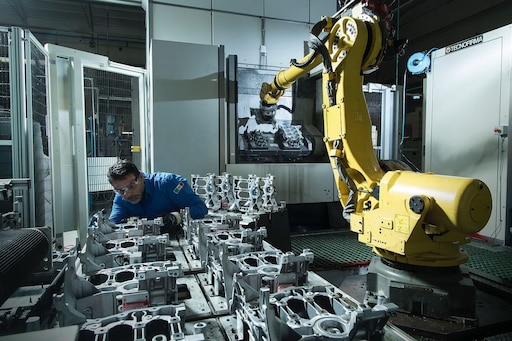
From Transition 5.0 to the Special Economic Zone. From the household appliance subsidy to the former Ilva site. The package of industrial policy measures that the government will present as part of the budget bill – broadly defined as the combined provisions of the draft budget bill and the related decree-law, both expected in October – is beginning to take shape. It cannot be ruled out that some measures may be deferred until the conversion process in Parliament, where they could take the form of amendments tabled by the government itself or by the ruling majority.
Transition 5.0
There is no immediate funding crisis for the new Transition 5.0 plan, but the surge in applications for hyper-depreciation on the GSE platform could certainly lead to the need for refinancing. Furthermore, with a view to multi-year planning, and to provide greater certainty for businesses wishing to plan innovation projects, consideration is also being given to extending the current scheme, which at present covers investments made up to 30 September 2028. The latest figures cited by the Minister for Enterprise and ‘Made in Italy’, Adolfo Urso, indicate 20,000 applications and projects totalling around €6 billion in planned investment, based on preliminary notifications.
Special Economic Zone
There are two measures on the table. The refinancing of the tax credit for investments in the Single Special Economic Zone (ZES), in accordance with the current scope, which includes the regions of Southern Italy plus Umbria and Marche. On this point, the Under-Secretary for the South, Luigi Sbarra, is calling for at least the same level of funding as was provided in the last budget, namely an allocation of 4 billion euros over three years. Work is also underway on extending the scheme to the central and northern regions, but only selectively and limited to procedures aimed at simplifying bureaucracy, without risking conflicts with the EU over the extension of the tax bonus and, above all, without having to find funding that could prove prohibitive. The extension of the ‘single authorisation’ model could, in any case, be limited to certain economic sectors (one possibility is the renewable energy sector) and to investments exceeding a specific value threshold.
Appliance Bonus
At the end of the year, when the budget bill is passed into law, the renewal of the household appliances bonus – which was launched by the Ministry of Infrastructure and Transport (MIMIT) towards the end of last year with a budget of 50 million euros, which was exhausted within a few hours – is also expected to be introduced. The possible renewal of this scheme goes hand in hand with the confirmation – also currently under consideration by the government – of the furniture and household appliances bonus, which is linked to building renovations. The two schemes would, however, be mutually exclusive and therefore cannot be claimed in combination.
Meanwhile, the government – together with Poland, France and Germany – has put forward a ‘non-paper’, an informal document on the sector, calling on the Commission to launch an EU plan containing measures to support manufacturing innovation and the competitiveness of factories, to ensure reciprocity in relation to Asian competition, and to introduce European instruments to boost demand, modelled on the Italia bonus scheme.


