
From the countryside to the battlefield to the catwalks: here is the story of the Burberry trench coat
The iconic garment from the British brand, which is celebrating its 170th anniversary, takes centre stage in a comprehensive exhibition at the V&A Museum in London, which recounts its famous and, in some ways, unexpected history

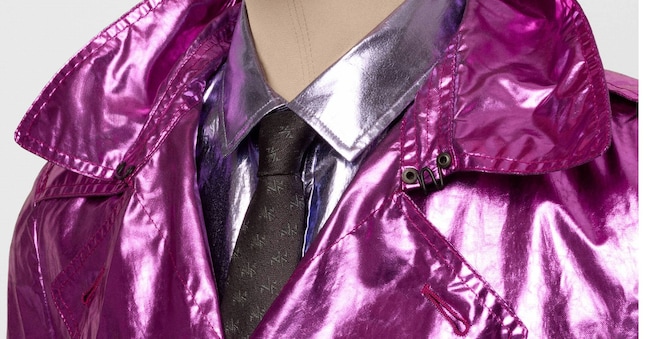
LONDON – Burberry is celebrating its 170th anniversary in style: an exhibition at the Victoria & Albert Museum, London’s temple of design, dedicated to the history of its iconic garment, the famous trench coat, from its military origins right through to the catwalks of contemporary fashion.
The galleries on the museum’s second floor, with their mahogany-panelled walls, have been chosen to take visitors on a journey into the past, starting from the very beginnings, with objects and documents drawn from the Burberry archive and the V&A’s permanent collection.
-U64455347026aSX-600x313@IlSole24Ore-Web.jpg)
Thomas Burberry had opened his fabric shop in Basingstoke, in the county of Hampshire, in 1856, when he was just 21 years old. The turning point came in 1879, when he invented cotton gabardine, a water-resistant fabric perfect for outdoor life. In 1901, a public competition was held to find a logo, and the winning design was an image of a horseman on a galloping horse – which has since been immortalised on every label – holding a flag bearing the word ‘Prorsum’, the Latin for ‘Forward’.
-U12363558584tqI-600x313@IlSole24Ore-Web.jpg)
From the very beginning, Burberry used the fabric to create coats, jackets and raincoats for both men and women, but its qualities – strong, durable and water-repellent – also made it perfect for the military during the First World War. Strictly reserved for officers, the Burberry trench coat thus made its way from the English countryside to the battlefields.
In the years that followed, the trench coat’s design and details – such as the epaulettes, belt, labels, buttons and hand-finished collar – were refined. The checked lining – the Burberry House Check – which makes every trench coat instantly recognisable, was created in the 1920s and was subsequently used on scarves, bags, dresses, accessories and even children’s teddy bears.
-U54068288414ATs-600x313@IlSole24Ore-Web.jpg)
The exhibition explains how, despite the passing of the years, the gabardine used by Burberry is still produced at the brand’s textile mill in Keighley, in the north of England, and how it still takes 90 individual pieces of fabric to make a single trench coat, which is then always inspected by hand.

