The new challenges

From crisis to opportunity, Milan a city open to all

A virtuous model that, beyond the judicial events, must now look to the future by focusing on accessibility and simplification

by Carlo Ratti
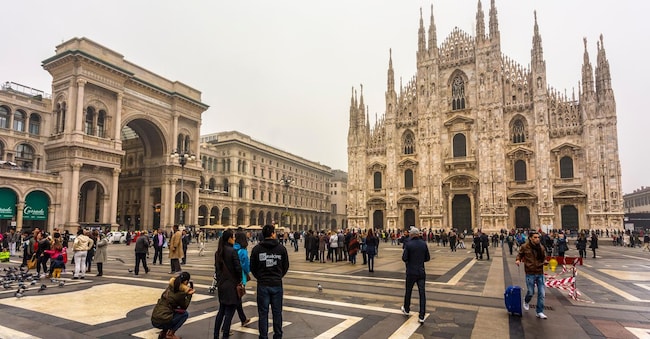
(Alamy Stock Photo)

3' min read

Translated by AI
Versione italiana

3' min read

Translated by AI
Versione italiana

At a time when Milan is under media and judicial attack, I feel it is my duty - without going into the merits of the judiciary's work - to recall what the city has managed to build and affirm over the last ten years. A virtuous model, the Milanese one, which deserves to be defended.

As I emphasised at the Forum Scenari Immobiliari, if there is a 'Milan model', it is that of a city that, after a major revival, is now faced with the challenge of a 'second act'. It is a recurring passage in urban history: New York in the 1960s, Rio de Janeiro in the 1970s, Mexico City in the 1980s. Or Barcelona, which reinvented itself thanks to the 1992 Olympics, experienced a period of momentum and then went into crisis.

Loading...

Milan is now at a similar crossroads. Its rebirth begins with Expo 2015. At the time, the city appeared tired, disillusioned, uncertain even about whether it would be able to inaugurate the event in time. Instead, Expo became the catalyst that united local players and relaunched the city's image globally.

From there, the 'first act' takes shape: new infrastructures, an increasingly competitive university system, growing attractiveness for international students and talent. Entire neighbourhoods change face - Porta Nuova, CityLife - and Milan establishes itself as a global city, in the sense given by sociologist Saskia Sassen: strategic nodes in the world economy, centres of finance, innovation, advanced services, with an influence that goes beyond national borders.

Success, however, also brings new imbalances. When a city works, goods become scarce and prices go up - starting with the cost of land. Milan today is more expensive and less accessible than ten years ago. The risk is that this reduces the space for those who study, create, work, take risks.

That is why we must not close the curtain on the first act, but take care of the backstage. Protect the conditions that make innovation possible. This is where the challenge of the 'second act' comes from, which can be built on two pillars.

Firstly, accessibility. Milan must remain a city for all. On this front, we can look to foreign models, such as that of Paris, which is experimenting with ambitious policies to guarantee access to the city for different segments of the population.

Second: simplification. It is clear that some of the current critical issues have structural roots, linked to bureaucracy and a lack of legal certainty. Milan can become a national laboratory for transparency and regulatory clarity, reducing time, litigation and barriers to investment. A streamlined but rigorous system could make the entire urban transformation process more efficient.

Innovative tools such as digital twins and artificial intelligence applications already allow real-time verification of urban planning parameters, automating many technical steps in authorisation processes. But alongside technology, human intelligence is needed: the qualitative assessment of projects remains crucial.

It is from this alliance - between artificial and human intelligence - that the second act of Milan can be born. It is the theme we also address in Venice 2025, with the 19th International Architecture Exhibition, Intelligens. Natural. Artificial. Collective.

Milan has everything to succeed: human capital of excellence, strong universities, dynamic production chains, vision and courage. It has already demonstrated its ability to turn crises into opportunities. Now it is time to raise the curtain on the next act.


Architect and engineer, Carlo Ratti teaches at MIT Boston and the Milan Polytechnic and founded the design and innovation studio CRA-Carlo Ratti Associati. He is curator of the 19th International Architecture Exhibition of the Venice Biennale: "Intelligens. Natural. Artificial. Collective" (10 May-23 November 2025)

Copyright reserved ©
Loading...

Brand connect

Loading...

Newsletter

Notizie e approfondimenti sugli avvenimenti politici, economici e finanziari.

Iscriviti