Industry

From the ecological footprint of products and processes click for the entire supply chain

Life cycle assessment methodology is increasingly crucial in business planning and allows waste and costs to be reduced. Food, beverages and packaging take the lead

by Roberta Stefanini

4' min read

4' min read

In an international context that increasingly demands attention to environmental sustainability, life cycle assessment is a powerful and widespread tool for quantifying impacts on the planet. Life cycle assessment, known by the acronym LCA, in fact allows for the assessment of the potential environmental impacts of all phases of the life cycle of a product or process, including for example the extraction of raw materials, transport for procurement, transformation processes, assembly, packaging, distribution, use and final disposal.

Although the foundations were laid in the 1960s, when the first research began to examine the emissions of pollutants associated with production processes, it is in the new millennium that this methodology has been consolidated, and integrated into corporate decision-making processes, also thanks to the advent of software that facilitates the conduct of the most complex analyses. To complete the life cycle thinking approach, which considers the dimensions of sustainability in an integrated manner, LCA can be used in combination with life cycle costing, which considers the life cycle of a product from an economic point of view, and social life cycle assessment, which instead considers its social impacts. However, among the aforementioned tools for assessing the three dimensions of sustainability, LCA is the most widely used today.

Loading...

The four phases

.

To know the principles for life cycle assessment companies can refer to Uni En Iso 14040, while Uni En Iso 14044 specifies the requirements and provides operational guidelines for practical application. According to these standards, LCA is divided into four phases.

We begin by defining the objective and scope. Here, the purpose and motivation for conducting the study are described, specifying the type of audience it is intended for, as well as the possible desire to make comparative assertions between two or more alternatives. The physical, temporal and geographical boundaries of the system to be analysed are also outlined, as well as the functional unit of the study. The second phase is the inventory analysis and includes the collection of data provided by the company and the calculation procedures that quantify the inputs (materials, transport and energy) and outputs (substances in air, water and soil) relevant to the product. Then comes the assessment of impacts, where the previously collected data is classified according to the potential environmental issues to which it contributes (such as climate change, fossil fuel depletion, acidification, eutrophication) and then characterised to report its value to a defined unit of measurement for each impact category.

In the last stage, that of interpretation, the results are discussed and summarised according to the definition of the objective and scope as a basis for conclusions, recommendations and decisions.

The methodology described is applicable to any product or organisation, but some sectors have historically implemented it more frequently. This is the case in the food industry, where companies have been quantifying the carbon and water footprint related to the production of food, beverages and packaging for years, and in the energy sector, which uses it as an aid for comparing the impacts of fossil fuels compared to renewable energy sources. Other industries where LCA is used as an opportunity to increase production efficiency and end-of-life management are the automotive, chemical and textile industries. However, irrespective of the sector, the LCA methodology has been increasingly used in recent years to quantify environmental impacts across supply chains.

The life cycle of a bottle

.

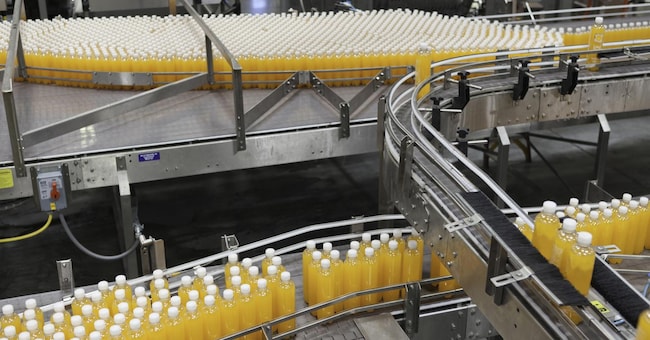
Suppose you want to analyse the potential greenhouse effect of a bottle complete with cap and label. Having established the functional unit, equal to the packaging to contain one litre of beverage, and the physical boundaries of the system, encompassing all phases of the life cycle, we proceed to data collection. To put it simply: the materials and energy used in the production of raw materials to create the bottle, cap and label are obtained; the kilometres travelled by road, sea or air for procurement are calculated; the materials and energy used in the decontamination, preparation, filling, capping and packaging of the bottle are quantified; transport for distribution to customers is taken into account, as well as the consumption associated with the use of the packaging and its end-of-life (recycling, landfill, or incineration). The data can then be modelled on commercially available LCA software, enabling the calculation of CO2 equivalents, a unit of measurement conventionally used to quantify the potential impact on global warming. The analysis will make it possible to identify the most impactful steps and to draw inspiration for improvements in the production process in order to increase its environmental sustainability.

Criticism and Advantages

.

In carrying out a life cycle analysis, the inventory analysis phase sometimes presents critical issues both in terms of time, since it can take up to several weeks, and in terms of the quality of the data collected, which must be representative of reality and directly measured. Carrying out a complete analysis therefore requires specific skills and a rigorous approach in order to obtain consistent results and correct interpretations. Mistakes to be avoided in setting up or modelling the study are, for example, to exclude some important phases from the analysis, such as distribution or disposal, or to use obsolete or irrelevant data that could distort the results.

Having addressed the (surmountable) challenges for calculation, LCA enables multiple benefits for companies: it can support the identification of product and process improvement opportunities, thus assisting strategic planning, design or redesign. By identifying waste and inefficiencies, it can enable a reduction in operating costs. LCA results then lay the foundation for green marketing, enhancing products with reduced environmental impact through eco-labels, environmental claims or environmental product declarations, known by the acronym Epd. Furthermore, the European Union recognises it as the basis for defining green taxonomy and standards for eco-friendly products. In fact, it provides solid and transparent scientific evidence for the quantification of environmental impacts, helping companies to demonstrate compliance with the sustainability standards required for access to funding and incentives.

In conclusion, it can be said that life cycle analysis has now become an indispensable tool for complying with increasingly stringent environmental regulations and for rising above the competition: by enhancing the reputation and image of companies that use it, LCA will increasingly enable them to quantify and demonstrate their focus on research and the pursuit of greater environmental sustainability of products, processes and organisations in the near future.

Researcher in Industrial Engineering and Lecturer in Assessment Tools
for Food Sustainability, University of Parma
.

Copyright reserved ©
Loading...

Brand connect

Loading...

Newsletter

Notizie e approfondimenti sugli avvenimenti politici, economici e finanziari.

Iscriviti