
From the Gulf War to Lebanon, General Portolano new Chief of Defence Staff: here is who he is
As of 4 October, Portolano will take over from Admiral Giuseppe Cavo Dragone, who has been appointed chairman of the NATO Military Committee as of next January and will also assume the position of advisor to the Minister of Defence for relations with NATO. Portolano currently holds the position of Secretary General of Defence and National Armaments Director
by Redazione Roma
 Aggiungi Il Sole 24 Ore
ai preferiti su Google
5' min read
5' min read
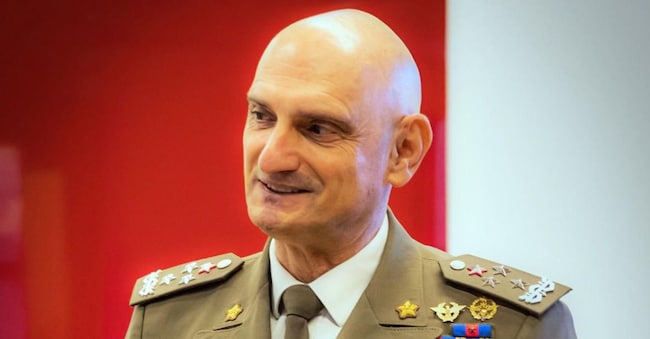
The Council of Ministers, at the proposal of Defence Minister Guido Crosetto, has decided on the appointment of General Luciano Antonio Portolano as the new Chief of Defence Staff. This was learned from government sources. As of 4 October, Portolano will take the place of Admiral Giuseppe Cavo Dragone, who has been appointed chairman of the NATO Military Committee as of next January and who will also take on the position of advisor to the Defence Minister for relations with NATO. Portolano currently holds the position of Secretary General of Defence and National Armaments Director.
Army Corps General, 63 years old, originally from Agrigento, Portolano began his career by attending the 161st Course at the Military Academy of Modena and, subsequently, numerous other courses in Italy and abroad. Over the course of his military life, he has taken part in many operations and missions. In addition to his command duties at home and in operational contexts outside national borders, he has held staff positions in the Armed Force, Inter-Forces and International Organisations. Between 1990 and 1991, with the rank of Captain, he took part in the UNIMOG (United Nations Iran-Iraq Military Observer Group) mission, on the border between Iran and Iraq, set up with the aim of monitoring the buffer zone and compliance with the ceasefire between the two states.
In 1991, following the events of the 1st Gulf War, he was then transferred by the United Nations to the border between Iraq and Kuwait, to take part in theUNIKOM (United Nations Iraq-Kuwait Observation Mission), established to create and monitor the demilitarised zone between the two countries, where he remained until 1992. In 1999, with the rank of Lieutenant Colonel as Commander of the 67th Bersaglieri Battalion, he took part in the NATO Operation Joint Guarantor in Macedonia, and in Operation Joint Guardian in Kosovo, leading the units that made up the Early Entry Forces of the national contingent.
In 2003, with the rank of colonel, commanding the 18th Bersaglieri Regiment, he took part in Operation 'Ancient Babylon 1', in Iraq, once again in command of the Early Entry Forces of the national apparatus, deployed following the events connected with the 2nd Gulf War and the related UN Security Council resolution, which urged the international community to contribute to the stability and security of the Iraqi country.
As Commander of the Mechanized Brigade "Sassari" at the rank of Brigadier General, between 2011 and 2012 he was sent to Afghanistan with the Large Unit to take over the leadership of the multinational Command RC-W (Regional Command - West) as part of the NATO - ISAF (International Security and Assistance Force) operation.

