From face to heart: restoring time. The philosophy of the perennial clock
Modern, vintage, antique: whatever its age, the mechanism of a watch is designed to never stop beating. In Geneva, we entered the workshop where history is set in motion.

5' min read
5' min read
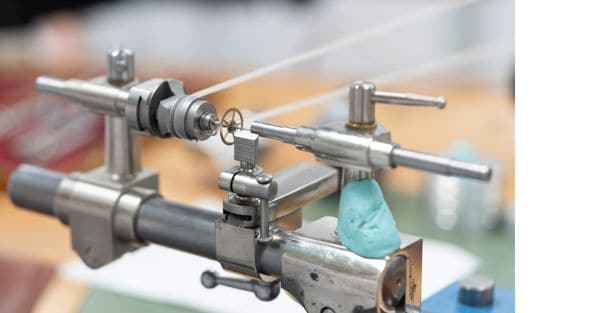
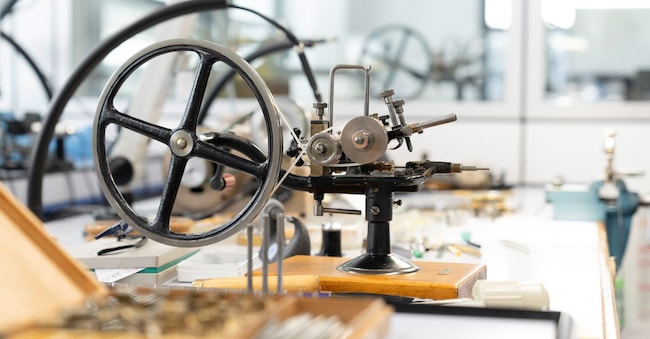
The heart of time is made of belts, wheels, blades, wheels, teeth, lathes, wings. This is how the beat of a gear is transformed into the rhythm of hours and days. How long can a watch live? Ideally forever. Sounds like a romantic aspiration if it were not anchored in the practical and minute dimension of care. Rhabiller is a slow and counter-intuitive operation in relation to a contemporary obsolescence-oriented world, replacing that which wears out. To repair means to set in motion again, to prepare again, to put back into the world. An idea that the West has declined above all in the psychological and legal spheres (a work of justice and mending of bonds and the social fabric, since the times of Greek theatre) and that the East has developed in the art-symbol of rebirth: the kintsugi, which dresses the break, the crack, the error in gold and value.

There is, however, one area in which repair skill is a manual precision technique cultivated and developed over decades to preserve manufacturing culture: haute horlogerie. In Geneva and neighbouring Plan-les-Ouates, the philosophy of the rhabiller means guaranteeing any timepiece the option of a longevity that spans centuries and generations and verges on forever. This is Patek Philippe's in-house workshop, which for the first time has opened its doors to HTSI.
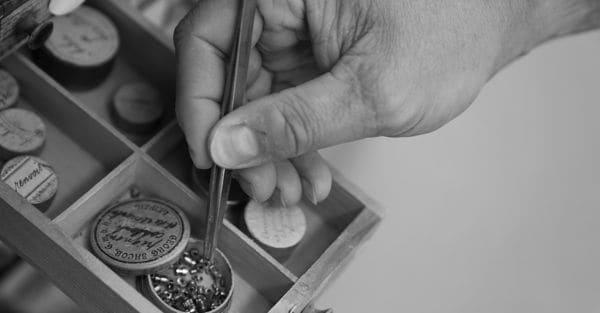
But let us proceed with order. The maison, which has had its home in the Swiss city since 1839 under the name of Patek, Czapek & Cie - which only in 1851 became its current one - has since its beginnings represented one of the pinnacles in the field of complicated mechanical watchmaking. A brand with many souls, over time it has made the blend of tradition and innovation its hallmark. Its heritage underlies its everyday production, so much so that in 2001 the Patek Philippe Museum was opened to the public to offer visitors a journey through the history of watchmaking. On display here are not only the most representative creations, but also the most valuable pieces produced over more than five centuries.
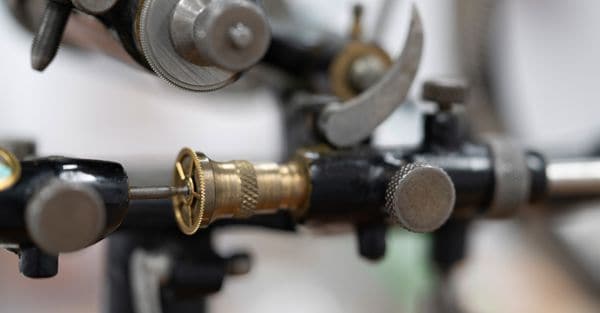
Precisely in order to mark the link with history, the maison has set up a restoration workshop located inside the first factory opened by Patek Philippe in 1996, in Plan-les-Ouates, just outside Geneva. Since 2020, this production site has been joined by a second construction, a futuristic ten-storey building (four of which are underground) 200 metres long and 67 metres wide, where most of the maison's activities take place. Like all mechanical watches, Patek Philippe's haute horlogerie watches need an overhaul. Whether they are modern, i.e. produced from 1970 to the present day, or vintage, from 1940 to 1970, this is considered a normal routine step, not very different from what is done for any precision instrument, whose health is checked and reliability attested. This is carried out by a number of specialised departments within the manufacture.
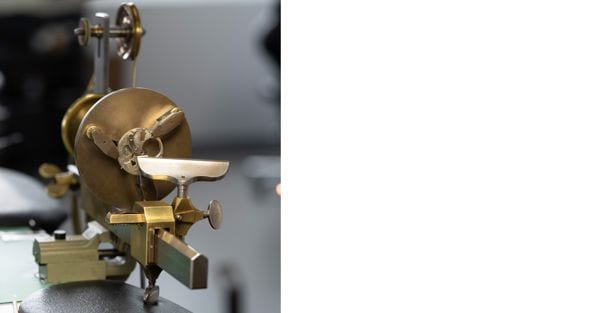
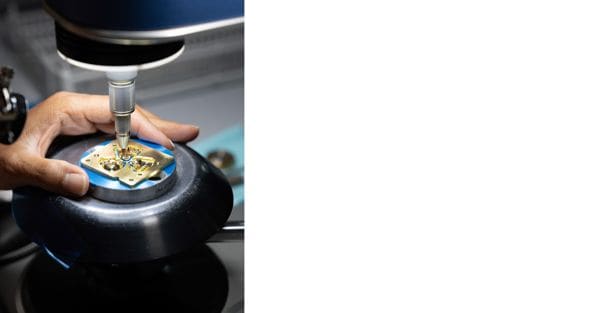
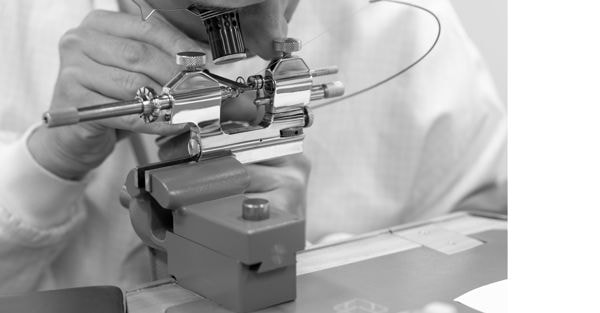
The same should obviously be able to happen, albeit with a completely different approach, to the models made by the brand between 1839 and 1940, which are considered antique, and for which there is no talk of overhaul, but rather of restoration. For these historical pieces, there is an in-house workshop at Patek Philippe, which for the first time has opened its doors to HTSI. A place where 20 specialised watchmakers work who are entrusted with the complex task of restoring to their original vitality wrist, pocket or table models, produced in very small numbers and entrusted to the company by private collectors. It is here that our journey begins to piece together decades of history and discover how these masters of time operate. The first discovery is that the only watchmakers who can work on these models have learnt the art of restoration through experience and the passing on of knowledge from the previous generation, through an apprenticeship within the company: some of them are young, they come from specialist schools, even though there are no dedicated didactic courses for restoration and it takes skill, time and above all listening, to train by observing and repeating the gestures of other craftsmen who are already experts. This is why work is carried out in small teams in which each craftsman concentrates on a fundamental part of the watch. Several specialists only deal with the movements: given the date of the pieces, they are almost all calibres originally designed for pocket models. Then the size was revised to accommodate them in wristwatch models.