
From hotels to brand experiences: flexibility and identity are reshaping the hospitality industry
From modular solutions that cut renovation times and costs to projects that enhance the local area, right through to collaborations with the fashion world, the hospitality sector is redefining its business models

Key points
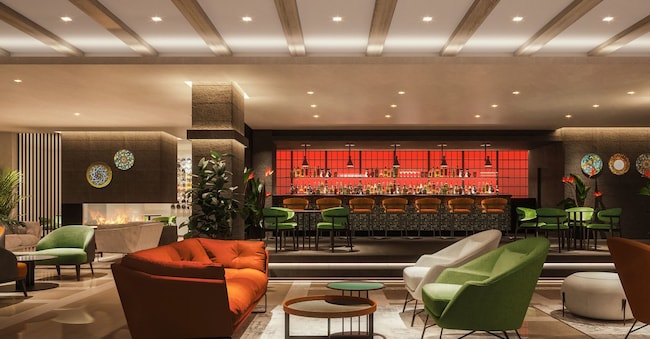
The idea of a hotel as merely a place to stay is now a thing of the past. Today, architecture and interior design are the primary means through which a hotel conveys its identity, transforming hospitality into a coherent and memorable experience. The contemporary guest no longer seeks just a room, but a seamless experience that integrates wellbeing, socialising and work. The sector is undergoing a quiet revolution: hotels are becoming seamless experiential hubs and brand showcases. From fitted wall units that can be assembled in a day to ‘fashion taking over hospitality’, the face of hospitality is changing.
Flexibility as an economic value
In a market that demands ever-faster renewal cycles, the ability to evolve without bringing business to a standstill is the new paradigm in property investment. Diego Baiocchi, CEO of Luconi, emphasises how time has become a decisive economic factor: ‘A room or a communal area furnished with flexible solutions (in their case, it’s called Chameleon, ed.) can be refurbished in less than a day, without any demolition or work on the building services. The wall ceases to be a mere partition and becomes an active infrastructure that integrates desks and shelving, freeing up space and improving efficiency.’ This approach aims to redefine spaces through a design capable of adapting to any architectural context. For the investor, this means minimising ‘room downtime’ – the most costly item on a construction site – thereby improving the economic viability of the entire project.
Beyond aesthetics: function drives design
If flexibility is the hardware, functional design is the software. ‘The role of architects and interior designers is no longer limited to expressing elegance or aesthetic refinement,’ explains Piero Giovannini, co-founder and partner at H&A Associati. ‘ “Today, we must translate the most intimate needs of those who live in and run the hotel into physical space. Function is our guide: remote working, for example, requires new furnishings. It is no longer enough to have just a beautiful desk; perhaps a comfortable armchair with an iMac-holding armrest is needed for a Zoom call.” According to Giovannini, modern design is adaptive: communal areas encourage connections and co-working, whilst digitally integrated services reduce friction and waiting times. This approach caters to a sophisticated traveller, focused on the quality of the experience rather than monumental appearances.
At the same time, sustainability has become an essential design criterion. “Environmentally friendly materials, efficient air-conditioning systems, bioclimatic solutions and a focus on the environmental footprint are no longer simply added values,” comments Giovannini, “but elements incorporated into the very logic of design. Hotel brands are investing in visual and functional identities that reflect ethical values and social responsibility, broadening the concept of luxury towards that of responsible and comfortable luxury – that is, luxury that is functional for the guest. Consequently, there is also a growing focus on the cultural contextualisation of the project: design is no longer standardised, but engages with and seeks to connect with the local area, local art and traditions.”
Between Genius Loci and the regeneration of existing buildings
Whilst technology enables speed, design ensures authenticity through a connection to the local area. One example is the Nina Trulli Resort in the Itria Valley, where luxury lies in the restoration of the Masseria San Francesco, built in 1730, making use of the existing structure without constructing anything new. Similarly, in the Dolomites, the Grand Hotel Ampezzo – designed by architect Alessandro Scaranari (Studio Zuretti) – focuses on fine local materials and artisanal craftsmanship: ‘The silhouette of the mountains is reflected in the mirrors and installations of the spa, offering a poetic and memorable experience,’ explains Scaranari. ‘This dialogue with history finds an industrial synthesis in the design of the NH Collection Murano. Here, Piero Giovannini describes the restoration of an old glassworks: “Natural materials and a connection to the local area generate a profound aesthetic value. Sustainability, through efficient systems and bioclimatic solutions, becomes an element embedded in the very logic of the design.”
Brand connect


Newsletter RealEstate+
La newsletter premium dedicata al mondo del mercato immobiliare con inchieste esclusive, notizie, analisi ed approfondimenti
Abbonati