From lifestyle turn to mini electric: what will the future of the car be?
The super niche, customisation, the innovative past, the value of craftsmanship. If true luxury is knowing, here are the trends that anticipate the big changes in the first object of desire.

6' min read
6' min read
'Storm over the car'. 'Tsunami on industry'. 'Epochal transition'. These are the concepts that keep being repeated and that tell of a serious situation, of profound metamorphosis, for the industry that, incidentally, churns out adults' favourite toys: cars, including top-of-the-range, special models and supercars, but also normal cars, because understatement is just the other side of chic.
Discussing the crisis is a topic for the office, cocktails and bars; between clichés ('I said it myself that the electric...') and subjectivity, semantic banalities and vintage nostalgia. If true luxury is to know, to know the trends in order to anticipate and interpret them, then delving into the future of the car market is indispensable. And it goes far beyond the development of social conversation skills.
What is really happening? What do we need to know in order not to overlook a global phenomenon? The question revolves around a far-reaching change, capable of disrupting the geography of production perhaps more than pandemics, wars and chip shortages have done in recent years. The car industry, which has set off at full speed towards the electric revolution, is coming to terms with a reality that differs from marketing forecasts: lithium-ion cars, imposed in practice by the EU, are not convincing customers. And the customer, as we know, is sovereign: if he is not convinced, he doesn't buy, and the numbers clearly speak of a gap between supply and demand. That is why it is time to return to putting the value of engineering and product at the centre. The car is still a satisfying and desirable object of desire, but it is a long way from a handbag or a pair of shoes. And it is certainly not a smartphone on wheels.
The new car game is therefore being played out on macro-themes that include the shift from premium to luxury with a return of vintage, curbing the wave of stacked vehicles, and a level of customisation that becomes self-expression. And above all, it is played on product quality.
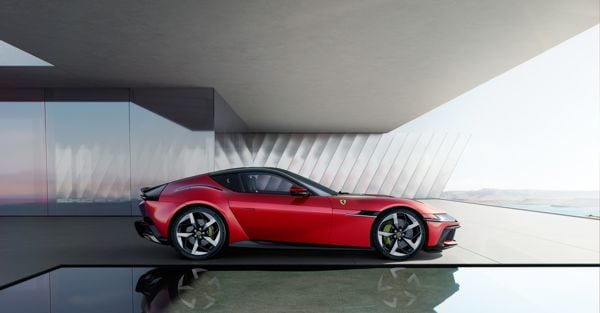
Luxury in respect of DNA. One example among all is Ferrari, which has always been considered a luxury brand for the craftsmanship of its models. Since its foundation in 1947, the Maranello-based company has maintained its DNA of sportiness and Italian-made excellence. The development of new divisions such as lifestyle is a tribute to the timeless elegance of the Prancing Horse, which uses its know-how to embrace new business: a fashion collection inspired by the style, innovation and performance of the brand's models. But the skills and styles of their respective markets, fashion on the one hand and automotive on the other, are quite distinct in their aims, both creative and technical.