Super-depreciation

Bonuses are driving investment in machinery

Plant manufacturers and engineering firms are reporting a recovery in orders. However, the regulatory process is still incomplete.

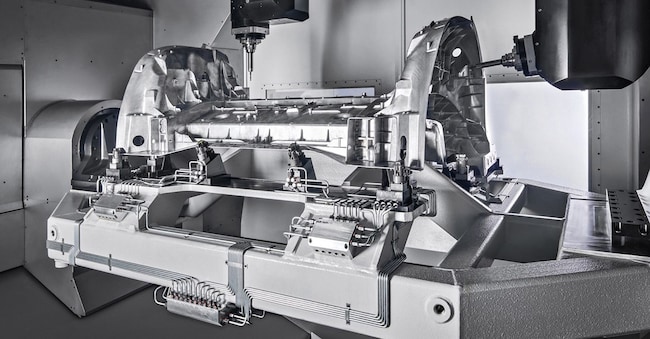
GiGa Bi 1600 lineare

4' min read

Translated by AI
Versione italiana

4' min read

Translated by AI
Versione italiana

“The initial figures are generally encouraging,” explains Riccardo Rosa, “and looking at what’s happening in my company, I’ve already seen confirmation of over three million orders from Italia.”

The result achieved by the president of Ucimu is not an isolated one, with machinery manufacturers seeing a partial upturn in orders following the release of the new incentives – a turning point that arrived on 12 June after months of waiting, with the operational rules and the opening of the GSE portal for submitting investment applications. This was a much-needed turning point, given recent results, with a clear slowdown evident in the figures for orders received in Italia during the first half of the year. The situation was particularly weak for machine tool manufacturers, who saw a fall in domestic orders of over 30 per cent between January and June, and almost 40 per cent in the second quarter. This slowdown was also felt across the capital goods sector as a whole, at Federmacchine level, with a reduction in domestic orders of more than 9 per cent.

Loading...

“This new measure,” explains Rosa, “will certainly give a boost to investment in new technologies, and indeed orders are coming in, with more expected when business picks up again in September. I see a buzz of activity in the defence sector, but more generally in mechanical engineering and mould-making too. The outlook? Credit must be given to the Ministry of Economic Development for having introduced a measure that will run for several years, and this is definitely important for the sector.”

“June, following the enactment of the decree, was actually a very good month for us,” adds Massimo Carboniero, owner of the Veneto-based firm Omera, “with ‘dormant’ orders worth over three million euros being released. “There is a resurgence in investment across several sectors, including heating and ventilation, and household goods. But also in the automotive sector, particularly amongst those working in the premium segments.”

“Thanks to June and July, when there was a 20 per cent surge,” adds Mauro Biglia, owner of the Piedmont-based lathe manufacturer of the same name, “Italian orders for 2026 are 6–7 percentage points above last year’s levels. The market has picked up, although I must say that, working with numerous subcontractors, we’re still seeing a great deal of caution: global uncertainty is holding back projects and, in many cases, customers say they want to wait until September. This is also because, as we’re dealing with a multi-year scheme, thankfully there isn’t a frantic rush to claim the incentive.”

There has also been a surge among engineering firms that assist businesses in accessing the incentives, as is the case with the Quarenghi consultancy, which has 25 staff and handled applications totalling over half a billion in incentives last year. “Since the decree was passed,” explains Sergio Quarenghi, “we’ve been receiving at least 5–6 enquiries a day from businesses, and I’m optimistic about the recovery in September. Even though the rules still need to be finalised.”

Whilst the decree allowing investments to be booked on the GSE portal has been in force since 12 June, and the platform for submitting investment confirmation notices has also been operational since 21 July, the final step relating to the notification of the transaction’s completion is still missing; this measure was announced in the latest decree.

“Some customers invested in 2026 and have already completed the installation,” explains Quarenghi, “but the procedure cannot be finalised precisely for this reason. It should be noted, however, that on average the tax relief will only be available to companies from next year, so there is still time to take action.” The exception applies to those whose financial year ends on 30 June – companies which, at present, cannot begin claiming the deduction for that financial year.

“Since 12 June, there has been a sharp rise in the number of projects,” explains Alessandro Di Raddo, owner of the engineering firm Diratec, “with investments ranging from a few thousand euros to tens of millions: every day, between emails and phone calls, we receive 7–8 requests for quotes; I hope to be able to take a break at least during the week of mid-August – at the moment, we’re struggling to keep up with the quotes.”

The booking figures (9,000 applications totalling three billion, according to the latest data released by Mimit on 15 July) are encouraging, although a genuine recovery will require different figures: Federmacchine’s figures for domestic consumption of plant alone amount to 28 billion, rising to 170 billion if the scope is broadened to include the Istat classification of machinery and equipment (+armaments). Now that the backlog caused by the wait for the measure has been cleared, the real test will begin in September, when the flow of applications reaches full capacity and it will be possible to gauge companies’ willingness to invest, as they are now in a position to plan ahead.

Loading...

Thanks to a scheme that offers a benefit of over 43 per cent on investments of up to 2.5 million, thereby almost halving the outlay for the company. This scheme has, for once, been made permanent, with a timeframe extending until September 2028, a deadline that some trade associations are already seeking to extend by a few months, taking into account the six-month delay that has accumulated between the passing of the Budget Law at the end of 2025 and the possibility of booking orders, which only became available from 12 June.

However, this is not the only change that plant manufacturers are calling for.

“I believe we must once again strongly call for the protection of ‘Made in Europe’,” adds Carboniero, “by seeking to curb Chinese competition, which in certain sectors of the machinery industry is becoming unmanageable, with below-cost production subsidised by Beijing. At European level, efforts are underway to establish a shared definition to defend the manufacturing sector, a push that is now also being strongly championed by German industrialists, whose leading figure is chairman of the supervisory board of Trumpf, the country’s largest machine tool group.”

Copyright reserved ©
Loading...

Brand connect

Loading...

Newsletter

Notizie e approfondimenti sugli avvenimenti politici, economici e finanziari.

Iscriviti