From cinema to reality

From mondine to machines: history of the farmstead where 'Riso Amaro' was filmed

On the estate that once belonged to the Agnellis and Ligresti families, female labour has been replaced by weedkillers. And today it is threatened by climate change

by Micaela Cappellini

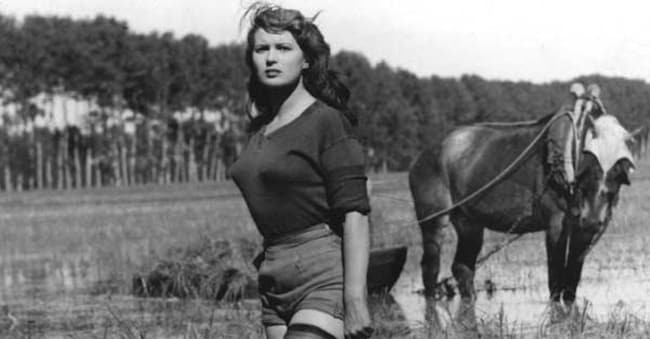
Silvana Mangano in Riso Amaro  (Alamy Stock Photo)

6' min read

Translated by AI
Versione italiana

6' min read

Translated by AI
Versione italiana

When the master of neorealism Giuseppe De Santis shot 'Bitter Rice', Fulvio Bertoldo was not even born. It was 1948, and the worldly Silvana Mangano was inciting her companions to social struggle among the Vercelli rice fields. Almost eighty years later, the Cascina Veneria in Lignana, which was the set of the film, is still in place. Only now, it is Fulvio Bertoldo himself who harvests the rice: 'We bought the estate about fifteen years ago,' he says, 'me, my father Ermenegildo and his brother, my uncle Antonio.

With its 750 hectares, Veneria is the largest rice farm in Europe and its history is long, very long. It began in the 12th century, when it was a hunting outpost included in the landed estate of the abbey of Santa Maria di Lucedio, then over the decades it passed to the Savoys. At the time of 'Riso Amaro' it belonged to the Agnelli family: 'Riccardo Gualino of Lux, the film's production company, was a personal friend of the Avvocato,' says Marco Grossi, who teaches History of Cinema at the Academy of Fine Arts in Frosinone and is the secretary of the Giuseppe De Santis Association, dedicated to the director's works. Thus, it is the standard bearer of Italian capitalism who lends his estate to the most communist of directors.

Loading...

On the set of the film

.

And Gianni Agnelli often went to the set. And so did Robert Capa, who eventually published a report in 'Life' on Italian rice weeders that went down in the history of photography. As did Renato Guttuso, who designed the film's brochure. And so did Cesere Pavese, who fell in love - and unrequitedly - with the sister of the film's co-star, the American actress Doris Dowling. Constance - the sister, in fact - was at the Veneria because she had a small part in the film, as a mere extra: "Death will come and it will have your eyes" are apparently verses that Pavese wrote thinking of her.
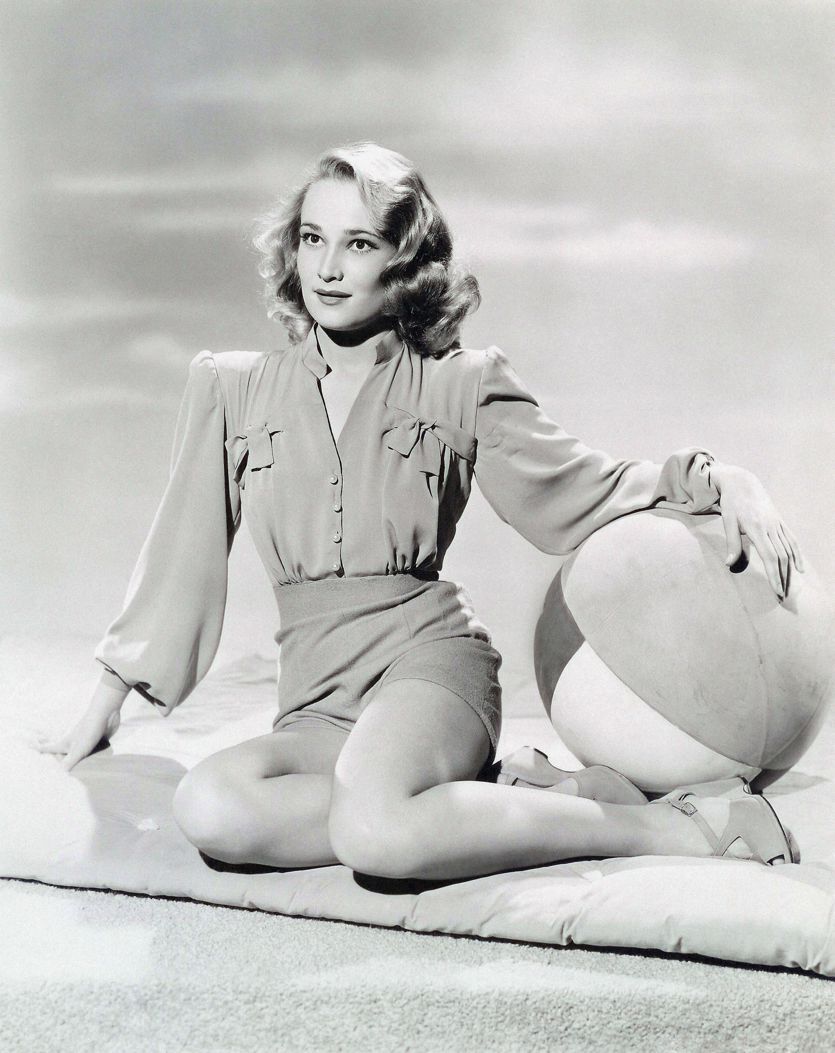
Verrà la morte e avrà i tuoi occhi

I versi scritti da Cesare Pavese per l’attrice americana, conosciuta sul set di «Riso Amaro»

Constance Dowling (Photo by WolfTracerArchive / Photo12 via AFP)

After the Agnellis, the Lignana estate passes to the Ligresti, and it is from Fondiaria Sai that the Bertoldo family buys the farmstead and land: 'We were in the newspapers at the time for that acquisition,' Fulvio recounts, 'a company of historical and territorial importance ended up in the hands of a little-known family. The Bertoldo family are self-made people; Fulvio's grandfather left from the deepest part of Veneto, in the province of Vicenza, in the 1950s with a wife, eight children and no money in his pocket. He started by renting a piece of land and finished by putting together 2,000 hectares of his own land and 3,000 head of cattle.
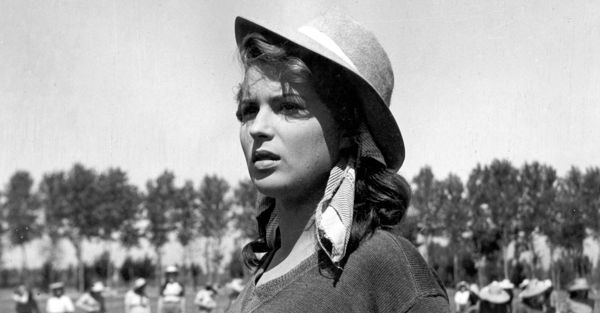
La rivolta contro il lavoro nero

Silvana Mangano guida la rivolta delle mondine nel film «Riso Amaro»

Silvana Mangano

The work of the Mondine

.

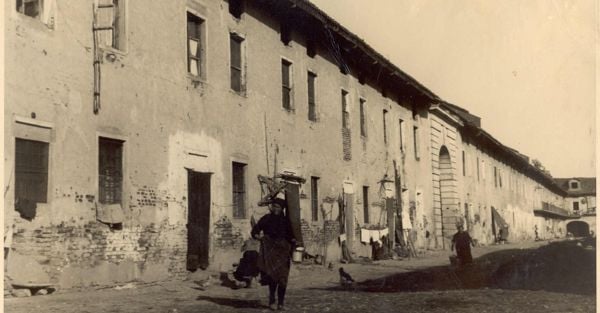
When he looks at 'Riso Amaro', Fulvio Bertoldo recognises some glimpses of his Veneria: 'Part of the farmstead is still as you see it in the film,' he says, 'but the landscape around it has changed profoundly. Above all, work in the rice fields has changed: 'Since I've been making rice, I've never seen a mondina,' he admits. In the post-war period, on the other hand, everything was exactly as De Santis recounts: the workers and peasant women from Veneto and Emilia would come to the Vercellese for forty days to plant rice and pull up weeds, their bare feet in the water and their trousers rolled up above the knee. A kilo of rice was a day's pay. Talking was forbidden, so they sang, and each verse was a message to their companions. Silvana Mangano, in the role of Francesca, led the protest against the "mondine" who were hired illegally, because then, as now, in the Italian fields, caporalato was at home. De Santis, after all, was a true neo-realist and had done his homework in order to tell his story: 'He had asked a friend of his, the editor-in-chief of the Turin newspaper L'Unità, for help,' says Marco Grosso, 'who had put a young journalist from the Culture editorial office at his disposal for the inspections in the Vercelli rice fields: charming, graduated, ex-partisan, former Turin football player, theatre actor in his spare time. That journalist's name was Raf Vallone: it was the part of the sergeant he got in 'Riso Amaro' that made him change his profession for good and launched him into the star system.
The advent of herbicides

But when exactly did the mondine disappear from the rice fields? And who replaced them? "It is not machines that have replaced women's work, the real innovation was chemical weed-killers, which began to mow the weeds instead of them," says Giovanni Daghetta, vice-president of the Rice Group at Copa-Cogeca, a member of Cia-Agricoltori Italiani. From the height of his 72 years of experience, he remembers the rice weeders well: 'On the family farm we had 400 hectares of rice paddies and 400 rice weeders came to work there. They came fromthe Veneto and Brescia, in the last period also from Abruzzo. The warehouses that housed the paddy in winter, in spring and summer were transformed into dormitories, a bit like boarding schools'. The season lasted two months, 'the mondine,' Daghetta recalls, 'were paid a salary, but they were also given a few sacks of rice'. Then, in the mid-1960s, chemistry arrived in the field: 'In a few years,' he recounts, 'at the farmstead we went from 400 to 30-40 mondine at most. When the combine harvesters arrived, we were left with the machines and only four workers. But the machines have only replaced the horses and riders, it is the chemistry that has replaced the mondine.

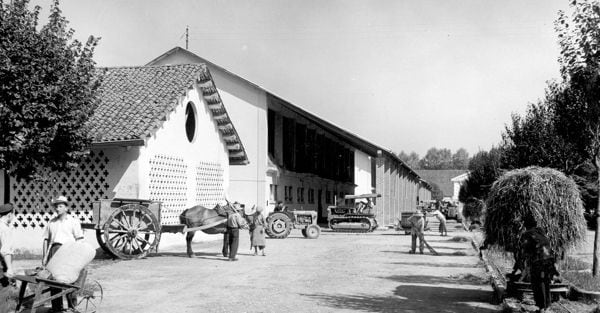
La Cascina Veneria

Così appariva negli anni 60 la tenuta, che ancora oggi è la più grande azienda risicola d’Europa

La tenuta di Lignana, in provincia di Vercelli

The challenges of modern production

.

Producing rice today is much cheaper than in the 1950s: 'Production has increased,' says Daghetta, 'and consumption has also grown. In addition, today farmers have the aid of the CAP, which helps to increase income'. In short, it is not true that things were better in Vercelli when they were worse. We are concerned about imports from Asian countries,' explains the vice-president of Copa's Rice Group, 'just as we are concerned about the green deal, which prevents us from using many of the chemical products we use in rice fields without giving us an ecological alternative that is also valid.

These are all issues that are clearly on the table of the national agricultural associations: 'The rice sector is under pressure,' says Cristiano Fini, president of the Cia, 'and is asking the government and Brussels for concrete measures to defend quality, income and the future of the supply chain. We need updated tariffs, not stopped in 2004, to protect us from Asian rice produced by exploiting child labour and without our food safety standards. We need an automatic and streamlined safeguard clause against uncontrolled imports. And we need a CAP that is closer to the companies, capable of truly supporting those who produce'. Rice growers, says Fini, are caught between two fires: 'On the one hand, US tariffs risk penalising high-end rice such as risotto rice, while the treaty with Mercosur could introduce up to 60 thousand tonnes of rice grown with plant protection products that have been banned in Europe for years. The continuous openings to free trade areas, not least the one planned with India, as well as the old zero tariffs agreements with EBA countries such as Cambodia and Myanmar, are increasingly transforming European rice from a crop of excellence into a simple expendable commodity'.

Il lavoro di una volta

I magazzini che d’inverno ospitavano il risone, in primavera e in estate servivano a dare alloggio alle mondine che venivano a lavorare nelle risaie del Vercellese

Cascina Veneria

climate change

.

At the 'Riso Amaro' farmstead, different varieties continue to be cultivated today, from Carnaroli to Baldo, and even Vialone Nano. 'The noblest ones,' says Bertoldo, 'we process them directly here, in our rice mill, and then we sell them under the Veneria brand to delicatessens, restaurants, Eataly shops or Rinascente'. What worries the Veneria owner the most, however, is climate change: 'We cannot underestimate therisk of a decrease in the availability of water to irrigate the rice fields: four years ago we already had a difficult season because of the drought. The other side of the coin is too much water: ten days ago in the Vercelli area there was a powerful hailstorm, which risks compromising up to 40% of this year's rice harvest'. .

Copyright reserved ©
Loading...

Brand connect

Loading...

Newsletter

Notizie e approfondimenti sugli avvenimenti politici, economici e finanziari.

Iscriviti