United States

From Nixon’s surprise win in Florida to Trump’s setback in Wyoming: what the recent US primaries tell us

Angie Nixon’s surprise victory in Florida has given the Democratic left a new lease of life, whilst a series of defeats is testing the influence of the President’s endorsements

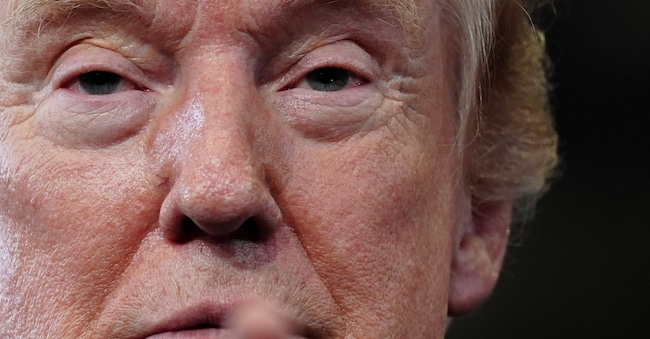
Il presidente degli Stati Uniti Donald J. Trump APN

5' min read

Translated by AI
Versione italiana

5' min read

Translated by AI
Versione italiana

Sixteen million dollars versus less than one. If the US primaries were won through fundraising, in Florida Alex Vindman would have been a shoo-in for the Democratic nomination for the Senate. But the opposite happened. Angie Nixon, a state representative and Democratic socialist, beat him and will face the Republican Ashley Moody in November to serve the final two years of the term vacated by Marco Rubio, now Secretary of State in the Trump administration.

It is the latest outcome of an election campaign that is putting the hierarchies of both parties to the test. On the left, progressive candidates capable of defeating establishment-backed figures are gaining ground. On the right, Donald Trump remains the centre of gravity of the Republican Party, even though the latest primaries have shown that not even the President’s endorsement guarantees victory.

Loading...

Florida: Nixon’s surprise victory in an increasingly red state

Nixon’s victory is perhaps the most surprising. Vindman, a former National Security Council official and one of the key figures in Trump’s first impeachment, had raised more than 16 million dollars. Nixon raised less than one.

For the Democrats, however, the hard part begins now. Florida is no longer the swing state that kept America on tenterhooks for years, given that there are around one and a half million more registered Republicans than Democrats. Furthermore, in Tuesday’s primaries for the Senate and governor, GOP candidates secured a total of around 1.6 million votes, compared with 1.2 million for the Democrats. Vindman was also considered the stronger candidate among centrist voters. With Nixon standing as a candidate, unseating the Republican Ashley Moody in November will be even more difficult.

The progressive revolt, however, did not sweep the entire party. Jared Moskowitz defeated Oliver Larkin, who was backed by the Democratic Socialists of America, a US socialist left-wing organisation. Debbie Wasserman Schultz, former chair of the Democratic Party’s national committee, secured the nomination in the new constituency in southern Florida.

And for the Democrats, the bad news doesn’t end there. The new constituency map could hand the Republicans up to four more seats in the House of Representatives. If the estimates reported by Reuters are confirmed at the polls, after November Florida could send 24 Republican representatives and just four Democrats to Washington.

On the Republican side, Byron Donalds, backed by Trump, has secured the nomination for governor and will take on David Jolly, a former Republican MP who has switched to the Democrats. If elected, Donalds would become Florida’s first Black governor. However, two other candidates backed by the President have been defeated. Catalina Lauf lost the race for the House seat vacated by Donalds himself. Cory Mills, the outgoing congressman whose campaign had been marred by controversy and an investigation by the House Ethics Committee, was also defeated.

Wyoming: another setback for Trump

A similar signal came from Wyoming. To succeed Governor Mark Gordon, Trump had chosen Megan Degenfelder, the state superintendent of education. Republican voters preferred State Senator Eric Barlow. The President did, however, achieve the result he wanted in the Senate race: Harriet Hageman, his ally and a key figure in Liz Cheney’s defeat in 2022, secured the nomination for the seat vacated by Cynthia Lummis.

Alaska: Peltola gets back into the game

As one door seems to be closing in Florida, another may be opening much further north. In Alaska , Mary Peltola , a moderate Democrat and former Member of the House of Representatives, beat the outgoing Republican Senator Dan S. Sullivan in the open primary . Both will be on the ballot in November, but Peltola’s result has turned Alaska into one of the most promising opportunities for Democrats seeking to win Republican Senate seats.

Peltola is a very different candidate from Nixon. She was the first Alaskan Native to be elected to Congress and has established herself as a moderate, capable of appealing to independents and Republicans alike. This is no minor matter in a state where the top four candidates from the primaries go through regardless of party, and where the November election is decided using the ranked-choice voting system.

Loading...

And in Alaska, the Senate race has taken on an almost surreal twist. On the ballot paper, alongside Republican Senator Dan S. Sullivan, another Dan Sullivan has appeared: Dan J., a former teacher and also a Republican. The senator’s allies do not believe it is a coincidence; they suspect that the other Sullivan has entered the race precisely to confuse voters and take votes away from the incumbent. The former teacher denies this, but in the meantime, the case has also come to the attention of the Department of Justice.

The Left put to the test in the Midwest

The Nixon surprise, moreover, had been preceded by another wake-up call for the Democratic establishment. Two weeks earlier, in Michigan, the progressive Abdul El-Sayed, a doctor and former health commissioner for Detroit, had beaten MP Haley Stevens in the Senate race. The margin was narrow, but the political significance far less so: Stevens represented the party’s more moderate wing, whilst El-Sayed had the support of the left and, amongst others, Bernie Sanders. In November, he will face the Republican Mike Rogers.

The stakes are high. Trump won Michigan in 2024, and the Democrats cannot afford to lose that seat if they are to have any chance of overturning the Republican majority in the Senate, which currently stands at 53 to 47.

A week later, it was Minnesota’s turn. Deputy Governor Peggy Flanagan defeated the moderate MP Angie Craig in the Democratic primary for the Senate. Flanagan is a progressive, although she is not a member of the Democratic Socialists of America, and she made her fierce opposition to the Trump administration’s immigration policy one of the key themes of her campaign, going so far as to call for the dismantling of ICE.

Mike Lindell, of the bedding company MyPillow and a long-standing ally of Trump, was defeated in the same state. The president’s support was not enough to see him through against Lisa Demuth.

However, all it took was crossing the border into Wisconsin for the tide to turn. Here, David Crowley, a moderate, beat Francesca Hong, the socialist left-wing candidate, by just over three thousand votes and secured the Democratic nomination for governor.

In Hawaii, where the establishment is holding out

And Hawaii has also put the brakes on the idea of a complete shift to the left. Here, Ed Case, a 73-year-old moderate MP, easily fended off the challenge from the progressive Jarrett Keohokalole, aged 43, winning with 57 per cent of the vote against 34 per cent. In a firmly Democratic constituency, the result does little to shift the balance of power in the House, but it does reveal something about the internal dynamics of the party. Namely, that whilst there is a desire for change, it does not always favour the left.

South Carolina: the next test is on 25 August

Finally, the race in South Carolina remains too close to call. Darline Graham, who was called upon to temporarily fill the seat vacated by her brother Lindsey, who died in July, is now aiming to retain it for a full term and can count on Trump’s support. On 11 August, she won the first round of the Republican primary, but without reaching 50 per cent. On 25 August, she will therefore face MP Ralph Norman in the run-off, and this will be another test for the president: Graham is currently in the lead, but his endorsement was not enough to settle the race in the first round.

So far, in short, it has mainly been the parties that have voted. In November, America will go to the polls. And that is when we will see whether the shift to the left observed in Florida, Michigan and Minnesota is capable of winning over those who did not vote in the primaries. And, above all, whether the Trump brand retains the same appeal when someone else’s name appears on the ballot paper.

Copyright reserved ©
Loading...

Brand connect

Loading...

Newsletter

Notizie e approfondimenti sugli avvenimenti politici, economici e finanziari.

Iscriviti