
From the M.A.R.E. project to the partnership with Ogyre, Shiseido's commitment to the oceans

3' min read
3' min read
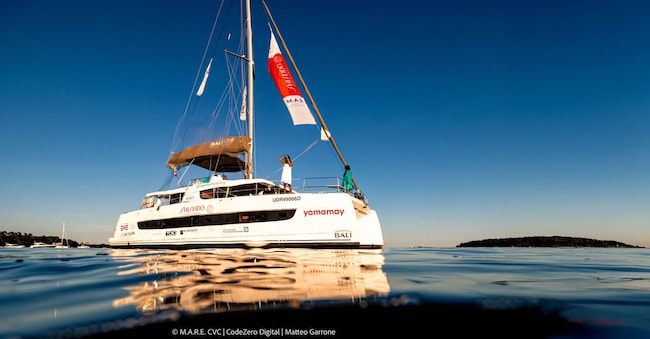
Originating from a country with a unique geographic location - Japan sits at the crossroads of several seas - Shiseido is committed to the conservation of marine ecosystems through the Shiseido Blue Project, the environmental initiative launched in 2019 to inspire, educate and raise awareness for improving the health and beauty of the planet's oceans and seas. As part of this global mission, since 2024 Shiseido has been supporting the M.A.R.E. (Marine Adventure for Research & Education) project, the maritime expedition launched in 2022 by the Centro Velico Caprera Foundation, the largest sailing school in Italy, in collaboration with One Ocean Foundation, which has scientific and educational aims focused on marine ecosystems.
For the 2025 edition of the M.A.R.E. project, Shiseido renews and strengthens its support with a new and unprecedented research programme initiated by the Shiseido Europe Innovation Centre and focused on innovation in sustainability.
"The partnership with M.A.R.E. offers us a fantastic platform to study how pollutants affect our seas. "Understanding in order to act": we have decided to go further by launching a large-scale research project aimed at future innovations in the cosmetics industry, driven continuously by our commitment to limit our environmental impact," comments Nathalie Broussard, Shiseido's Director of Science Communication.
On 17 May 2025, a team of scientists with complementary skills from renowned universities, research enthusiasts and the marine world set sail aboard the catamaran for 10 weeks and 1800 miles. Starting in Taranto, the expedition will head south to Greece, then to the coast of Turkey, before returning to Italy in July, arriving in Palermo.
The objective of this fourth edition is to map the Ionian and Aegean Seas and complete the data obtained during the three previous expeditions, enabling the entire navigable Mediterranean Sea to be monitored. Although it covers less than 1% of the oceans' surface, the Mediterranean hosts a surprising number of marine species (10%), making it a key biodiversity hotspot. Its relatively small size compared to the oceans makes its ecosystem particularly sensitive to anthropogenic impacts such as pollution, climate change and maritime traffic.


