
From the provinces the thermometer of tourism development
Comparison over a five-year period on the development of supply and demand and the impact on the territory
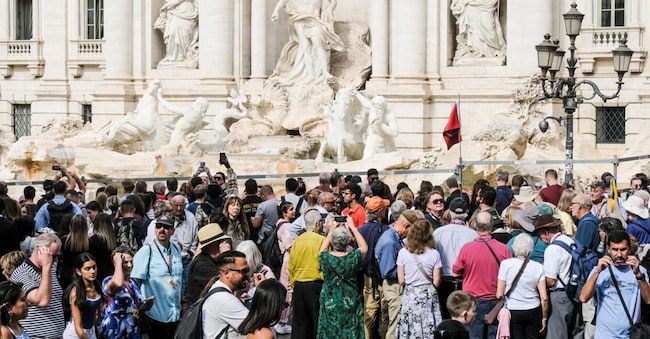
There is a little less summer in the Italians' holidays. Total presences in the June-August period dropped from 52% in the 1990s to 46% in the first years of the new millennium. Global tourism then multiplied arrivals from abroad, increasing foreign tourist presences in the top ten provinces from 49% in 2019 to 50% last year. In 2024, tourist presences thus exceeded 466 million, up 7% on 2019, and ten provinces captured half of the presences, growing by two percentage points more than the average in 2019 (+9%). The map of destinations thus changes and, compared to the pre-pandemic years, Rome has overtaken Venice in first place, while Naples has overtaken Florence. Several double-digit growth rates are recorded in the top ten, such as those of Rome (+37%), Brescia (+14%), Bolzano and Milan (+10%). On the other hand, key destinations such as Florence (-17%) and Rimini (-7%) have fallen back. In the 10 provinces that close the ranking, the total number of presences is just over 2.2 million and the trend is one of stability. This is what emerges from the report 'Tourism in the Italian provinces: an analysis of demand and supply' produced by the Italian Touring Club Studies Office, which highlights how the development of tourism deserves careful planning to better manage housing pressure and the increase in prices, of rentals as is the case in cities of art where there has been a rush to turn flats into locations for short rentals.
Sprint for hotel extra
During the period under review, there was a strong growth in non-hotel beds, which rose to 3.2 million (+10%), while those managed on an entrepreneurial basis with more flats for short-term rentals even increased by 34%. By contrast, the supply of hotels grew by 1 per cent. Thus in 2024 just over 182 million presences were recorded in non-hotel structures, almost 40% of the total, with a growth in the five-year period of 17%.
With a constantly changing offer, the average length of stay is 3.3 nights, with higher averages in those provinces with a strong vocation for tourism, particularly seaside tourism. This is the case in Crotone, Teramo, and Vibo Valenza, where the average length of stay ranges from 5.5 nights to 4.8, as, for example, in Romagna in the province of Forlì-Cesena. The average is lower in provinces where the flywheel is mainly business tourism or those, as in the case of Varese and Bergamo, that host airports with large passenger volumes.
Arrivals from abroad are growing steadily, with a 15% increase between 2019 and last year with over 254 million foreign presences. Presences from abroad that for some macro-areas reach 80% as in the case of Como (83%), Verbano-Cusio-Ossola (81%), Verona (79%), Brescia (72%) and Lecco(71%). There was a similar trend for Florence (79%), Venice (77%) and Rome(72%), the classic trio of art cities that are the backbone of tour operators' packages. The slowdown in stays by Italians is accentuated (-2% compared to 2019). The provinces visited almost exclusively by fellow countrymen are Campobasso (92%), Crotone (91%) and Cosenza (90%): all southern provinces are in the top 10.
Attractive Territories
Then there is the attractiveness factor of the capital destinations and the spillovers to the provincial territory. In the case of Rome, for example, 90% of flows are concentrated on the capital. This is followed by the provinces of Massa-Carrara, where the two capitals attract 85% of presences, and by Prato (80%). High percentages are also recorded by Milan (78%), Florence (71%) and Bologna (70%). The situation is reversed in the case of destinations with a strong tourist vocation. This is the case in the provinces of Sondrio, Bolzano and Belluno where the surrounding municipalities are the real magnets for guests. In the case of Sondrio, for example, this benefits Bormio, Livigno, Aprica, Madesimo, as well as the entire Valtellina, which welcome thousands of tourists in summer and winter. The same considerations apply to Bolzano and Belluno, but also to South Sardinia, Cosenza and Teramo, where around 98% of guests stay in municipalities around the capital.

