Public art

From a summer exhibition to a permanent collection. ‘La Straperetana’ celebrates its 10th anniversary

In Pereto, a new programme has been launched ahead of the joint solo exhibition by Montessori and Favelli

Installazione, Palazzo Maccafani, Pereto (AQ)_Flavio_Favelli, «Bologna Centrale», 2026, video 20 minuti. (Foto Giorgio Benni) Courtesy Galleria Monitor

4' min read

Translated by AI
Versione italiana

Key points

4' min read

Translated by AI
Versione italiana

The Straperetana is celebrating its tenth anniversary and has adopted a new format. No longer a summer arts festival, but a public open-air contemporary art collection, spread across the narrow alleys, streets and squares of Pereto (Aq). Kicking off this new chapter are two leading figures on the Italian art scene, Elisa Montessori (Genoa, 1931) and Flavio Favelli (Florence, 1967). Both artists explore the realms of memory, time and identity, using different approaches and artistic languages.
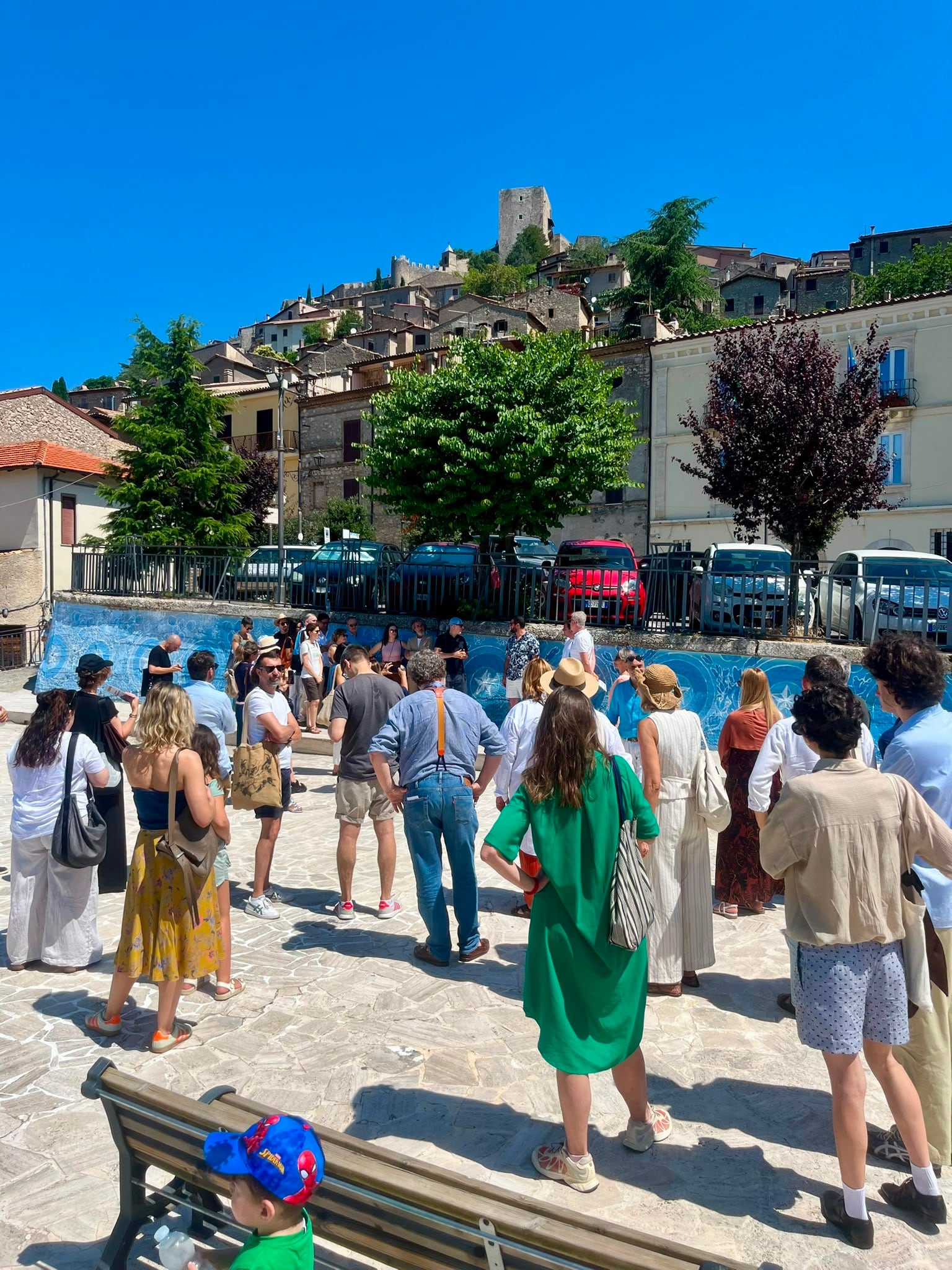
Presentazione di «REGIMENTALE», muro dipinto di Flavio Favelli


The small medieval village of Pereto, with a population of around 600, stands on a hill in the Turano Valley, in an area bordering Lazio, hence its nickname ‘Porta d’Abruzzo’. Like many Italian mountain villages, it faces the problems of depopulation and marginalisation, though it comes back to life during the summer months. Surrounded by woodland, it boasts a perfectly preserved historic centre that extends around the medieval castle, dating back to the first half of the 10th century. There are numerous historic buildings and stately homes, the most important of which is Palazzo Maccafani, which, to mark the tenth edition of the initiative – curated by Paola Capata and Annalisa Inzana – is hosting a joint solo exhibition by Montessori and Favelli, which can be viewed until 16 August 2026. An opportunity to explore the work of these two artists in greater depth, within an unusual and evocative setting.

Loading...

Flavio Favelli, «REGIMENTALE», veduta totale del muro dipinto, Pereto (AQ)

On display by Favelli are ‘Black&Ivory’ (2024), a sculpture composed of small assembled pieces of furniture; ‘Fondazza’ (2026), a painting in shades of blue on a crate that once held bottles of sparkling wine; ‘soft arancio’ (2026), an old Oransoda box assembled with other materials, as well as ‘Rosso Antico’ (2025), made from an old beer carton, and ‘San Vitale’ (2026). The common thread is an imagery centred on mass culture, in which personal impressions and memories converge. In the underground space of the Cisterna at Palazzo Maccafani, the previously unseen video ‘Bologna Centrale’ (2026) is on display. A “cathartic narrative” spanning a thirty-year period, beginning in ’74, during which personal stories and memories linked to the time the artist spent living in the Santo Stefano neighbourhood of Bologna unfold in succession.

Favelli’s works come from the Studio SALES and are valued at between 7,000 and 15,000 euros, whilst those by Montessori, represented by the gallery Monitor, are valued at between 2,500 and 65,000 euros.
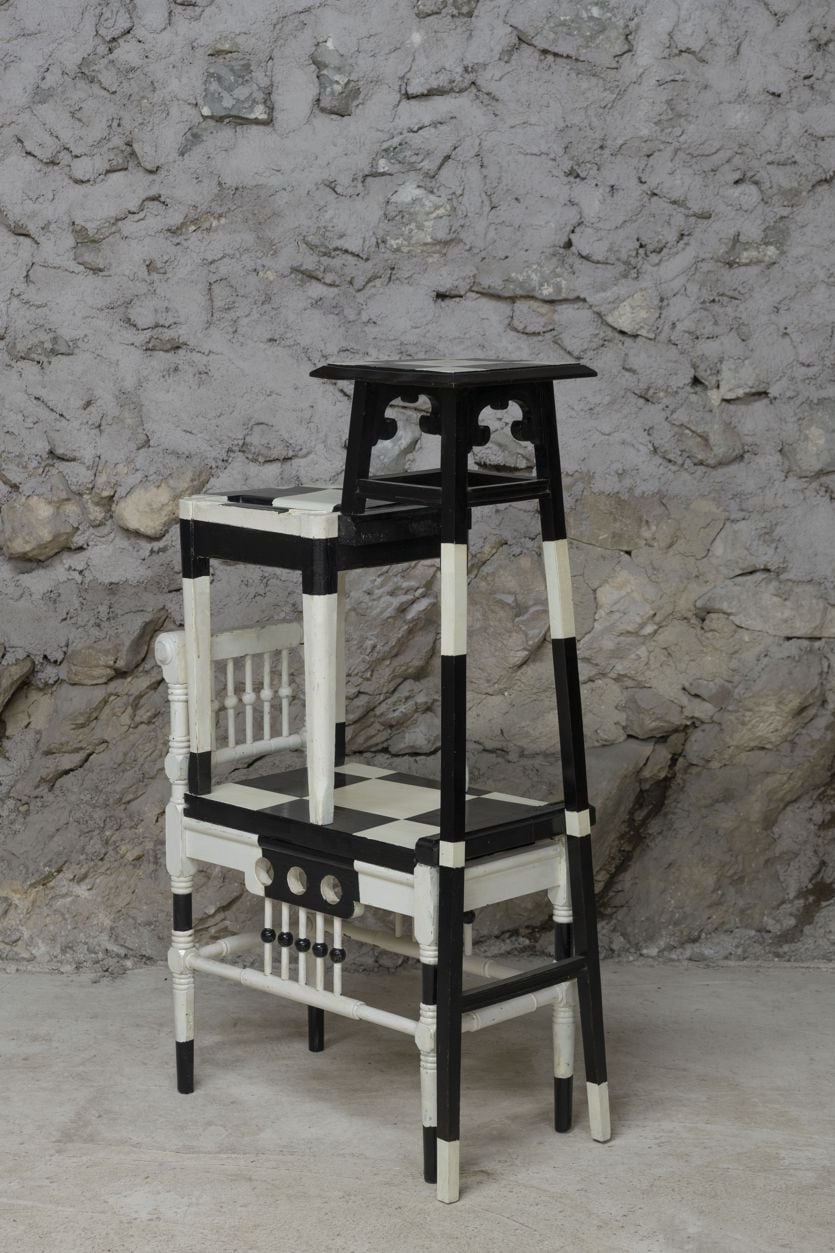
Flavio Favelli, «Black & Ivory», 2024, assemblaggio di arredi dipinti, 109 x 62 x 33cm Courtesy Studio SALES di Norberto Ruggeri; foto Giorgio Benni

On display is a previously unseen environmental sculpture by the Genoese artist, ‘Labirinto’ (1989), a fully painted cardboard roll over 30 metres long, arranged in a spiral pattern. A reflection on time and memory as they unfold and layer within the present, analysed and understood through the artist’s distinctive painterly practice and refined graphic style. A poetic landscape, both physical and mental, into which one can immerse oneself to glimpse new horizons. Also on display are small painted ceramics depicting retro-style women’s shoes, created in collaboration with the ceramicist Elisabetta Seber, which reflect a commitment to women’s empowerment.

Palazzo Maccafani, Pereto, Elisa Montessori (con Elisabetta Seber), «Sandali», 2020, ceramica dipinta, 23x8x8 cm

The new Straperetana trail is inaugurated by two site-specific works, created by the two artists and donated to the community of Pereto.

Montessori has chosen to reproduce one of her earliest drawings, ‘La Mano Sinistra’ (1948), on a metal plate set against a large stone wall near Piazza del Castello. At the heart of the work lie the artist’s personal memories and those of the location hosting the installation. Favelli’s work, on the other hand, is a painting, ‘Regimentale’, created on the 36-metre-long wall of the Belvedere. Inspired by the early 20th-century aesthetics of the labels on certain Abruzzo liqueurs, he draws on their graphic elements – such as pointed or pinwheel-shaped stars – and reproduces them against a light blue background. The result is a sky that celebrates a symbol belonging to the collective imagination, yet also encapsulates memories and meanings relating to a more intimate and personal sphere.

Flavio Favelli, «REGIMENTALE», dettaglio, muro dipinto di 36 metri, Pereto (AQ)

“La Straperetana was launched in 2017 following the conclusion of the Granpalazzo project (a three-year cultural event running from 2015 to 2017 in the municipalities of Zagarolo and Ariccia), from the idea of continuing to bring contemporary art to places not strictly designated for it,” explains Capata. The title itself, which emerged from discussions with Delfo Durante and Saverio Verini (curator of the first five editions), almost evokes an expanded vision of Pereto, as if it were a proper village festival.”

The collection

To date, over 160 artists have been invited to engage with the history and identity of the village. A highly interesting artistic workshop, recognised as such even by those in the know. But starting this year, there’s been a turning point: the Straperetana is no longer just a summer event, whose purpose ends with its creation, but is becoming a long-term project. A permanent collection of contemporary art, intended to take root in the village’s history and redefine its identity. This is increasingly the case for villages and small towns turning to urban regeneration projects centred on contemporary art. The budget allocated for this edition amounts to 5,000 euros, covering production and communication costs. A figure that is, to say the least, paltry and far below market rates, justified by the initiative’s recognised credibility and the pro bono collaboration of many of the professionals involved.

“Straperetana is a small miracle that has been repeating itself for ten years, made possible by the generosity of all the professionals involved and, above all, the artists who make it happen,” say Capata and Inzana, curators of the tenth edition of Straperetana. Even this year, as we’ve ‘reinvented ourselves’, embarking on a journey that we hope will lead us to build a permanent public art collection in the village, we’re truly delighted! We’ve had the patronage and support of the local council, the patronage of the City of L’Aquila – Capital of Culture 2026 – and the public’s response has been warm. The donated works were well received, and in the exhibition accompanying their installation, we showcased previously unseen, rare and beautiful pieces! We couldn’t be happier. We’re already thinking about the 2027 edition!”

Copyright reserved ©
Loading...
Loading...

Brand connect

Loading...

Newsletter

Notizie e approfondimenti sugli avvenimenti politici, economici e finanziari.

Iscriviti