
From the laboratory to the table: this is how CN-Agritech – SPOKE 9 UNIRC transforms authenticity and food safety into verifiable data

How much do we really know about the food we buy every day? Behind every label, certification or designation of origin lies a complex system comprising research, advanced technologies and scientific expertise, which today aims to translate consumer trust into verifiable data.
This has been one of the challenges faced by the National Agritech Centre, one of the most important research programmes funded by the PNRR through the Ministry of Universities and Research, set up to support the digital and ecological transition of the Italian agri-food system. This project has brought together universities, research centres and businesses to strengthen the competitiveness, sustainability and quality of production chains.
Within the Centre, which is organised into nine thematic ‘Spokes’, a key role has been entrusted to Spoke 9, dedicated to food quality, traceability, authenticity and sustainability. The Mediterranean University of Reggio Calabria has also contributed, hosting one of the laboratories in CN-Agritech’s AGRITRACK network: the Focus Lab, coordinated by Professor Mariateresa Russo, lecturer in Chemistry and Food Safety, President of the Italian Society of Food Chemistry, and CN Agritech representative for the Mediterranean University.
The work carried out by UNIRC within Spoke 9 focused on the development of integrated protocols capable of combining chemical, physical and genetic data using a multidisciplinary approach aimed at making the relationship between what a food product promises and what it actually contains increasingly transparent.
The team coordinated by Professor Russo, together with the young researchers recruited as part of the project, also utilised advanced analytical techniques to validate the protocols developed, with the aid of non-destructive platforms based on both biomimetic sensors – such as electronic noses and tongues – and NIR. The latter were developed and implemented in collaboration with the electronics team led by Professor Massimo Merenda.
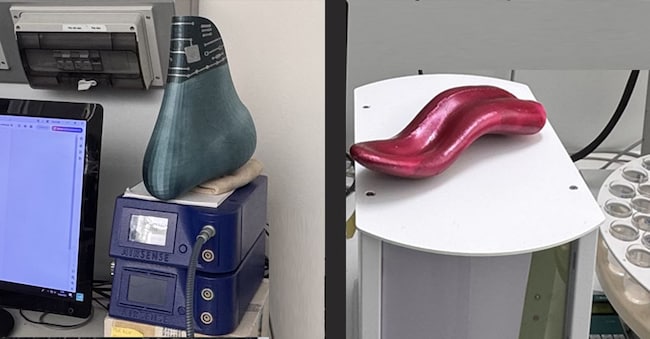
The specific case on which the multidisciplinary team focused was honey. Electronic nose and electronic tongue, instruments that mimic human senses and are trained to recognise different aroma and flavour profiles, alterations and distinctive characteristics of food. These technologies do not replace human expertise, but complement it with objective and measurable data.
Thanks to the NIR (Near-Infrared Spectroscopy) platform, rapid interpretative models have been developed to verify the quality and safety of honey produced in Calabria.
Validated non-destructive technologies enable real-time data collection and the creation of reliable systems for assessing the quality, authenticity and safety of the food that reaches our tables.
The contribution of the Università Mediterranea takes on even greater significance for the local context in which it operates. Southern Italy and the Mediterranean region are home to an extraordinary wealth of biodiversity and distinctive local produce, which can become strategic drivers of development only if supported by appropriate scientific tools.
This is why the research being carried out in Reggio Calabria is not confined to university laboratories. The technologies and protocols developed are tested in real-world conditions and trialled directly within local supply chains, helping to boost competitiveness, brand recognition and market access.
Against this backdrop, the UNIRC operational unit of CN-Agritech has implemented much more than a research programme: a model of innovation applied to the food supply chain. The work carried out by Mediterranea demonstrates how universities, the local area and businesses can work together to build a system in which quality is not merely claimed, but scientifically demonstrable.
These innovations now represent an extraordinary opportunity for the Italian food industry. Technologies, expertise and models developed thanks to the PNRR and the work of universities cannot remain the isolated preserve of laboratories, nor, even less so, be allowed to disperse outside the country. They are concrete tools in which to invest to strengthen ‘Made in Italy’, making it more competitive, transparent and recognisable on international markets.
Behind analytical platforms, smart sensors, digital platforms, blockchain and advanced control systems lie not just algorithms or machines: there are ideas, research, engineering, and the day-to-day work of professors, researchers, PhD students and undergraduates whom Italian universities continue to train. This is where the true added value of the national economy lies.
The experience of the Mediterranean University of Reggio Calabria demonstrates how the link between research, the local area and young talent can be transformed into real development. Investing in these skills means creating new innovation ecosystems, retaining skilled human capital and building a future in which ‘Made in Italy’ is not merely synonymous with tradition, but also with scientific and technological excellence. An unrivalled asset that Italia has a duty to nurture, promote and put to good use.
Brand connect


Newsletter Scuola+
La newsletter premium dedicata al mondo della scuola con approfondimenti normativi, analisi e guide operative
Abbonati