
From Mondo al contrario to Futuro Nazionale, all the stages of the Vannacci phenomenon
In an initial survey by Youtrend for Sky TG24, the general's new party would be just over 3%

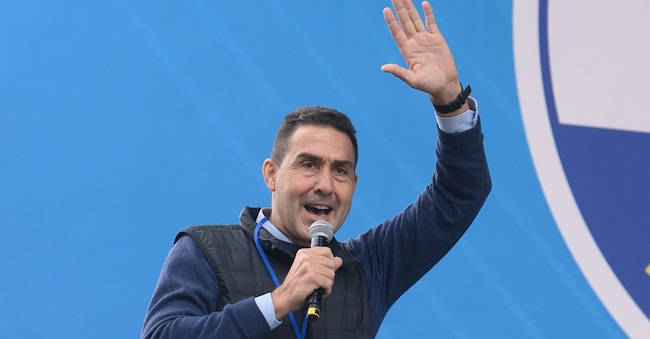
The parable of Roberto Vannacci within the League comes to an end. From Mr. 500,000 preferences at the European elections in June 2024 (Carroccio's candidate as an independent) to federal deputy secretary, his political trajectory in the League - which lasted less than two years - has shaken the internal balance and opened a debate on the party's identity, with clashes and attempts at mediation. The straw that broke the camel's back was the registration of the symbol 'National Future'. A move that led to an acceleration towards leaving the Carroccio.
Success at the European 2024
For the author of the bestseller 'The world to the contrary', launched in the summer of 2023 (in which he expounds theses considered by his detractors to be extreme right-wing, retrograde, and in some cases homophobic or racist) the polls had proved an overwhelming success: second candidate with the most preferences, behind Fdi leader and premier Giorgia Meloni. Salvini had then welcomed him into the party in 2025: on 6 April, Vannacci had officially taken the League's membership card during the federal congress in Florence, breaking the deadlock when there were already rumours about a possible party of his own.
The hostility of the Northern wing
Then, on 15 May 2025, the Federal Council appointed him deputy secretary of the party, a move Salvini wanted to armour the sovereignist front and seek consensus on the right. A move that, however, also marked the beginning of the rift with the party's northern wing, led by the northern governors, Zaia, Fedriga and Fontana, who have always considered Vannacci far from the autonomist and federalist ideals of the League as a 'party of the territories'.
The break
The final rupture is recent history: Vannacci founded the 'teams' that bear his name throughout Italia, which were considered by many to be parallel groups to the League and therefore forbidden by the statute. At another federal council meeting it was decided that they would not be political entities but only cultural associations. The pot overflowed last week, however, when the general deposited the 'Futuro Nazionale' logo, which immediately appeared to everyone as the symbol of a new party. More discontent, more Salvini trying to mediate. Until today's epilogue, with indiscretions confirming Vannacci's farewell to the League and him writing on social media: "I continue on my way alone" and "from today Futuro Nazionale is a reality"
The Electoral Potential
But how much could Vannacci's party be worth in the 2027 elections? In an initial survey by Youtrend for Sky TG24, the list would stand at 4.2%, just above the national threshold even in the event of an increase from 3% to 4%. The general takes more from Fdi (23%) than from the League (18%), but also collects from others, undecided and abstainers. From the point of view of voting intentions, the poll's analysis goes on to say, the introduction of the Vannacci list would lead to an erosion of consensus mainly on the right: Fratelli d'Italia (-1.1%) and Lega (-0.9%) are the parties that register the most evident losses, while Forza Italia suffers a more contained impact (-0.2%). No significant effect emerges instead on the centre-left and centrist forces, whose consensus remains substantially stable.


