Trend

From trainers to bras: the body becomes a technological platform

Shoes that promise more concentration in competition, 'living' leggings that use bacteria to rejuvenate the skin, underwear with microbeads that stimulate the lymphatic system. Welcome to the age of bio-wearabl

3' min read

Translated by AI
Versione italiana

3' min read

Translated by AI
Versione italiana

Shoes that help improve concentration, perhaps during a competition. Leggings with bacteria that rejuvenate the skin. Bras with microbeads to stimulate the lymphatic system.

It is no longer enough for wearable technology to monitor our sports performance and health values. No, now it even has the ambition to change them, those performances and values. Cure us, even. Or at least that is the promise of a new category of innovative clothing. The scientific evidence for now is bland, but the elements on the plate are promising.

Loading...

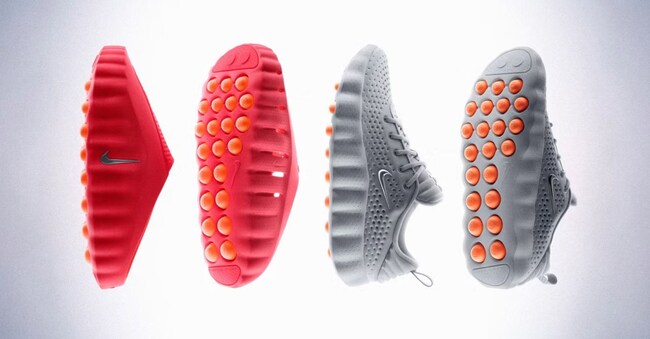
The first Nike shoes 'based on neuroscience' have been available for purchase for a few days, according to the company. Created in Nike's Mind Science Department, where neuroscientists and other experts study the connection between brain and body, the Nike Mind 001 and 002 are, respectively, a pair of sandals and trainers with bright orange foam knots of various sizes dotting the sole. The company claimed that each knot acts to transmit the feeling of the ground to the wearer.

Official American prices start at 95 dollars, but in Italy they are already under 90 euros. Nike's promise: these shoes sharpen the wearer's senses and improve concentration. In studies conducted by the company, scientists were able to observe a difference in brain activity after 15 minutes of use, in particular an increase in alpha wave activity, associated with 'concentration, visualisation, meditation and presence'.

The supporting studies are not yet public, but will be by 2026, Nike says. A few studies are starting to arrive in support of another wearable technology aimed at altering our brain waves: headbands to put on our foreheads, to fall asleep earlier. They work with sound impulses (like Elemind's) or electrical impulses (Somnee's), with prices around $500 for the more advanced ones.

If, on the other hand, we are more interested in the beauty of the skin than the brain, let us see what Coperni is doing with the C-line. The belted leggings ($195), top ($195) and bodysuit ($175) have bacteria embedded in them that, according to the company, help rejuvenate the skin and make it glow. After forty washes, the benefits diminish.

Another tech clothing start-up is Elastique, which offers leggings, sports bras and other sportswear woven with small resin beads designed to stimulate the lymphatic system. A bit like massages aimed at 'draining' excess fluid in the course. The principle is not very different from compression stockings, which serve to improve the lymphatic pump, against varicose veins. Prices around $240. Alternatives, with the same function, are produced by the companies Cean and Ballancer Pro. The former has leggings at around $140, the latter has pyjamas (between $200 and $400) with gold fibres and hyaluronic acid. Some of these products are very tight and compressive and should only be worn for a few hours, for instance during a long plane journey. Sitting for too long is not good for the lymphatic system, especially for people predisposed to certain related diseases, and these clothes might help. In addition, hyaluronic acid - as found in many anti-wrinkle creams - can rejuvenate the skin.

Again: you need to wait for a robust scientific literature to be fairly certain of efficacy. And some of these products may not be affordable yet, in Italy. The technology is advancing, however, in clothes, and public interest also seems to be there. The next step could be to coordinate the action of these smart clothes with wearables that monitor our data, perhaps putting artificial intelligence in the middle as a director. AI companies (see the new OpenAI services Chatgpt Health and Anthropic Healthcare) are already on track to take care of us. Whether we will trust them and let them do so, to AI as well as to tech clothes companies, is another matter, which will perhaps take a few more years to mature.

Copyright reserved ©
Loading...

Brand connect

Loading...

Newsletter

Notizie e approfondimenti sugli avvenimenti politici, economici e finanziari.

Iscriviti